There is a probiotic capsule in your medicine cabinet that never reached your gut. It dissolved in your stomach acid before breakfast was over. Meanwhile the food on your kitchen counter, the humble yogurt, the kimchi, the garlic and asparagus, is quietly feeding the bacteria that decide whether your skin stays clear. This is the part the label on the pill jar leaves out.
The Actual Difference Between Probiotics and Prebiotics
Probiotics are live bacteria. Prebiotics are the fibers that feed them. Probiotics arrive as a workforce that may or may not survive the trip to your intestines. Prebiotics arrive as food for the bacteria already living there. Your skin usually cares more about the second one.
Here is the piece most articles skip. The bacteria in your gut do not directly touch your skin. What they do is produce compounds called postbiotics. The most important of these are short-chain fatty acids like butyrate, acetate, and propionate. These are the messengers of the gut-skin axis. They travel through your bloodstream, calm systemic inflammation, and quiet down the sebocytes that overproduce sebum.
In my practice, when a woman tells me she has been swallowing probiotics for six months with no change in her skin, my first question is not which brand. It is what she is feeding the bacteria she already has.
Why Most Probiotic Supplements Never Reach Your Skin
Most probiotic capsules do not survive the stomach. In one 2021 review of commercial probiotics, tested strains lost more than a million CFU within five minutes of exposure to gastric acid. What arrives in the small intestine is often too low to shift the microbiome. And what shifts the microbiome is what eventually shifts your skin.
There are three specific reasons your capsule is not working:
- Stomach acid. Most strains have no acid resistance. They die before the pill reaches your small intestine.
- Wrong strain for the outcome. A generic multi-strain blend rarely contains the specific bacteria linked to skin outcomes. Most were selected for digestion, not dermatology.
- No food waiting for them. Even if some cells survive, they need prebiotic fiber in the colon to colonize and produce short-chain fatty acids. A capsule without a prebiotic-rich diet is a workforce with no groceries.
Lactobacillus rhamnosus GG is one of the few naturally acid-resistant strains, which is why it shows up in most of the clinical trials that actually produce results. But even that strain needs the right food waiting for it in the colon.
The Stanford Study That Changed What I Recommend
In 2021, Stanford researchers published a ten week trial in the journal Cell. Thirty six healthy adults were split into two groups. One ate six servings of fermented foods a day. The other loaded up on plant fiber. The fermented group saw a significant rise in gut microbiome diversity and a broad drop in 19 different inflammatory markers.
The study, led by Hannah Wastyk in the labs of Justin and Erica Sonnenburg, is important for a reason nobody talks about. It suggests that food-based probiotics beat pill-based probiotics for the outcomes that skin actually cares about. Diversity. Inflammation. And the calming of the immune system that stops dysbiosis from spilling out onto your face.
The most powerful pharmacy for your skin is sitting in the refrigerator behind the leftovers.
The fermented foods used were not exotic. Yogurt. Kefir. Fermented cottage cheese. Kimchi. Sauerkraut. Vegetable brine drinks. Kombucha. Every one of them is cheaper than the average probiotic subscription. And every one of them delivers live bacteria surrounded by their own food matrix, which helps them survive the trip that a dry capsule cannot.
The Bacterial Strains Actually Linked to Clear Skin
Two strains show up repeatedly in gut-skin research. Lactobacillus rhamnosus and Bifidobacterium longum. In a 2016 randomized, double-blind, placebo-controlled pilot trial published in Beneficial Microbes, Fabbrocini and colleagues gave twenty adult acne patients either Lactobacillus rhamnosus SP1 or a placebo for twelve weeks.
The probiotic group had normalized skin expression of genes involved in insulin signaling, an important pathway because insulin-like growth factor 1, IGF-1, is one of the strongest drivers of acne. Their skin improved. The placebo group did not see the same shift. That is a real, published, human trial. Not a marketing claim.
Bifidobacterium longum has a different job. It appears to reinforce the gut barrier and calm skin sensitivity. A 2022 study in Allergy, Asthma and Immunology Research showed that B. longum combined with galactooligosaccharide, a specific prebiotic fiber, improved skin barrier function and reduced inflammatory markers in atopic dermatitis models. Notice the pattern. The probiotic worked best when it had prebiotic fiber to feed it.
This is why single-strain thinking is a trap. The relationship you want is not between a pill and your skin. It is between a whole ecosystem and your skin.
The Prebiotic Foods That Feed Skin-Healing Bacteria
The bacteria linked to clearer skin all eat the same kinds of fiber. Inulin. Fructooligosaccharides. Galactooligosaccharides. Resistant starch. These are found in ordinary foods that most women I work with are not eating regularly, and they are the actual fuel that produces the short-chain fatty acids your gut barrier depends on.
Real prebiotic foods worth adding to a normal week:
- Raw or lightly cooked garlic
- Onion, shallots, and leeks
- Asparagus
- Chicory root, dandelion greens, and Jerusalem artichoke
- Cold-cooked potatoes and green bananas for resistant starch
- Oats, barley, and cooled rice
- Flaxseed and chia
- Sea moss, kelp, and other sea vegetables
Sea moss is worth its own paragraph. It feeds the microbiome through soluble fibers and delivers a broad mineral profile at the same time. This is where mineral-rich sea moss earns its place in a gut-to-skin protocol. It is not a probiotic. It is prebiotic fuel with the added benefit of magnesium, iodine, zinc, and other trace minerals your skin uses to repair itself.
When your bacteria are fed properly, they produce butyrate. Butyrate strengthens the tight junctions in your gut wall. That is the mechanism most acne protocols miss.
When the Gut Wall Loosens, the Skin Reacts
Intestinal permeability is what happens when the tight junctions between the cells lining your gut loosen. Undigested food particles and bacterial fragments cross into the bloodstream. Your immune system reacts. Inflammation rises. And in many of the women I work with, that inflammation is what shows up first on the face, along the jaw, and across the chest.
This is the gut-skin axis in plain language. Dysbiosis drives leaky gut. Leaky gut drives systemic inflammation. Inflammation drives excess sebum, breakouts, and stubborn redness. It also raises cortisol, which stimulates the HPA axis and the vagus nerve in ways that make skin worse even when you sleep less because of the stress it creates.
You cannot fix skin from the outside when the fire is starting on the inside. This is why a targeted gut cleanse is often the first step in my protocols, followed by a prebiotic-forward diet and, only when appropriate, a specific probiotic strain. In more stubborn cases, the deeper 12-week reset can be worth the time.
Myths I Hear Every Week
There are four myths about probiotics and prebiotics that I hear almost every week from women who come into my practice. Some come from marketing. Some come from well-intentioned articles that oversimplify the research. Here is what I actually say when a client repeats each of these to me.
Myth 1: More CFUs equals better results
The label CFU is the count at the time of manufacture. Not the count that reaches your intestines. A 50 billion CFU capsule with no acid resistance can arrive with fewer live cells than a smaller, well-formulated one. Strain, delivery, and diet matter more than the number on the front of the jar.
Myth 2: A probiotic pill will fix my acne on its own
In the clinical trials that actually improved acne, the probiotic was one part of the intervention. Diet, sleep, and stress showed up in every meaningful study. A pill on top of a bad diet cannot outwork a good diet on top of no pill. This is the order most protocols get wrong.
Myth 3: Fermented foods and probiotic pills are the same thing
They are not. A jar of live sauerkraut contains bacteria that developed inside a food matrix. That matrix protects them through digestion in a way a dry capsule cannot. Fermented foods also carry postbiotic compounds that a capsule lacks entirely. The Stanford trial showed the food route beats the pill route.
Myth 4: I just need to eat healthy
You need to eat prebiotic-rich. Those are not the same thing. Most "healthy" diets are still low in the specific fibers that feed the bacteria linked to clearer skin. Adding one clove of raw garlic, one tablespoon of resistant starch, or a small serving of sea vegetables per day changes the mix.
What I Actually Recommend in My Practice
The most effective approach I have seen is not a pill. It is a sequence. First, reset the gut load so the bacteria you want have room. Then feed them daily with prebiotic-rich food plus one or two servings of fermented food. Then, if needed, add a single-strain probiotic that survives stomach acid.
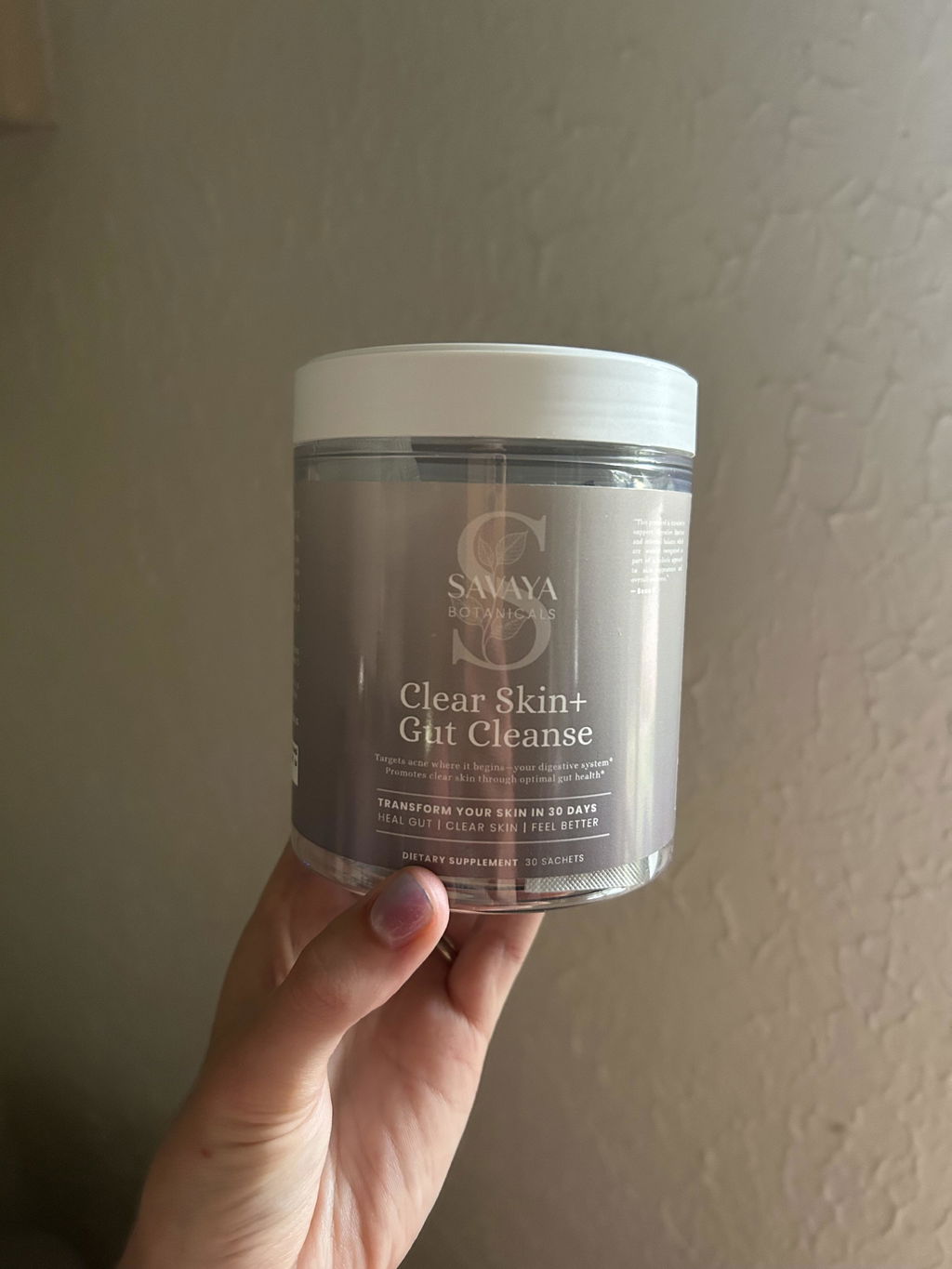
For women who want a simple daily addition to their skin routine, Clear Skin+ Max Detox is an acai-based blend that helps support the body's natural balance. I usually add a barrier-repairing tallow cream for the outer layer and bioavailable collagen support for the deeper structure once the inflammation begins to settle.
The Bottom Line on Probiotics vs Prebiotics
Probiotics get the marketing budget. Prebiotics do the daily work. Your skin is downstream of a microbiome that most women I meet are starving without realizing it. Feed the bacteria you already have. Add fermented foods that survive the trip. Only then consider a targeted probiotic. That is the order most protocols get backwards.
• • •
Frequently Asked Questions
These are the five questions I get most often about the probiotics vs prebiotics conversation, especially from women who have tried a supplement and seen nothing change on their skin. Short, plain-language answers so you can find what you need without scrolling past a wall of theory or a paragraph of hedging.
What is the difference between probiotics and prebiotics?
Probiotics are live bacteria that you eat. Prebiotics are the fibers that feed the bacteria already living in your gut. Prebiotics act as fuel. Probiotics act as reinforcements. For most skin issues, prebiotics do more of the daily work because they support the existing microbiome instead of depending on strains that may not survive digestion.
Do probiotic supplements really work for acne?
Some do. Most do not. The strains with the strongest human evidence for acne are Lactobacillus rhamnosus SP1 and Lactobacillus rhamnosus GG. Generic multi-strain blends without acid resistance rarely produce visible skin changes. If you take one, take it with fermented food and prebiotic fiber, or the strain has nothing to eat when it arrives in your colon.
How long does it take to see skin changes from prebiotic foods?
Most of the women I work with begin to notice a shift in inflammation and breakouts within four to six weeks. Deeper barrier repair and pigmentation changes usually take twelve weeks. The Stanford fermented foods study measured meaningful microbiome shifts at ten weeks, which is a useful baseline for what to expect from your own kitchen.
Can I take prebiotics and probiotics together?
Yes, and you probably should. Probiotics without prebiotic food to eat rarely colonize. Prebiotics without diverse bacteria to feed can produce bloating. When combined, they support the same outcome, which is a stable, diverse microbiome that produces the short-chain fatty acids linked to calmer, clearer skin.
Is sea moss a probiotic or a prebiotic?
Sea moss is a prebiotic. It is not a live bacterial culture. It feeds the bacteria already living in your gut through its fiber content and also delivers trace minerals like magnesium, iodine, and zinc that support skin repair. This is why it appears in gut-to-skin protocols alongside fermented foods and, when needed, targeted probiotic strains.