The probiotic capsule sitting on your kitchen counter? There's a strong chance most of those bacteria are already dead. And the few that do survive your stomach acid? They're probably not the strains your skin actually needs.
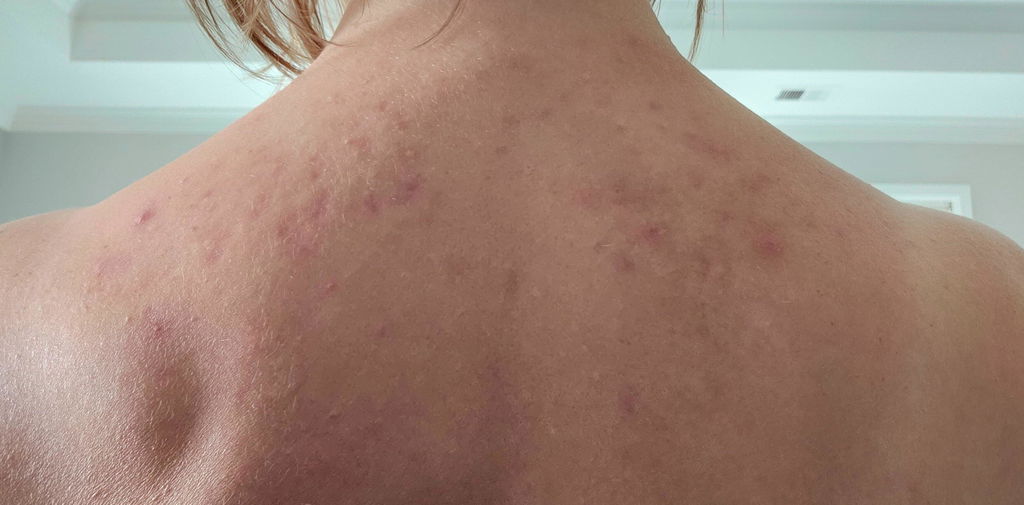
I learned this the expensive way. Over six years of fighting hormonal breakouts, I spent more than $3,800 on probiotic supplements. The $80 "premium" capsules with the impressive CFU counts. The refrigerated brands with the cooler-pack shipping. The targeted "women's blends," the "clear skin formulas," all of it. My breakouts didn't budge. And there was a reason — one the supplement industry quietly hopes you never figure out.
If you've been pouring money into probiotics expecting your skin to clear, this is the conversation no one is having with you.
Probiotics vs Prebiotics: The Difference That Changes Everything
Let's get the terminology right first, because most marketing blurs the line on purpose.
Probiotics are live bacteria you ingest. Think of them as new tenants you're trying to move into the apartment building that is your gut.
Prebiotics are the specific fibers and compounds that feed the beneficial bacteria already living in you. They don't add new tenants. They feed the ones who are already paying rent.
Here's why this matters for skin: your gut isn't a barren wasteland that needs to be re-seeded. It's a living forest with around 100 trillion microbes already in residence. The real question is whether the helpful ones are well-fed and outnumbering the inflammatory ones. Most of the acne, eczema, and dull skin issues I've worked through with clients trace back to that imbalance — not to a missing pill.
Why Most Probiotic Supplements Are Already Dead
This is the part that took me five years to accept. There are three reasons your $40 bottle is mostly placebo:
- Stomach acid is brutal. Your gastric pH hovers between 1.5 and 3.5. Most bacterial strains can't survive that environment for the 30 to 90 minutes it takes to reach your intestines. Without enteric coating or proper encapsulation, survival rates can drop below 10%.
- CFU counts are measured at manufacture, not at consumption. By the time the bottle ships, sits in a warehouse, gets trucked across the country, lives on a shelf, then waits in your cabinet, the live count is a fraction of what's printed on the label.
- The strains in most pills are picked for shelf stability, not skin outcomes. Lactobacillus acidophilus shows up in nearly every formula because it's hardy and cheap to produce. It's not necessarily what your skin needs.
I've watched people take a generic probiotic for six months expecting their cystic acne to clear, and feel completely defeated when nothing happens. The problem usually isn't them. The problem is they're holding the wrong tool for the job.
The Specific Bacterial Strains Linked to Clear Skin
This is where it gets interesting. Real clinical research has zeroed in on specific strains — not "probiotics" in general — that show measurable skin effects.
- Lactobacillus rhamnosus GG — studied for its role in modulating sebum production and reducing acne lesion counts. Randomized trials have shown clinically significant skin improvements over a 12-week window.
- Bifidobacterium longum — research links this strain to reduced skin sensitivity, calmer reactivity, and improved barrier function in adults with chronically inflamed skin.
- Lactobacillus paracasei — studied in atopic skin conditions for its anti-inflammatory effects on the gut-skin axis.
- Bifidobacterium lactis HN019 — primarily improves intestinal transit time, which matters because constipation directly correlates with breakouts in clinical observation.
If your supplement bottle just says "Lactobacillus blend," you have no idea what's actually in there. Strain specificity is everything. It's the difference between "a dog" and "a trained search-and-rescue dog." Both are dogs. Only one finds the missing person.
The Stanford Study That Changed How I Eat
In 2021, the Sonnenburg lab at Stanford published one of the most important nutrition studies of the decade in the journal Cell. They put healthy adults on one of two diets for ten weeks: high-fiber, or high-fermented-foods (yogurt, kefir, kimchi, sauerkraut, kombucha, fermented vegetables, brine-cured produce).
The fermented foods group showed something remarkable:
- Increased microbiome diversity — the single biggest predictor of overall gut health
- A measurable decrease in 19 inflammatory markers, including the ones tied to skin inflammation
- Effects that scaled with how much fermented food participants consumed
None of this came from a capsule. It came from food that had been fermenting on countertops and in clay pots for thousands of years, long before the supplement industry existed.
That study quietly rewired how I approached gut healing. Instead of stacking pills, I started thinking about what I was eating every single day, and whether each meal was building or breaking my microbiome.
———
Prebiotic Foods That Feed Your Skin-Healing Bacteria
Here's the menu I keep coming back to. These are the foods that feed the strains your skin actually wants more of:
- Garlic and onions — high in inulin, a fiber your beneficial bacteria love
- Green bananas and unripe plantains — packed with resistant starch
- Asparagus, leeks, Jerusalem artichoke, chicory root — concentrated prebiotic fiber
- Apples with the skin on — pectin, a soluble fiber that ferments into short-chain fatty acids
- Flaxseed — lignans plus soluble fiber, with the bonus of mild estrogen modulation
- Cooked-and-cooled rice or potatoes — the cooling process turns regular starches into resistant starch your bacteria can ferment
- Sea moss — a quietly extraordinary source of soluble polysaccharide fiber AND the trace minerals your bacteria need to do their work
I want to spend a moment on that last one because most people don't realize sea moss is a prebiotic at all.
The Mineral-Prebiotic Connection in Sea Moss
Sea moss has been quietly used for centuries in Caribbean and Irish coastal traditions. What modern research is beginning to confirm is what those grandmothers already knew — it does two things at once.
First, the polysaccharides in sea moss act as soluble fiber that ferments in the gut, producing short-chain fatty acids like butyrate. Butyrate is the compound that calms gut inflammation, strengthens the intestinal lining, and indirectly reduces the "leaky gut" pattern tied to so many chronic skin conditions.
Second, sea moss carries roughly 92 of the trace minerals your body needs — including zinc, selenium, magnesium, and iodine. These aren't just minerals for you. They're the cofactors your gut bacteria use to do their metabolic work. Feed your bacteria fiber without giving them the minerals to process it, and you're handing a chef ingredients without a stove.
Many of the women I walk through breakout protocols add a daily spoonful of raw sea moss gel for exactly this reason. It's the kind of nutritional layering you can't replicate with a multivitamin.
Three Probiotic Myths I Used to Believe
Myth 1: Higher CFU count means a better probiotic. Not true. A 2-billion-CFU bottle of the right strain with a delivery system that survives stomach acid will outperform a 100-billion-CFU bottle of generic, half-dead strains every single time.
Myth 2: All yogurt is probiotic. Most commercial yogurts are pasteurized after fermentation, which kills the bacteria. Only yogurts labeled "live and active cultures" actually deliver any. Even then, sugar content often cancels out the gut benefits, especially for skin-prone people.
Myth 3: A probiotic alone will fix your skin. Probiotics without prebiotics are like dropping new fish into a polluted pond. They don't survive the environment they're entering. You need to clean the gut and feed it before introducing new bacteria has any meaningful effect. That's exactly why I always recommend starting with a gut microbiome reset before layering anything else on top.
The Protocol I Actually Follow Now
After years of trial, error, expensive supplements, and hard-won lessons, here's what my actual day looks like:
- Morning: Warm water with lemon, then a smoothie with frozen green banana, a tablespoon of flaxseed, an apple with the skin on, and a spoonful of sea moss gel
- With lunch: A spoonful of unpasteurized sauerkraut or a small portion of kimchi alongside whatever I'm eating
- Throughout the day: Cooked-and-cooled rice or potatoes a few times a week, garlic and onions in nearly every cooked meal, leafy greens always
- Quarterly reset: A short gut cleanse to clear out built-up biofilm and inflammatory residue — this is when I lean on the full detox protocol rather than improvising
- Topical layer: Healing the skin barrier from the outside with a clean tallow cream at night, while collagen support comes from food and the occasional collagen strip for travel weeks
None of this is fast. Skin moves on its own clock — usually 8 to 12 weeks of consistent gut work before the changes really show up at the surface. That's why a simple daily habit — like our Clear Skin+ Max Detox — fits into that routine. Not because it's magic, but because the timeline of biology demands a consistency you can actually stick with.
The Bottom Line on Probiotics vs Prebiotics for Skin
If you remember nothing else from this: probiotics are guests, prebiotics are the meal, and your gut is the host. Most people are obsessed with importing more guests when the real issue is that the meal isn't being served and the host is exhausted. Fix the meal, rest the host, and the right guests show up on their own.
Your skin will be the first to thank you — usually around week eight, when you start catching glimpses of your own reflection and forgetting to look for what's wrong with it.
———
Frequently Asked Questions
Are probiotics or prebiotics better for acne?
For most people, prebiotics produce more reliable results. Probiotics are only effective if they are strain-specific (such as L. rhamnosus GG or B. longum), enterically coated to survive stomach acid, and taken alongside the fiber that feeds them. Prebiotics work directly with the bacteria you already have and don't depend on surviving digestion to be useful.
How long does it take for prebiotics to improve skin?
Most clinical research shows initial gut microbiome shifts within 2 to 4 weeks of consistent prebiotic intake. Visible skin changes typically lag behind those gut changes by another 4 to 8 weeks, putting most people in the 8 to 12-week window before they see meaningful improvement in breakouts, tone, and texture.
Can I get enough probiotics from food alone?
Yes — and it is likely more effective than capsules. The Stanford fermented foods study showed that real food sources (kefir, kimchi, sauerkraut, kombucha, traditionally fermented vegetables) produced significant microbiome diversity gains and reduced inflammatory markers without any supplement involvement at all.
Does sea moss really work as a prebiotic?
Yes. Sea moss contains soluble polysaccharide fibers that ferment in the gut to produce short-chain fatty acids, particularly butyrate, which is anti-inflammatory and directly supports the gut-skin axis. Its mineral profile also gives bacteria the cofactors they need for that fermentation process.
What's the best fermented food for clearer skin?
Unpasteurized sauerkraut and kefir tend to deliver the most bioavailable strains for skin outcomes, particularly Lactobacillus rhamnosus and Bifidobacterium longum. Traditional kimchi and water kefir come close. Avoid anything labeled "fermented" that has been heat-pasteurized — those bacteria are already dead.
———
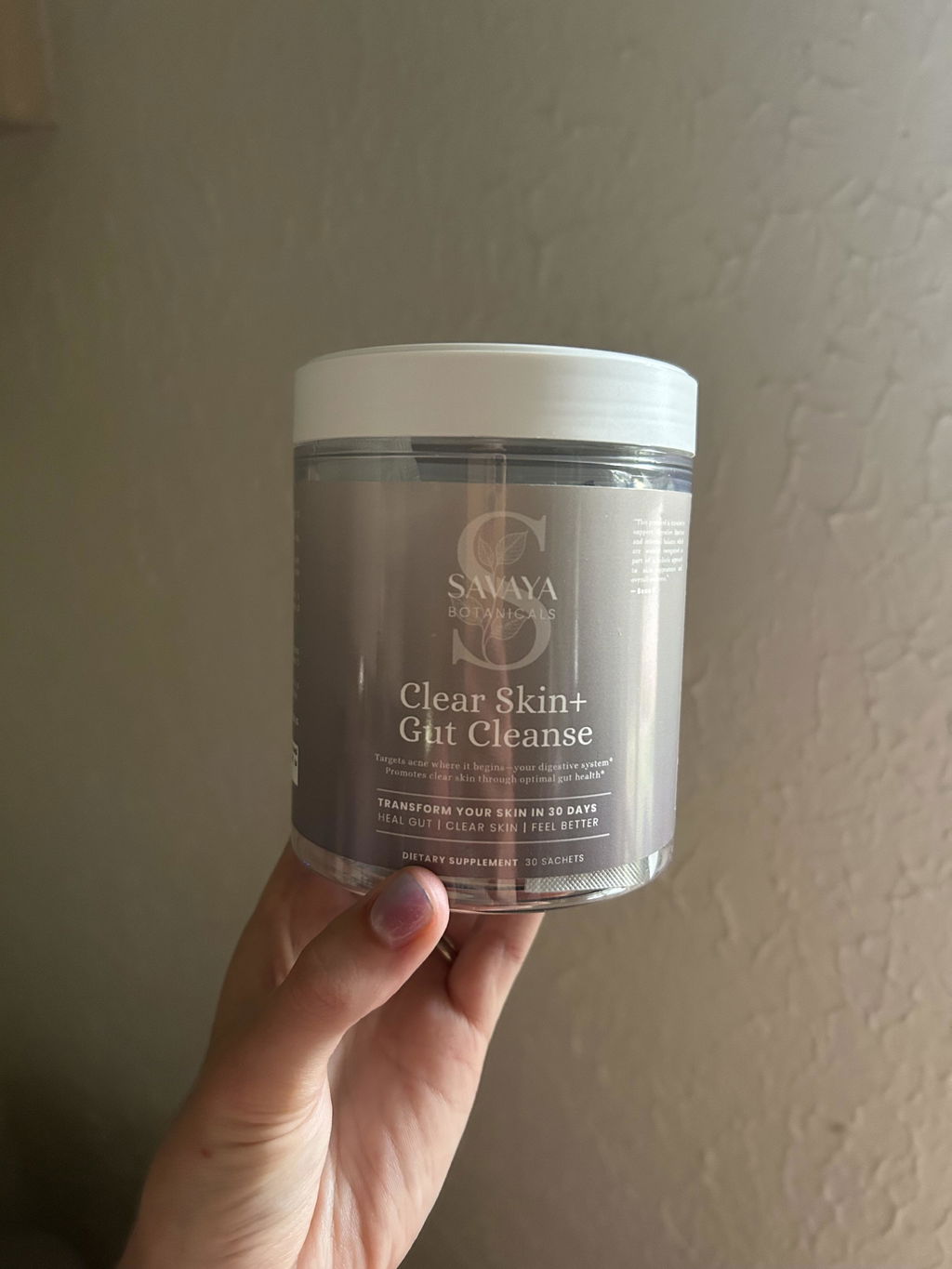
Ready to support your skin from the inside? Clear Skin+ Max Detox is the simple daily acai-based blend I wish I'd found six years and $3,800 ago — one easy step that helps support your skin from within, no complicated routine to follow.