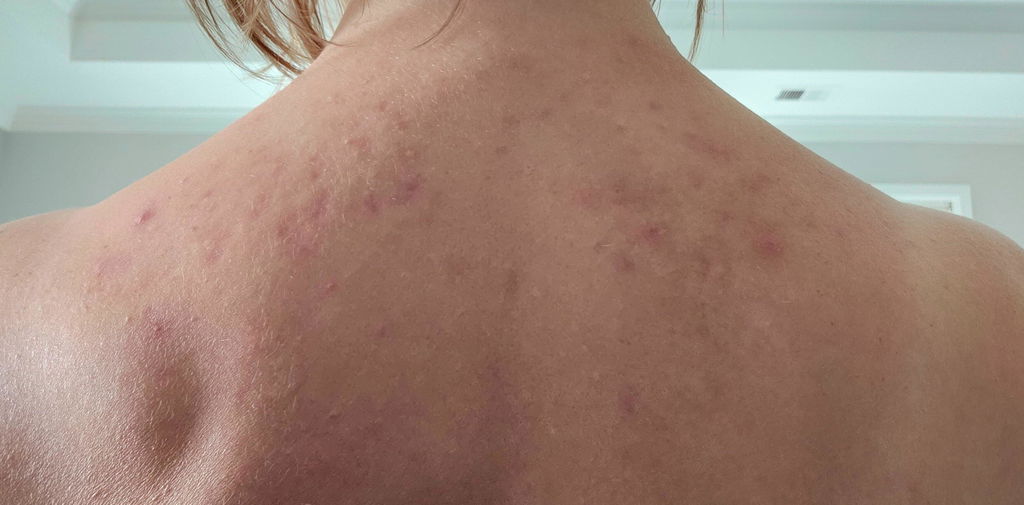
Your dermatologist probably told you diet has nothing to do with your skin. She is wrong. And the research proving her wrong has been sitting in peer-reviewed journals since 2005, quietly ignored while millions of women blame themselves for breakouts they cannot get rid of. In my practice, dairy is the single most common food trigger I see. Here is why.
What Actually Happens When You Drink Milk
Milk contains growth factors and hormones that raise insulin-like growth factor 1, or IGF-1, in your bloodstream within hours. IGF-1 signals your skin's oil glands to produce more sebum, thickens the follicle wall, and drives the exact hormonal cascade behind cystic acne. The mechanism is not mysterious anymore. It is measurable.
Cows are lactating mammals. Their milk is designed to grow a 90-pound newborn calf into an animal several times that size in about a year. It is a hormonal signaling fluid, not just a beverage. When you drink it as an adult human, those signals do not evaporate at the stomach. They activate a pathway called mTORC1 inside your skin cells, which is the same pathway that stimulates sebum production, keratin buildup, and inflammation inside the pore.
Dr. Bodo Melnik, a German dermatology researcher, has published extensively on this. His work shows that regular milk consumption activates mTORC1 signaling in a way that closely mirrors what happens in acne-prone skin. This is not fringe science. This is mainstream dermatology now.
The mainstream conversation just has not caught up yet.
The Harvard Nurses' Health Study Nobody Talks About
The Harvard Nurses' Health Study II followed more than 47,000 women who recalled their high school diets and skin history. Published in 2005 by Dr. Clement Adebamowo, the study found women who drank two or more glasses of skim milk a day had a 44 percent higher likelihood of severe teenage acne. Skim milk showed the strongest association of any dairy category.
Read that again. Skim milk was worse than whole milk. Nobody expected that.
The reason is telling. When fat is removed from milk, the concentration of bioactive hormones and growth factors, which are largely water soluble, effectively rises per serving. The processing also strips off the fat that would have slowed absorption. So the skim glass hits harder and hits faster.
Adebamowo repeated the study with teenage girls in 2006 and teenage boys in 2008. Same pattern each time. A 2018 meta-analysis published in Nutrients, pooling data from 78,529 children, adolescents and young adults, confirmed the same trend. Any dairy, total milk, whole milk, low-fat milk, and skim milk were all linked to a higher risk of acne. Interestingly, yogurt and cheese did not show the same clear association, likely because fermentation partially breaks down the offending proteins before they reach your gut.
You changed the label when you switched to organic. You did not change the mechanism.
A1 vs A2 Casein: Why Some Dairy Feels Different
Casein makes up 80 percent of the protein in cow's milk, and it comes in two variants. Most conventional dairy cows produce A1 beta-casein, which releases a compound called beta-casomorphin-7 during digestion. A2 casein, from certain heritage breeds like Jersey and Guernsey, does not release the same compound. That single difference changes how the immune system and the gut respond.
Beta-casomorphin-7, or BCM-7, is an opioid-like peptide that has been linked to gut inflammation, delayed digestion, and immune activation in the intestinal lining. When your gut stays inflamed for months or years, you develop increased intestinal permeability. The gut barrier loosens. Zonulin, a protein that regulates the tight junctions between intestinal cells, gets triggered too often.
A leaky gut lets bacterial fragments and undigested proteins slip into the bloodstream. Your immune system reacts. That systemic low-grade inflammation eventually shows up on your face as breakouts, redness, and cystic bumps along the jawline.
Some clients tell me they can drink European milk in Italy or goat milk from a small farm and their skin stays clear. That is often A2 casein at work. It is real. But it is not permission to drink a gallon a week and expect nothing.
The Whey Protein Trap Nobody Warns Athletes About
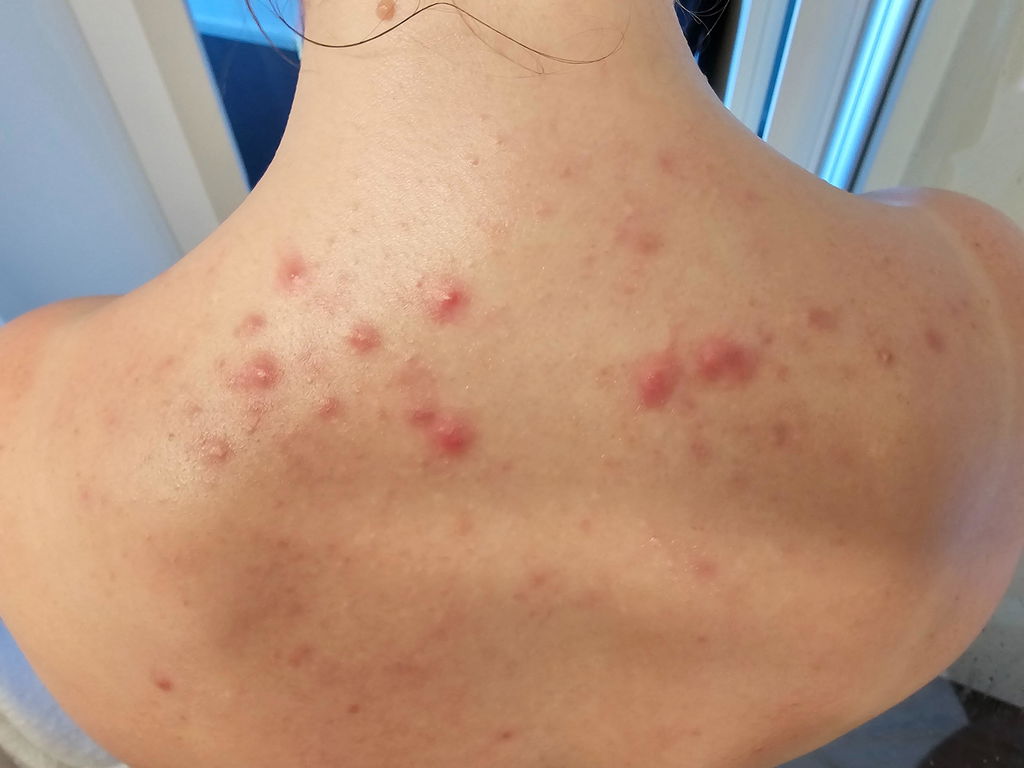
Whey protein is the water-soluble fraction of milk that separates during cheesemaking. Isolated and concentrated into powders, whey delivers a massive spike in leucine and IGF-1, both of which activate mTORC1 signaling in sebocytes. This is why so many young men who start lifting and drinking daily protein shakes develop sudden, severe acne on the back, shoulders and jawline.
In 2012, Dr. Nanette Silverberg published a case series in Cutis documenting five teenage male athletes whose moderate to severe acne cleared completely after they stopped whey protein, and returned within weeks of restarting it. Since then, dozens of dermatology reports have described the same clean-off, break-on pattern.
I see it in women too. Especially those using collagen shakes marketed as beauty products. If the base is whey, the effect on the skin is the same. This is why I steer clients toward bioavailable collagen support that is not whey-based, or better yet toward whole food sources that rebuild connective tissue without hijacking the mTORC1 pathway.
Yes, Even Organic Grass-Fed Dairy Has Hormones
Organic and grass-fed dairy is better in many ways. It contains no added synthetic bovine growth hormone, more omega-3 fatty acids, and better vitamin K2 content. But it still comes from a pregnant lactating cow, which naturally produces estrogen, progesterone, IGF-1 and other bioactive hormones in her milk. There is no such thing as truly hormone-free cow's milk.
Modern dairy farming keeps cows pregnant for most of their productive lives. The later a cow is in her pregnancy, the higher the hormone concentration in her milk. Independent researchers have measured estrone sulfate and other estrogens in commercial milk at levels that concern endocrinologists.
Organic just means no synthetic additives were used during production. It does not remove the biology of what milk actually is.
If your acne has not responded to switching to organic or grass-fed, this is exactly why.
Why Your Friend Can Drink Milk and You Cannot
Human tolerance for dairy comes down to two variables. First, lactase persistence, the genetic ability to keep producing the lactase enzyme into adulthood. Second, gut microbiome composition, which determines how you process casein, whey, and residual sugars. Both vary dramatically across populations, and both shift over time.
Roughly 65 to 70 percent of adults worldwide lose the ability to produce lactase after childhood. If you have Northern European ancestry, you probably kept the gene switched on. If you have East Asian, West African, or Native American ancestry, statistics say the switch turned off. The LCT gene on chromosome 2 controls this, and its regulation depends on a variant near the MCM6 region.
But lactase persistence is only about digesting the sugar, lactose. It says nothing about how you handle casein or hormones. You can be perfectly lactose tolerant and still break out from milk because the acne response is driven by IGF-1 and inflammation, not by gas and bloating.
The second variable is your microbiome. A gut dominated by certain species of Bifidobacterium and Lactobacillus produces short-chain fatty acids that reinforce the gut barrier and lower systemic inflammation. A gut in dysbiosis does not have that protective effect. Everything you eat, including dairy, hits harder. This is why a targeted gut cleanse can change the entire equation. When you rebuild the microbial ecosystem, you tolerate more foods with less reactivity.
Better Dairy Alternatives That Actually Support Gut Health
Not all dairy alternatives are created equal. Many plant milks are loaded with seed oils, gums, and added sugars that harm the microbiome as much as dairy did. The best alternatives are minimal-ingredient, unsweetened, and either fermented or fortified with real nutrients rather than synthetic additives. Choose products that feed your gut, not just replace a beverage.
Here is what I recommend in my practice:
- Unsweetened coconut milk, canned or carton, without gums or thickeners when possible.
- Unsweetened organic almond milk, ideally homemade or from a four-ingredient brand.
- Fermented coconut yogurt with live cultures, which delivers postbiotic compounds that support the gut barrier.
- Mineral-rich sea moss added to smoothies for the trace minerals most modern diets are missing.
- Bone broth for those who tolerate it, as a source of glycine, proline, and gut-healing amino acids.
Sea moss deserves specific attention. It is a red algae that carries 92 trace minerals from the ocean, along with soluble prebiotic fiber that feeds beneficial gut bacteria. Many of my clients notice their skin calming down within a few weeks of adding it, especially when combined with a broader microbiome reset.
If you have been dairy-free for months and your skin still has not cleared, the deeper issue is usually gut integrity and hormone clearance. A short cleanse can shift things quickly. For more stubborn cases where the gut has been inflamed for years, giving the body time to rebuild matters most. Others find Clear Skin+ Max Detox helps support regularity when constipation and sluggish elimination are part of the picture.
• • •
Give your skin ninety days. Remove dairy completely, rebuild your gut with this microbiome reset, and let the mechanism reverse itself. The research is clear. Your face will follow.
Frequently Asked Questions
How long after quitting dairy does acne start to clear?
Most women in my practice see initial calming within three to four weeks, with significant clearing between weeks eight and twelve. The lag reflects how long it takes for existing hormonally activated sebocytes to complete their cycle, for inflammation to subside, and for the gut barrier to begin repairing. Give it a full ninety days before deciding whether it worked for you.
Is goat milk safer than cow milk for acne-prone skin?
Goat milk contains A2 casein, which digests differently and produces less BCM-7. Many people who react to cow milk do tolerate goat milk better. But goat milk still contains IGF-1, hormones, and casein overall. It is not a free pass. If your skin is highly reactive, remove all mammalian dairy for at least twelve weeks first to establish a clean baseline.
Can I still eat cheese if I stopped drinking milk?
Fermented aged cheeses and yogurt showed weaker or no association with acne in the 2018 Juhl meta-analysis, likely because fermentation partially breaks down casein and reduces bioactive peptides. That said, cheese still contains hormones and IGF-1 precursors. During an active breakout phase, remove it. During maintenance, small amounts of fermented raw cheese are usually fine for most people.
Why does skim milk cause more acne than whole milk?
The Harvard research consistently showed skim milk had the strongest association with acne. Removing the fat concentrates the bioactive proteins and hormones per serving, and the absence of fat speeds absorption. The result is a bigger, faster IGF-1 spike. Whole milk is not innocent, but skim milk is measurably worse for the gut-skin axis.
What about lactose-free milk and acne?
Lactose-free milk still contains casein, whey, IGF-1 and the same hormone profile. Removing lactose only addresses digestive symptoms in lactose-intolerant people. It does nothing to reduce the acne-driving pathway. Many of my clients switched to lactose-free and saw no change in their skin, which is exactly what the mechanism predicts.