Why "Drink More Water" Is the Worst Skin Advice I Ever Followed
I spent three years carrying a gallon jug everywhere I went. To the gym, to client sessions, to bed — that jug was my security blanket. I was drinking close to a gallon and a half a day, convinced my skin would eventually glow the way every wellness influencer promised.
It never did. My skin stayed dull, my under-eyes stayed puffy, and the breakouts along my jawline never fully cleared. What did happen? I was running to the bathroom every 40 minutes. I felt bloated. Some mornings my fingers were so swollen I couldn't get my rings on.
It wasn't until I started studying cellular hydration — not just water intake — that everything clicked. Plain water alone doesn't hydrate your cells. And the "drink 8 glasses a day" rule? It has almost no scientific backing. What your skin actually needs is a completely different conversation — one that involves minerals, your gut, and a fundamental shift in how you think about hydration.
———
The 8 Glasses a Day Myth: Where Did It Even Come From?
The idea that everyone needs eight 8-ounce glasses of water per day has been repeated so many times it feels like settled science. It isn't. A 2002 review published in the American Journal of Physiology by Dr. Heinz Valtin found no scientific evidence supporting the "8x8" rule for healthy adults. The recommendation likely traces back to a misread 1945 U.S. Food and Nutrition Board guideline — which actually said most of our water needs are met through food.
A 2020 study in Science further confirmed that water turnover varies dramatically based on age, climate, body composition, activity level, and diet. A 130-pound woman living in Portland and a 200-pound man in Phoenix have wildly different hydration needs. A blanket number was never going to work.
More importantly for your skin: drinking excess plain water can actually flush out the very minerals your cells need to hold onto that water. This is where it gets interesting.
Why Plain Water Doesn't Actually Hydrate Your Cells
Here's something most people never learn: water doesn't just passively flow into your cells. It moves through aquaporin channels, and this movement is governed by osmotic balance — the concentration of electrolytes on either side of your cell membrane.
When you drink large amounts of plain, mineral-stripped water, you dilute the electrolyte concentration in your blood. Your body responds by flushing the excess — which is why you're running to the bathroom constantly. Your cells never actually got hydrated. The water passed through you.
True cellular hydration requires three key electrolytes working together:
- Sodium — regulates fluid balance outside your cells and drives water absorption in the small intestine
- Potassium — the primary electrolyte inside your cells, critical for keeping water where your skin actually needs it
- Magnesium — activates the sodium-potassium pump (the enzyme that moves electrolytes across cell membranes) and supports over 300 enzymatic reactions in the body
Without adequate levels of all three, water has no mechanism to stay inside your cells. You can drink a gallon a day and still be cellularly dehydrated — which shows up as dull, tired skin that no amount of water seems to fix.
Mineral Water vs. Filtered Water: What You Drink Matters
Not all water is created equal, and this matters more than most people realize.
Reverse osmosis and standard carbon filters remove contaminants — which is great — but they also strip out naturally occurring minerals like calcium, magnesium, and bicarbonate. You end up with "dead" water that's clean but offers zero mineral support for hydration.
Natural mineral water (think European-style spring water) contains dissolved minerals from underground rock formations. Studies have shown that mineral-rich water with higher magnesium and bicarbonate content can improve hydration markers compared to low-mineral water.
My practical advice? If you use a reverse osmosis or Brita-style filter at home, you need to add minerals back. A pinch of unrefined sea salt, a squeeze of lemon, or — what I recommend to most of my clients — a whole-food mineral source that provides the full spectrum your body recognizes.
This is why I started recommending sea moss to my clients years ago. It naturally contains 92 of the 102 minerals your body needs — including magnesium, potassium, zinc, and iodine — in bioavailable forms that your cells can actually use. It's not a supplement in a lab. It's ocean nutrition in its whole-food form, and it makes a noticeable difference in how your body holds water.
Structured Water: Separating Hype From Science
If you've been in the wellness space, you've probably heard claims about "structured water" or "hexagonal water" — the idea that water can be organized into a crystalline structure that hydrates cells more efficiently.
I want to be honest about this. The concept comes from Dr. Gerald Pollack's research on exclusion zone (EZ) water at the University of Washington, which showed that water near hydrophilic surfaces forms a more ordered, gel-like layer. That research is real and peer-reviewed.
However, the leap from "EZ water exists in lab conditions" to "you should buy a $300 water structuring device" is not supported by clinical evidence. There are no published human trials showing structured water improves skin hydration, cellular function, or any health outcome compared to regular mineral-rich water.
What does have research behind it? Ensuring your water contains adequate minerals and that your gut can actually absorb what you drink. Those are the real levers.
Your Gut Determines How Well You Absorb Water
This is the piece almost everyone misses. You can drink the perfect mineral-balanced water, but if your gut lining is compromised, your absorption will be poor.
Water absorption happens primarily in your small intestine and colon. The process depends on sodium-glucose co-transporters (SGLT1) in the intestinal wall — this is actually the science behind oral rehydration therapy used in hospitals worldwide. But when your gut lining is inflamed, when you have dysbiosis, when the mucosal barrier is damaged — those transporters don't function optimally.
Signs your gut might be sabotaging your hydration:
- You drink plenty of water but still feel thirsty
- Your skin is dry despite high water intake
- You experience bloating after drinking water
- Frequent urination without feeling hydrated
- Chronic constipation (your colon is pulling water from stool because absorption upstream is poor)
If any of that sounds familiar, your gut lining likely needs attention before any hydration strategy will fully work. I've seen this pattern hundreds of times in my practice — women doing everything "right" with their water intake, but their compromised gut was the bottleneck the whole time.
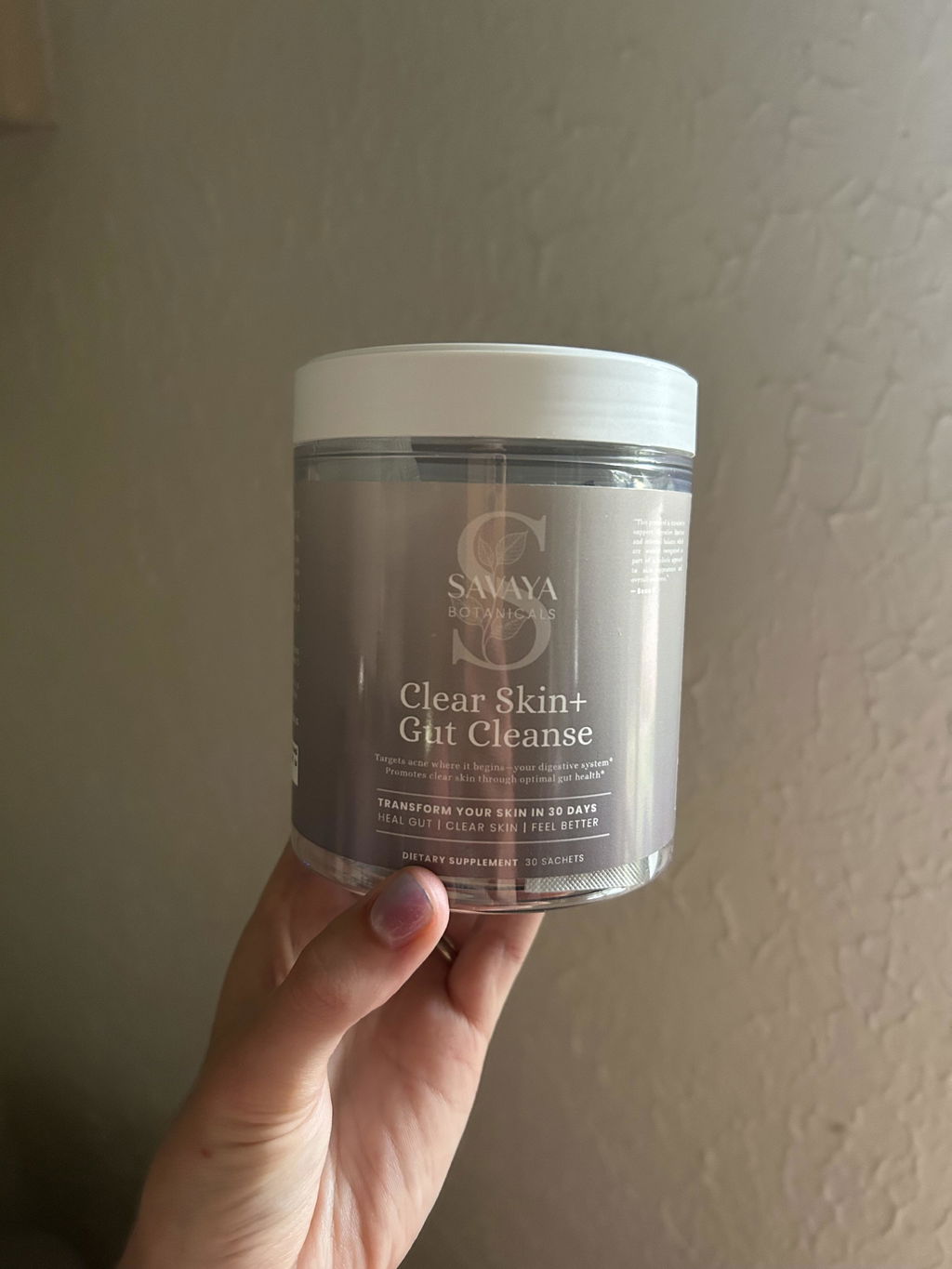
For clients in this situation, I typically start with a gut reset before addressing hydration. A targeted microbiome gut cleanse can help clear the debris and restore the intestinal environment so your body can actually absorb nutrients and water efficiently again. It's often the single change that unlocks everything else.
Practical Hydration Strategies That Actually Work for Your Skin
After years of working with clients and studying this from every angle, here's what I recommend instead of "just drink more water":
1. Add minerals to your water. Every glass. A pinch of Celtic or Himalayan sea salt, a squeeze of citrus, or blend sea moss gel into your morning smoothie for a full mineral spectrum. Your cells need the electrolytes to actually use the water.
2. Eat your water. Cucumber, watermelon, celery, zucchini, berries, and leafy greens are 85-96% water — and they come packaged with fiber, minerals, and natural sugars that enhance absorption through those SGLT1 transporters. Research shows food-based hydration is often more effective than drinking plain water.
3. Front-load your intake. Drink most of your water between waking and 3 PM. Your body's absorption capacity follows circadian rhythms. Evening over-hydration often just disrupts sleep — and poor sleep damages skin faster than mild dehydration ever could.
4. Stop chugging, start sipping. Drinking large amounts quickly overwhelms your kidneys' reabsorption capacity. Small, consistent sips throughout the day — especially with minerals — allows your body to actually retain what you drink.
5. Fix your gut first. If you have any signs of gut dysfunction (bloating, irregular digestion, food sensitivities), address that before obsessing over water quantity. A full detox protocol that addresses your microbiome, liver, and intestinal lining can transform how your body processes everything — water included.
6. Support from the outside too. Hydration isn't only internal. Your skin barrier needs support to prevent transepidermal water loss — which is where a quality tallow-based moisturizer comes in. Tallow mimics your skin's natural sebum and helps lock in the hydration you're building from the inside.
7. Think long-term, not quick-fix. Real skin transformation from improved hydration takes 4-8 weeks. Your epidermis turns over roughly every 28 days. If you've been cellularly dehydrated for years, give your body time. For deep skin concerns like persistent acne or dullness, a daily acai-based blend like Clear Skin+ Max Detox helps support your skin alongside consistent hydration habits.
The Bottom Line: Hydration Is a Whole-Body Event
"Drink more water" isn't wrong — it's just incomplete to the point of being useless for most women struggling with their skin. Your cells don't care how much water you pour into your stomach. They care about the mineral balance that lets them absorb it, the gut integrity that allows transport, and the overall nutritional environment that keeps everything functioning.
When I finally stopped obsessing over water quantity and started focusing on water quality, mineral balance, and gut health, my skin changed in ways that three years of gallon-chugging never achieved. The puffiness went down, the dullness lifted, and for the first time, my skin actually looked hydrated — not just wet.
If this resonates with you, start simple. Add minerals to your water tomorrow morning. Eat more water-rich whole foods. And if your gut has been giving you signals that something's off, listen to it — because no hydration hack will outperform a gut that can't absorb.
———
Ready to Hydrate From the Inside Out?
If you're serious about giving your skin what it actually needs, start with the foundation: minerals and gut health. Our wildcrafted sea moss delivers 92 essential minerals in a whole-food form your body recognizes — the same minerals that make cellular hydration possible. Pair it with a microbiome gut cleanse to restore the absorption your skin has been missing.
Try Sea Moss — 92 Minerals Your Cells Are Craving
———
Frequently Asked Questions
Does drinking more water actually help your skin?
Drinking water alone has limited direct impact on skin hydration. A 2018 study in Clinical, Cosmetic and Investigational Dermatology found that increased water intake only improved skin hydration in individuals who were previously drinking low amounts. For most people, the quality of water (mineral content) and the body's ability to absorb it (gut health, electrolyte balance) matter far more than quantity. Without adequate sodium, potassium, and magnesium, water passes through your system without reaching your skin cells.
How many glasses of water do you really need per day?
There is no universal number. The commonly cited "8 glasses a day" rule has no scientific basis, as confirmed by research in the American Journal of Physiology. Your actual needs depend on your body weight, activity level, climate, diet, and health status. A better approach is to drink mineral-rich water consistently throughout the day, eat water-rich whole foods, and pay attention to urine color (pale yellow indicates adequate hydration) rather than counting glasses.
What minerals are most important for skin hydration?
The three most critical minerals for cellular hydration are magnesium, potassium, and sodium. Magnesium activates the sodium-potassium pump that moves water into cells. Potassium is the primary electrolyte inside cells and determines how much water they retain. Sodium regulates fluid balance and drives water absorption in the intestine. Zinc and silica also play supporting roles in skin barrier function and collagen integrity.
Can gut health affect how hydrated your skin looks?
Yes. Water absorption occurs primarily in the small intestine and colon through specialized transporters. When gut lining integrity is compromised by inflammation, dysbiosis, or damage to the mucosal barrier, these transporters function poorly. This means you can drink adequate water but absorb it inefficiently. Many women who struggle with dry, dull skin despite high water intake find significant improvement after addressing their gut health first.
Is structured water better for hydration than regular water?
While Dr. Gerald Pollack's research on exclusion zone (EZ) water is legitimate laboratory science, there are currently no published human clinical trials demonstrating that commercially available "structured water" products improve hydration, skin health, or cellular function compared to regular mineral-rich water. The most evidence-backed approach to better hydration is ensuring your water contains adequate minerals and that your gut health supports optimal absorption.