You wash. You double cleanse. You spend money on serums, and the breakouts still show up on a Wednesday after two bad nights. In my practice I see this pattern every single week. The reason is almost never your face. It is a quiet conversation between your sleep, your gut lining, and the skin that shows the fallout. Most routines miss it entirely.
Your gut keeps time, and your microbes keep it too
The gut-skin axis has a clock. Your microbiota rise and fall across twenty-four hours, blooming and shrinking by species, releasing short-chain fatty acids and bile acids on a timed schedule. When sleep collapses, that schedule collapses with it, and the microbiome you wake up with no longer behaves like the one you went to bed with.
Thaiss and colleagues (2014) showed in Cell that gut microbial composition oscillates on a daily rhythm driven by feeding times, and that jet lag in humans produces dysbiosis so disruptive it transfers metabolic dysfunction when the stool is transplanted into germ-free mice. In a 2016 follow-up they showed those microbial oscillations drive genome-wide host transcriptional cycles in the gut and liver. Flatten the microbial rhythm, and you flatten the host rhythm with it.
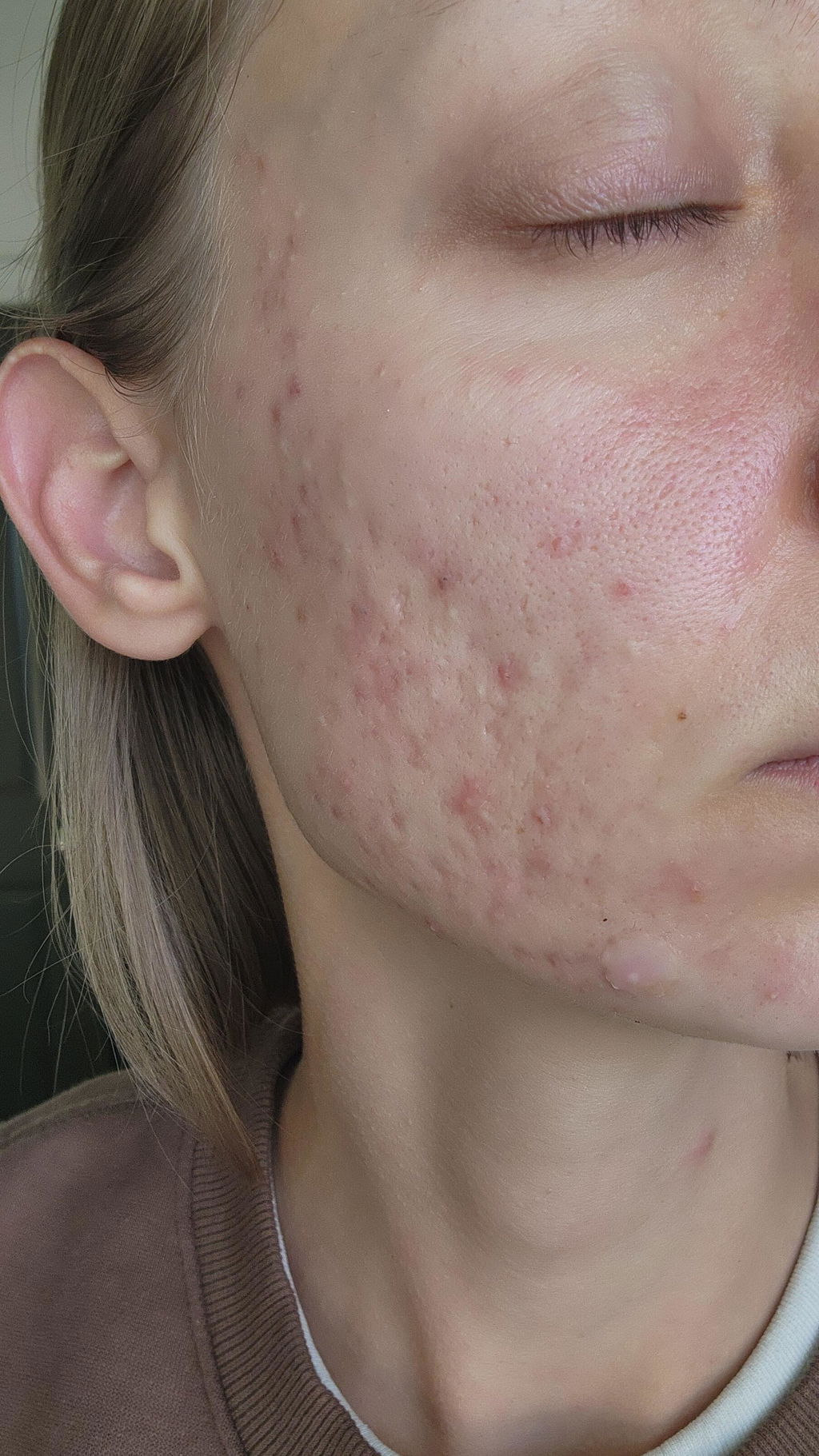
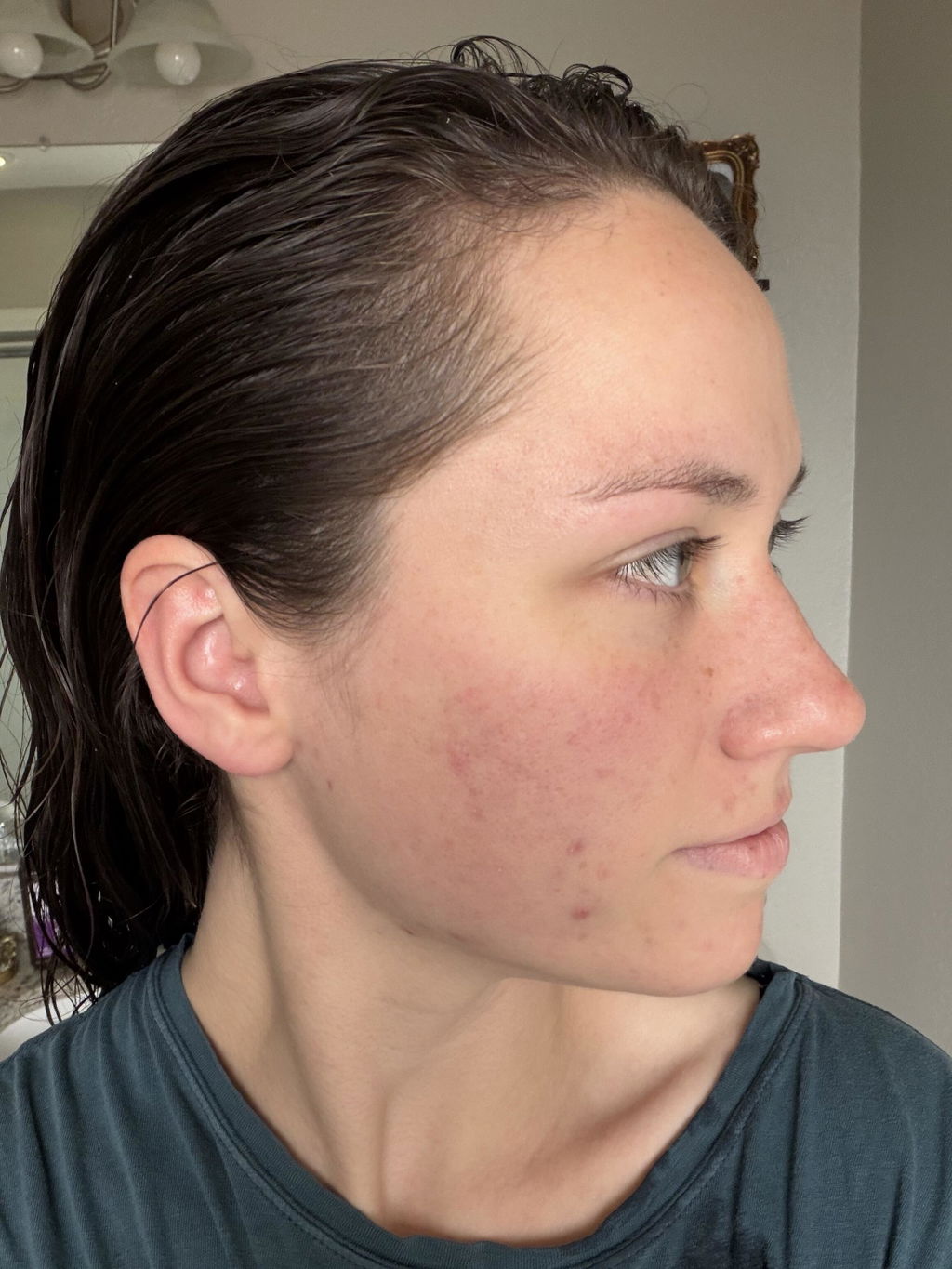
I watch this play out on skin. Clients who work night shifts, who travel across time zones, who finish dinner at ten and climb into bed at eleven: their microbiome is being asked to improvise. Postbiotic signalling drops. Barrier function wobbles. By the end of the week there is a new cluster of inflamed bumps along the jaw.
The melatonin your gut quietly makes at night
Melatonin is not just a brain hormone. Enterochromaffin cells in your gut mucosa synthesize melatonin from tryptophan through the serotonin pathway, using the same AANAT and HIOMT enzymes the pineal uses. This local gut melatonin binds MT1 and MT2 receptors on enterocytes, protects the mucosa, and modulates motility while you sleep.
Bubenik (2002) proposed that the gastrointestinal tract contains roughly four hundred times more melatonin than the pineal gland, and Konturek (2007) extended this to show MT1 and MT2 receptors expressed throughout the GI tract. Kennaway (2023) has pushed back hard on the 400x figure, arguing the number is an artifact of poorly validated immunoassays and that the real ratio is far smaller. I take that caution seriously. What is not disputed is that your gut makes melatonin, your microbes respond to it (Paulose 2016 showed a human gut commensal entrains its own circadian swarming to physiological melatonin concentrations), and the signal is tied to when you eat, not when the sun sets.
So the practical point is simpler than the controversy. Eating late and sleeping poorly scrambles two melatonin signals at once: the pineal one that times your sleep, and the enteric one that quiets your gut lining overnight. Your skin feels both.
When sleep slips, cortisol cracks the gut barrier
Sleep loss blunts the evening cortisol nadir, so cortisol stays elevated into the night. That sustained cortisol, acting through CRH and intestinal mast cells, loosens the tight junctions holding your gut lining shut. The result is more intestinal permeability, more systemic inflammation, more skin reactivity, and more breakouts within days.
Leproult and colleagues (1997) showed that partial and total sleep deprivation in healthy men raised evening cortisol by thirty-seven to forty-five percent the next day and delayed the quiescent nadir by at least an hour. Vgontzas (2004) found that a single week of six hours in bed produced increased daytime IL-6 secretion and HPA dysregulation. That extra cortisol does not stay abstract. Vanuytsel (2014) showed that in healthy humans, acute psychosocial stress and intravenous CRH both increased small-intestinal permeability, and a mast-cell stabilizer blocked the effect. Zheng (2013) reproduced the same loss of claudin-1, occludin, and ZO-1 in rats given chronic stress, with corticosterone replicating the damage and a glucocorticoid-receptor blocker preventing it.
Honest caveat here. Karl (2023) found that three nights of severe two-hour sleep restriction cut gut microbiota alpha-diversity by twenty-one percent but did not change intestinal permeability on sugar probe tests. So the "sleep loss causes leaky gut in forty-eight hours" story is softer than Instagram makes it. What the mechanistic literature does show, consistently, is that chronic stress plus chronic sleep loss plus late meals is the combination that opens the gate. One bad weekend is survivable. A pattern is not.
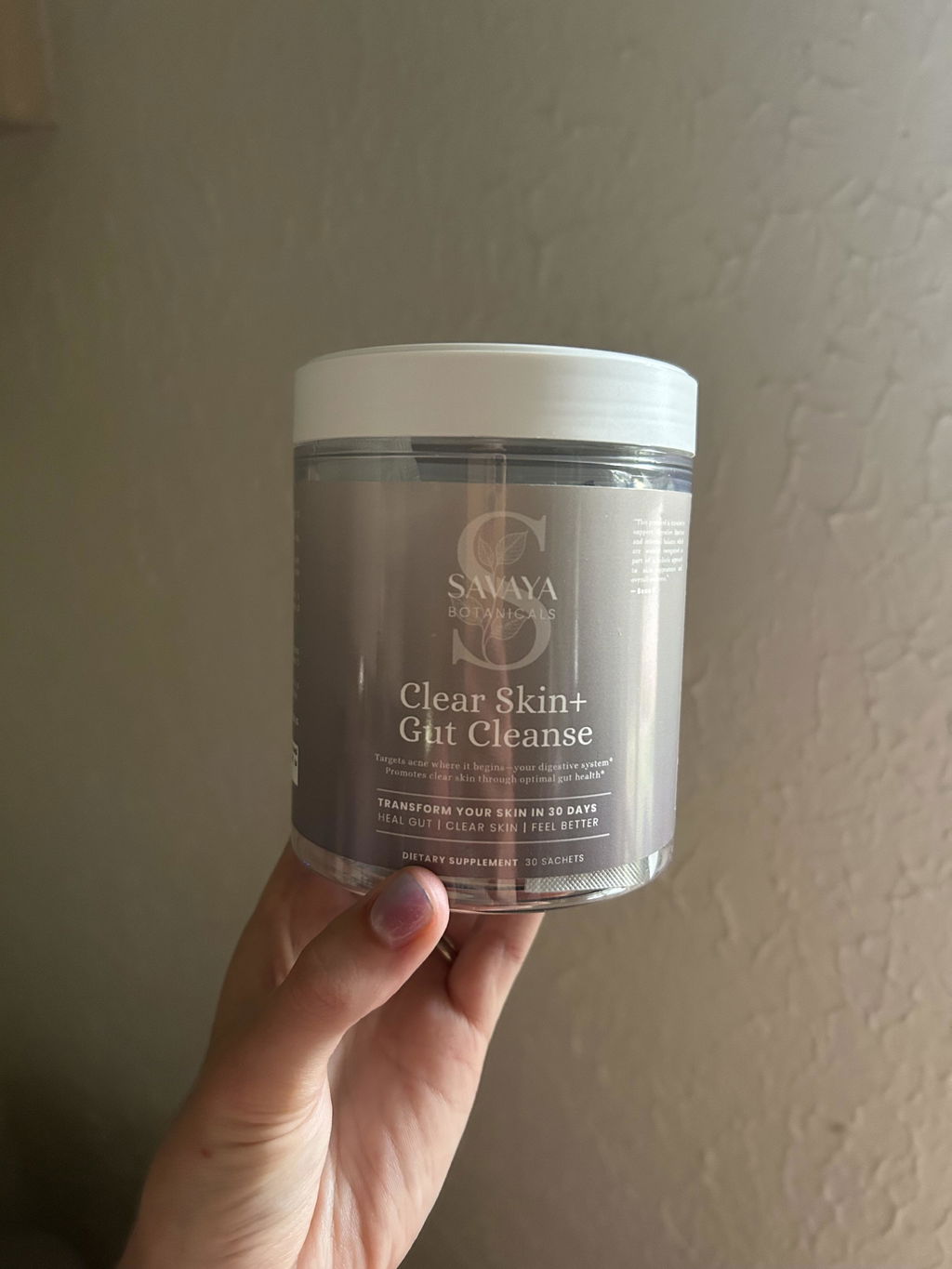
In my practice, this is where I point women toward a targeted gut cleanse or the deeper 12-week reset to close the barrier before chasing acne topically. If the lining is leaking LPS into circulation at midnight, no serum is going to catch up.
The brain-clearance window that calms inflamed skin
During deep sleep your brain's interstitial space expands roughly sixty percent, and cerebrospinal fluid flushes metabolic waste through a system called the glymphatic pathway. The same slow-wave hours that clear the brain also deepen the vagal tone that calms gut inflammation. Skip them, and inflamed skin inherits what was never cleared.
Iliff and colleagues (2012) first described this paravascular clearance pathway in Science Translational Medicine, showing that cerebrospinal fluid moves through periarterial spaces, mixes with interstitial fluid via AQP4 water channels on astrocytes, and sweeps out solutes including amyloid-beta. Mice without AQP4 cleared about fifty-five percent less. Xie (2013) then showed in live mice that natural sleep expands this interstitial space and markedly accelerates clearance versus wake.
Why does a brain-clearance system matter to acne? Because the vagus nerve, which is most active in parasympathetic-dominant deep sleep, is the main anti-inflammatory brake on the gut. Short sleep means short vagal tone, which means a louder inflammatory background. Louder background means sebocytes under more IGF-1 pressure and more inflammatory signalling at the follicle. The skin is just the loudspeaker.
Your skin does not break out at night. It records what your gut and your sleep failed to finish.
What sleep quality actually does to acne severity
In a 2019 study of forty adults, worse Pittsburgh Sleep Quality Index scores tracked with higher objectively graded acne severity, even after controlling for depression and dermatology quality of life. A 2022 cohort of nearly four thousand adults with inflammatory skin disease found 85.6% reported sleep disturbance. The link is clinical, not folklore.
The 2019 paper is Schrom and colleagues in Clocks and Sleep. Halioua (2022) reported that patients with disturbed sleep slept roughly forty minutes less per night, and their self-rated disease severity rose with worse PSQI scores. I will say honestly that not every study finds a signal. At least one cross-sectional study in a different population found no significant association. The weight of evidence points one direction, but the dermatology literature here is thinner than it should be.
What I see in practice tracks the signal. Women who stabilise sleep for four to six weeks, who also feed the microbiome with 92 trace minerals from the ocean and bioavailable collagen support, tend to see the deepest cystic activity along the jaw and chin quiet down first. Not because any one supplement is magic, but because the gut-skin axis is getting its nightly repair window back.
For women ready to do this systematically, the 12-week gut-to-skin program builds the sleep ritual into the protocol instead of hoping you add it on your own.
An evening routine that supports gut-led sleep
A gut-friendly night is less about melatonin pills and more about rhythm. Finish eating at least three hours before bed so your microbiota can complete their nightly shift. Dim screens an hour out. Feed the microbes earlier in the day with prebiotic fiber. Keep evening rituals short and nervous-system-focused rather than stimulating.
What I give clients, in order:
- Last meal three hours before lights out. Include tryptophan-rich foods at dinner (turkey, oats, pumpkin seeds) so gut enterochromaffin cells have the raw material for enteric melatonin.
- A steady amount of prebiotic fiber across the day, not stacked at night. Short-chain fatty acids from fermentation support the mucus layer that holds everything in.
- Four minutes of slow nasal breathing after dinner. Four-count in, six-count out. This recruits the vagus nerve, which quiets the gut mast cells cortisol was priming earlier.
- Warm shower, then a thin layer of a barrier-repairing tallow cream. Transepidermal water loss drops at night, and a saturated lipid layer helps the skin hold moisture through the glymphatic hours.
- Lights dim by ten. Phone face-down. If your mind is loud, write three lines on paper. Rumination is a cortisol trigger disguised as productivity.
- Same wake time every day, including weekends. The microbiome entrains to consistency more than to any supplement you can swallow.
If sleep has been broken for a long time, the gut lining is almost certainly inflamed too, and the two have to be worked on together. The microbiome reset gives you the lining back. The sleep ritual gives it the time to repair. Neither one works alone.
• • •
If you have been treating your face while the real conversation is happening between your pillow and your small intestine, start there. In my practice, closing the gut barrier and protecting the sleep window together outperforms almost anything women try topically before they arrive in my office. The skin follows the gut. The gut follows the night.
Frequently asked questions
What is the gut-skin axis in simple terms?
The gut-skin axis is the two-way signalling between your intestinal microbiome, your gut barrier, and your skin. When the gut lining is intact and the microbiota are diverse, inflammatory signalling to the skin stays low. When the barrier is permeable or the microbiome drifts into dysbiosis, inflammatory molecules reach circulation and show up as redness, oiliness, and breakouts.
Why does one bad night show on my skin two days later?
Sleep loss raises evening cortisol, which through CRH and intestinal mast cells loosens tight-junction proteins in the gut lining within hours. The resulting low-grade inflammation and shifted sebum signalling take about forty-eight to seventy-two hours to surface as a visible breakout, especially along the jaw and chin where hormonal and inflammatory acne tends to cluster.
How long before better sleep improves acne?
Most women I work with see the first changes in oiliness and redness within two to three weeks of consistent sleep, and deeper cystic activity along the jawline tends to quiet over six to twelve weeks. The gut lining itself takes four to eight weeks to rebuild its tight junctions, which is why sleep plus a gut protocol usually outperforms either one alone.
Can I fix my skin without fixing my sleep?
You can lower surface inflammation with topicals, but if cortisol is cracking the gut barrier every night, you will keep refilling the inflammatory bucket faster than any serum can empty it. In my practice, sleep is the leverage point women skip the longest and regret the most. It is almost always worth addressing first.
Is it safe to use melatonin supplements for skin?
Melatonin supplements can help some women reset a disrupted rhythm short term, but they do not replace the gut-derived melatonin your enterochromaffin cells make in response to meals. For most women, eating earlier, dimming light, and stabilising the wake time does more than a pill. If you do experiment with melatonin, lower doses tend to work better than larger ones.