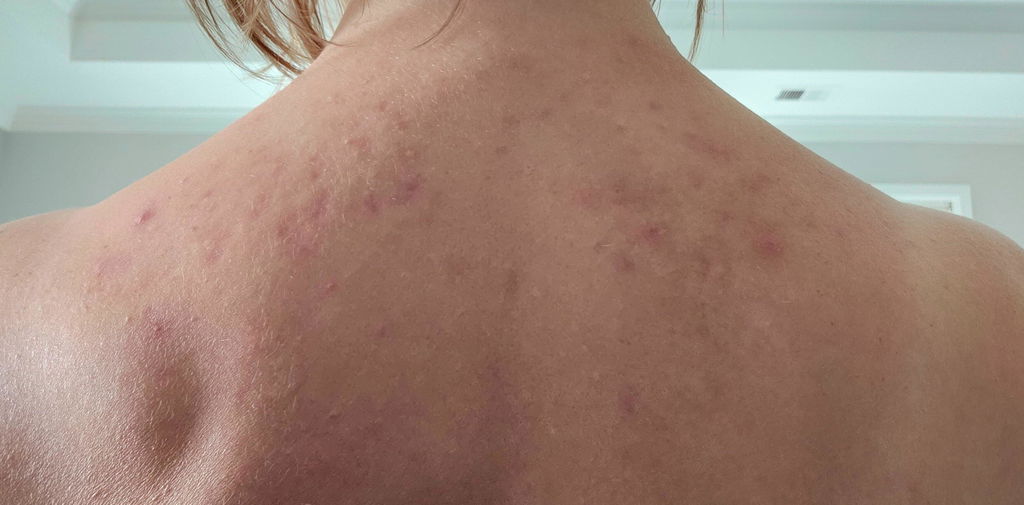
I need to tell you something I'm not supposed to tell you.
For fifteen years I stood behind a treatment-room door in Austin and told women who trusted me, women who paid me $180 an hour, to layer a retinol, a vitamin C serum, a hyaluronic acid, a peptide cream, an eye cream, an SPF, and sometimes a sixth "barrier repair" product that cost $94 for one ounce.
I sold them the routine. I sold them the brands. I got a discount from the distributor.
And every third client, I'd watch them come back a month later with skin that was worse. Tighter, redder, flakier, more reactive than when they started. Then I'd upsell them into a seventh product to "calm the barrier I helped break."
I'm 47 years old. I quit the industry two years ago. I want to tell you what finally made me stop.
The night I counted eleven bottles
It was around 3 a.m. on a Tuesday in late October 2023. I was standing in my own bathroom, staring at my own vanity, and I counted the products I was personally using on my own face.
Eleven.
Cleanser. Toner. Vitamin C. Hyaluronic acid. Retinol (two, actually. One for the face, a gentler one for the eyes). Niacinamide. Peptide serum. "Barrier cream." Night cream. Facial oil. SPF.

Total cost on that counter: $642 a year, just for my own routine. And I was still waking up with tight, thirsty, patchy skin. At 3 a.m., in my own bathroom, touching a flaky cheekbone.
Fifteen years of professional training, a treatment room full of Dermalogica and SkinMedica, and my own face looked worse than it did when I was 35 and only used a bar of Dove.
So I did what I never let myself do when I was still recommending these products. I turned one of them over and read the actual back label.

My "luxury" $80 night cream, the one my distributor called a "hero product," was 92% water, glycerin, and dimethicone, which is a silicone sealant. Then: phenoxyethanol. Polyethylene glycol. Fragrance. Methylparaben. Ethylhexyl methoxycinnamate. Sodium lauryl sulfate. Propylene glycol. Butylated hydroxytoluene.
None of that is food for your skin. None of it exists in nature. None of it matches the molecular structure of what your own skin produces.
I'd been selling women a jar of water, slippery silicone, and eleven chemicals her body doesn't recognize, and charging her for the privilege of her skin rejecting it.
The bioidentical gap
Here's the part no one in my industry wanted to talk about.
Your skin's outer layer, the part that holds moisture in and irritants out, is made of something called sebum. Sebum is approximately 60% saturated fat, structured in a very specific lipid profile your body produces on purpose. Your skin recognizes this structure because it is this structure.
There is exactly one substance on Earth that matches human sebum's lipid profile almost 1:1: the rendered suet fat of a grass-fed, grass-finished cow.
The scientific term for this is "bioidentical." Your skin cannot tell the difference between its own sebum and properly rendered grass-fed tallow. It absorbs it, integrates it, and uses it the way it would use fat your own body produced.
Women did this for 4,000 years. My grandmother did this. Every farm woman in 1850 did this. We stopped somewhere around 1955, when the seed oil industry got a marketing budget and the drugstore aisle was born.
I call the moment you notice this "the bioidentical gap." The distance between what your skin is asking for and what the $80 night cream is giving it.
Every single one of my problem clients, when I mapped it out later, was living inside that gap.
The farmers market jar
A client named Maggie worked at a regenerative cattle ranch outside Fredericksburg. During a consultation in spring of 2024 she pulled a small amber jar out of her bag and said, "My grandma made this. Try it for a week. If I'm wrong I'll buy you lunch."

Seven nights. One ingredient (well, five, but you'll see). No toner. No serum. No retinol. No peptide. No SPF even, because it was nighttime.
The morning after night seven, I looked in the mirror and cried a little. Not because the skin was dramatically different. Because it was calm. For the first morning in maybe a decade, my face wasn't tight. It wasn't hot. It wasn't asking me for something.
I called Maggie and said "what exactly is in this jar."
Five ingredients. That's it.

Every ingredient in the jar Maggie gave me, and every ingredient in the version I recommend to clients now, Pure Tallow+ Deep Healing, is certified organic. The tallow is grass-fed and grass-finished (the two are not the same. "Grass-fed" only means they started on grass. "Grass-finished" means they were never feedlot-fattened on corn).
1. Organic grass-fed & finished beef tallow. The bioidentical base. 60% saturated fat, matched to your skin's sebum profile. Carries fat-soluble vitamins A, D, E, and K into the layer your skin actually uses them in.
2. Organic extra virgin olive oil. Cold-pressed. Adds squalene (another molecule your body already makes) and balances the ratio so tallow isn't heavy on thinner skin.
3. Organic jojoba seed oil. Technically a wax ester, not an oil. Wax esters are the second-largest component of human sebum after triglycerides. So jojoba behaves more like your skin than any other plant-based ingredient I've worked with.
4. Fir needle essential oil. Trace amount. Anti-microbial without the burn of tea tree. Smells like walking through a forest after rain.
5. Organic lavender essential oil. Trace amount. Calms reactive skin at night. Helps you sleep.
That's the whole jar.
No water. No silicone. No parabens. No polyethylene glycol. No fragrance "parfum" mystery compound. No dimethicone sealant. No stabilizers. No phenoxyethanol. No sodium lauryl sulfate.
The first time a client asks me "where are all the other ingredients?" I tell her: your skin doesn't want them. It never did.
What 30 days looks like

I've now watched about 60 clients and friends do this swap. It's consistent enough that I tell people what to expect by week.
Days 1 to 3. The skin feels different. Fuller, quieter. Most women say "oh, I think my face is actually relaxed." If you've had a sensitized barrier for years, this alone is disorienting.
Days 4 to 10. The redness softens. If you have rosacea-type flushing around the nose and cheekbones, this is usually when it starts to lift. Not gone. Lifted.
Days 11 to 20. Flakiness and dehydration lines go. The tiny creases under your eyes that you thought were fine lines but were actually just chronic dehydration. Those disappear. (This is the part that surprises women the most.)
Days 21 to 30. The skin looks lit from underneath, not from on top. This is the difference between a glow that comes from a highlighter and a glow that comes from a barrier that's finally hydrated. You'll know when you see it in the mirror. I did.
Three women I want you to hear from
"I had been using a prescription retinoid for eleven years. Eleven. My dermatologist was good, I'm not mad at her, but my skin was paper-thin, reactive to every single thing, and I was spending about $50 a month just on the moisturizer I needed to cancel out what the retinoid was doing. Three weeks on Pure Tallow+ and my face stopped hurting. I don't know how else to say it. It stopped hurting."
"I'm perimenopausal. The 'sudden acne + sudden dryness at the same time' thing that happens at this age. No cream had solved that. My face was either oily or flaking and sometimes both in the same hour. I'm on day 34 of tallow and my skin looks like it did at 30. I cried in my car at a stoplight about it last Thursday."
"I had the full 9-step Korean routine. I was the person who ordered the third bottle before the second one ran out. I switched everything. EVERYTHING. For the one jar. My skin is better than when I was doing 9 steps. My husband noticed on day 12 and he has never once noticed a skincare product."

The seven questions I get asked most
"Won't it clog my pores? It's animal fat."
Comedogenicity is about molecular size, not source. Rendered grass-fed tallow has a comedogenic rating of 2 on a 0 to 5 scale. That's the same as shea butter, lower than coconut oil, and significantly lower than the mineral oil inside most drugstore night creams. Your skin was built to absorb this lipid profile. The products marketed as "non-comedogenic" often contain silicones that actually trap what's underneath them.
"Will it smell like beef?"
No. Properly rendered tallow has essentially no scent. The fir needle and lavender (trace amounts) are what you'll notice. A quiet forest smell at night. Nothing like a candle aisle.
"Is this safe during pregnancy?"
Yes. There's nothing in this jar that you wouldn't put on a baby. Many of my clients who were pregnant or nursing were the first to switch because they could finally pronounce every ingredient on the label.
"What about SPF?"
Tallow is not an SPF and does not replace one during the day. Use a clean mineral SPF (zinc oxide) in the morning on top. At night, Pure Tallow+ is the entire routine.
"I have oily skin. Won't an oil-based product make me oilier?"
This is the most counterintuitive part, so stay with me. "Oily" skin is often dehydrated skin overproducing sebum to compensate for a broken barrier. When you give the skin bioidentical lipids, it stops panic-producing its own. Most oily-skin clients report less shine by day 14, not more.
"Can I still use my retinol?"
You can. But based on 60 women I've watched do this, most of them quit the retinol within three weeks because they didn't need it anymore. That's not medical advice. That's what happens.
"How long does one jar last?"
One 2 oz jar is a 30-day supply if you use it as your full nighttime moisturizer. A pea-sized amount warmed between your fingertips and pressed into a clean damp face is all you need. Most women use less than they think.
Why I'm telling you this now

I'm not in the skincare business anymore. I don't get a distributor kickback. I don't have a treatment room to fill.
I'm telling you this because I spent fifteen years inside a system that profits from keeping your skin just broken enough to need the next product. And the night I counted eleven bottles on my own vanity was the night I realized: the system was working exactly as designed. Not on my clients. On me.
The single jar of Pure Tallow+ Deep Healing replaced every one of those bottles in my own routine. That's not marketing language. That is, literally, what happened.
60-day money-back guarantee
If your skin is not visibly calmer, less reactive, and more hydrated within 30 days, send the jar back (empty is fine) and get a full refund. No questions. I asked Savaya for a 60-day window specifically because I know, from my treatment room, that the barrier takes about a full skin cycle to reset.
Get Pure Tallow+ Deep Healing