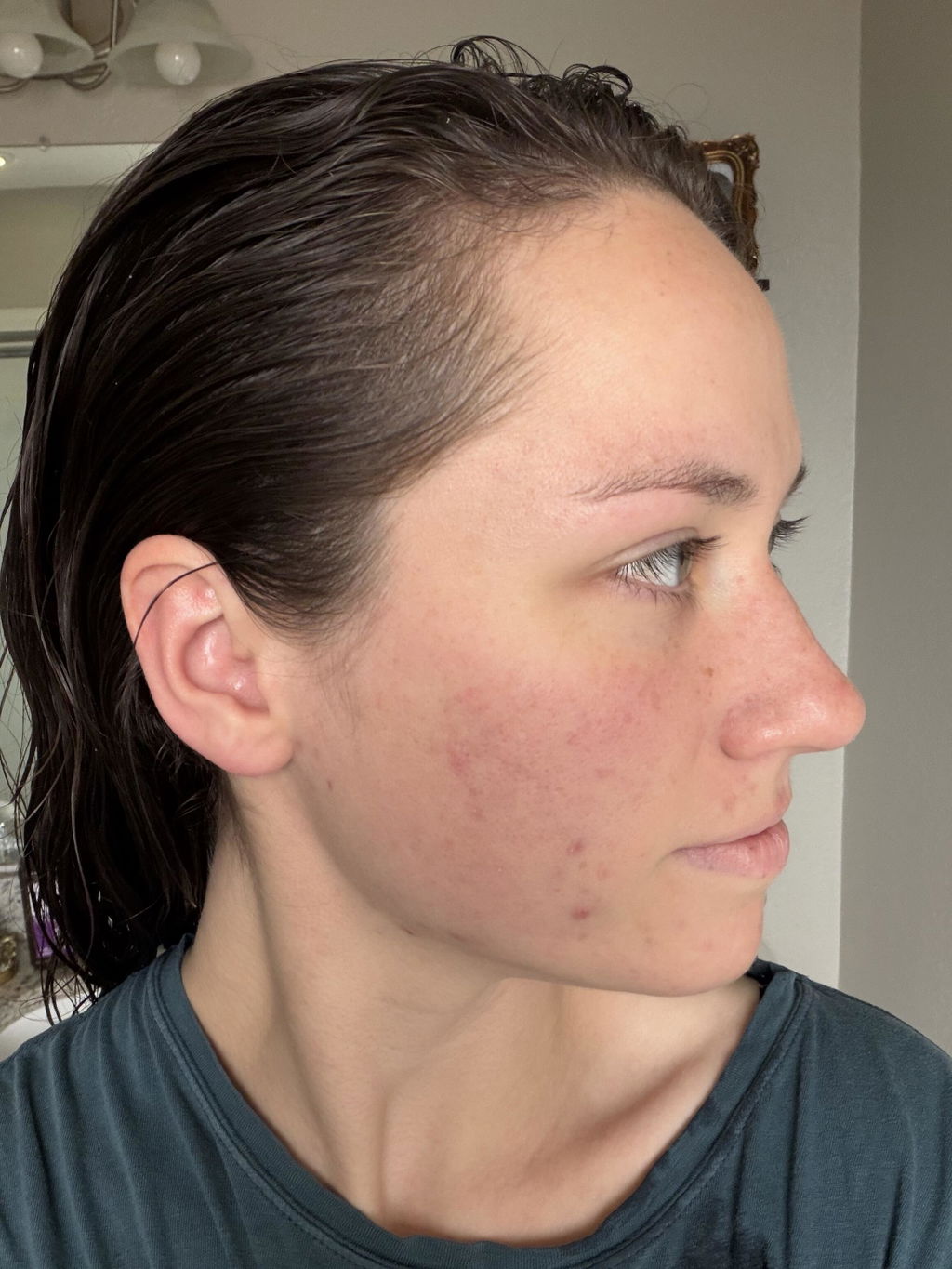
Your skin is not the problem. It is a screen. Every flare, every dull morning, every new sensitivity is a message from further inside. In my practice, women come in with pristine routines and cabinets full of serums, and their skin still refuses to settle. Nine times out of ten, the missing conversation is happening in the gut.
The gut-skin axis, in plain language
The gut-skin axis is the two-way conversation between your intestinal microbiome and the largest organ on your body. When the gut barrier is intact and the microbes are balanced, the skin receives fewer inflammatory signals and more of the nutrients it needs to renew. When it is not, your face pays the price first.
Researchers have been mapping this for years. Bowe and Logan's 2011 paper in Gut Pathogens laid it out cleanly. The same intestinal inflammation that flares digestion also flares the skin. Salem and colleagues pulled the mechanisms together again in 2018 in Frontiers in Microbiology. Different labs, different patient groups, same conclusion. Dysbiosis in the gut shows up on the face.
I am going to walk you through the seven patterns I see most often. If more than two of them sound like you, the fix probably is not another cream.
Warning sign 1: Chronic acne that ignores every topical (dysbiosis and sebocytes)
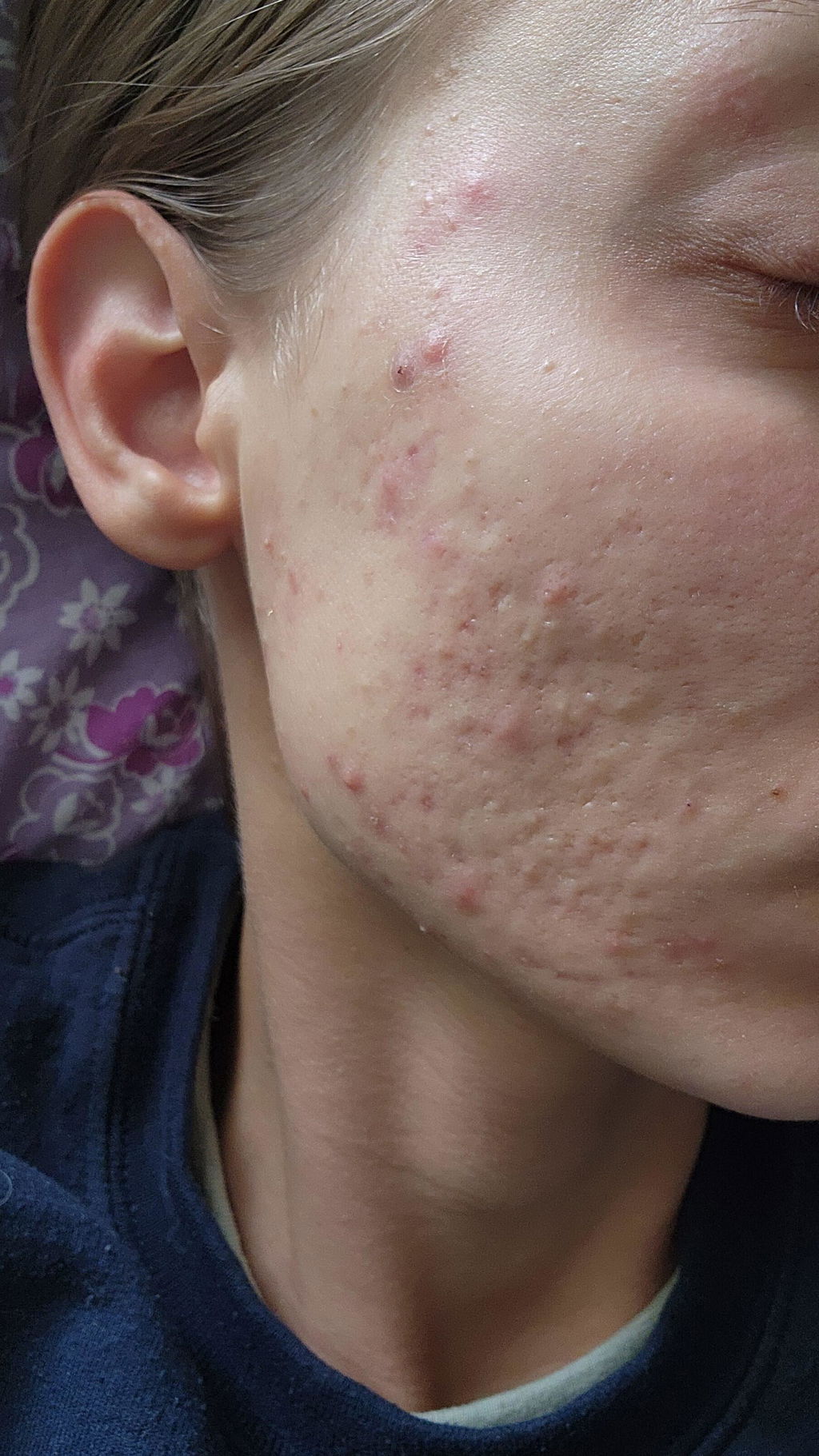
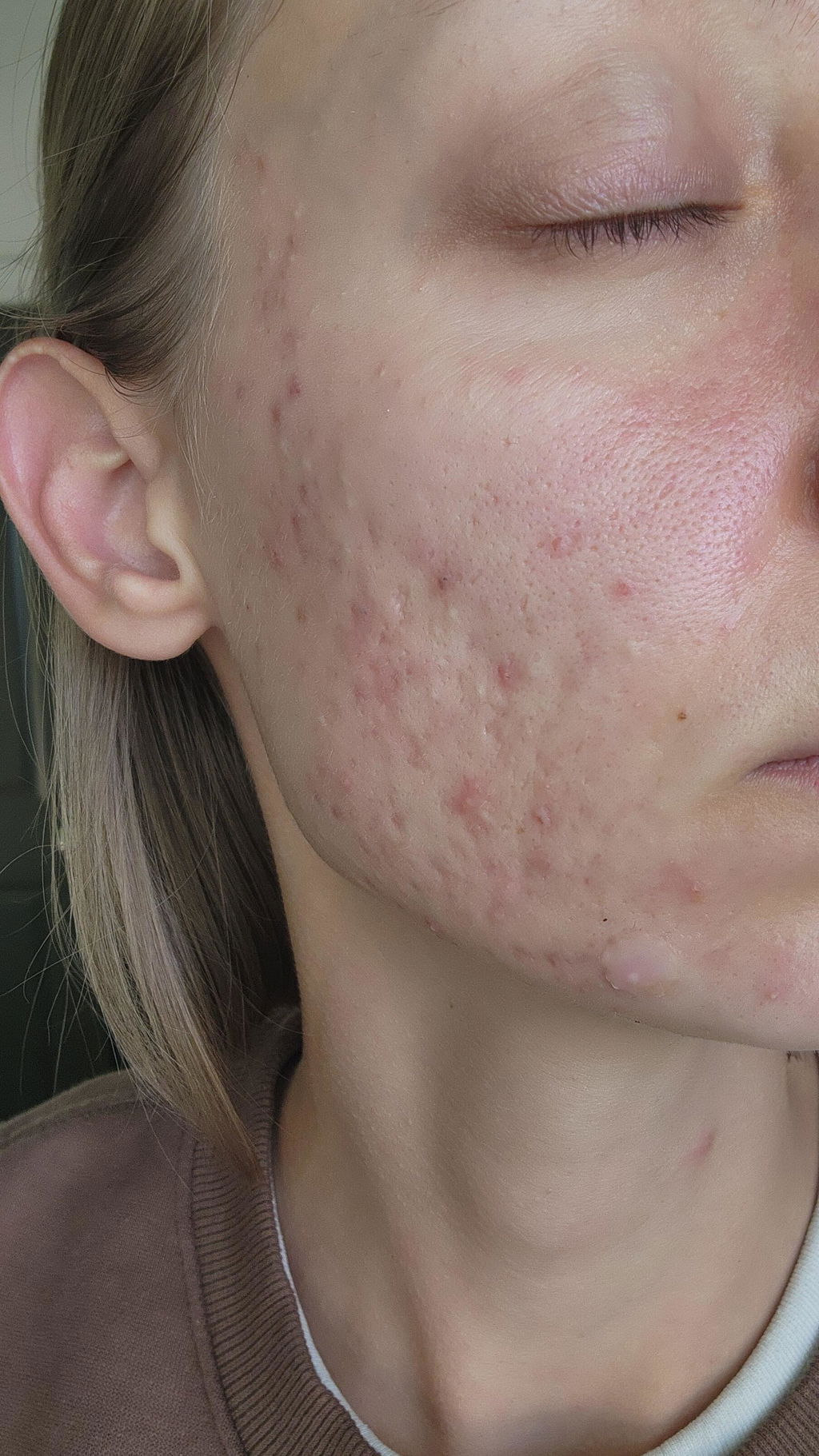
Acne that will not respond to topicals is often not a surface problem. It is inflammation from a disrupted microbiome traveling up to the sebaceous glands, where it drives excess sebum, clogged pores, and cystic flares that stay under the skin no matter what serum you layer on top.
Here is the mechanism in the shortest form I can give you. When the gut is in dysbiosis, the wrong bacteria dominate and the intestinal lining loosens. Endotoxins slip into circulation. The immune system responds systemically. Sebocytes, the oil-producing cells in your pores, are extremely sensitive to that circulating inflammation and to insulin-like growth factor. They pump out more sebum, thicker sebum, and the pore environment shifts in favor of acne bacteria.
The 2014 Bowe, Patel and Logan review in Beneficial Microbes made this a translational medicine question, not a fringe one. If your acne shows up along the jaw and lower cheeks, tends to be cystic, and gets worse with dairy or refined sugar, this is very likely your pattern.
What actually helps: address the gut environment first. This is where a targeted gut cleanse or the 12-week gut-to-skin program does the heavy lifting that no topical can reach.
Warning sign 2: Eczema that flares after meals (histamine and the gut barrier)
Eczema that flares within an hour or two of eating is one of the most reliable signals of a compromised gut barrier. Food particles and histamine cross an intestinal lining that has become too permeable, the immune system reads them as threats, and the reaction shows up as itchy patches, red creases, and flushing.
The connection between gut microbes and atopic skin was mapped in Penders and colleagues' KOALA Birth Cohort Study, published in Gut in 2007. Infants with disrupted early microbiota were significantly more likely to develop atopic eczema. That same fundamental pattern, dysbiosis and a leaky gut lining, continues into adulthood.
What I look for in practice: flares after tomatoes, aged cheese, wine, leftovers, or fermented foods. Those are histamine-rich, and a struggling gut cannot break histamine down fast enough. The result lives on your skin.
What actually helps: quiet the histamine load while you rebuild. Cooling the gut with a full detox protocol and shifting the diet toward fresh, low-histamine foods usually settles the pattern within a few cycles.
Warning sign 3: Rosacea that spikes under stress (HPA axis and SIBO)
Rosacea that gets worse under stress is a gut story dressed up as a nervous system story. Stress activates the HPA axis, cortisol rises, gut motility slows, bacteria overgrow in the small intestine, and inflammatory signals then reach the tiny facial vessels that give rosacea its familiar heat and flushing.
This is not speculation. Parodi and colleagues published a striking paper in Clinical Gastroenterology and Hepatology in 2008. Roughly 46 percent of the rosacea patients they screened had small intestinal bacterial overgrowth. When SIBO was eradicated, most of them saw dramatic skin improvement. Same face. Different gut. Different skin.
Kelly and colleagues in Frontiers in Cellular Neuroscience, 2015, traced how chronic stress raises cortisol, loosens the gut barrier, and lets more inflammation into circulation. If your rosacea flares before a hard week, on the third day of poor sleep, or during travel, this axis is almost certainly part of your pattern.
What actually helps: calm the vagus nerve, feed the beneficial microbes, and reset the small intestine. This microbiome reset combined with slow breath work and simple daily rhythms is where I start.
Warning sign 4: Dull, tired skin despite a perfect routine (microbiome and absorption)
Dull skin that does not respond to good skincare usually points at absorption, not application. A disrupted microbiome interferes with how you extract minerals, fatty acids, and B vitamins from the food you already eat. Without those raw materials, the skin cannot build fresh cells fast enough to look bright.
Vaughn and colleagues published a helpful review of the skin-gut axis in the World Journal of Dermatology in 2017. Their summary is worth remembering. Dysbiosis reduces the production of short-chain fatty acids like butyrate, and those short-chain fatty acids are what quiet systemic inflammation and support a resilient skin barrier. Less butyrate, duller skin. It is that direct.
What I see most often in this pattern: sallow tone by 3 pm, uneven texture across the cheek, and skincare that seems to sit on top of the face instead of sinking in. The face is not the site of the shortage. The gut is.
What actually helps: mineral density and gentle barrier support. Many women find that 92 trace minerals from the ocean, layered under a barrier-repairing tallow cream, shifts brightness within a few weeks.
Warning sign 5: Dark circles that will not lift (chronic inflammation and lymph)
Dark circles that refuse to lift after sleep, water, or eye cream are usually not a sleep problem. They are a low-grade inflammation problem. When the gut is chronically irritated, systemic inflammation sits under the eyes, where the skin is thinnest and the vessels show through most clearly.
The mechanism I explain most in clinic: dysbiosis raises circulating inflammatory markers, and the periorbital area, with its thin skin and rich vascular network, is the first place that colour shows up. Poor lymphatic drainage, common in a body that is quietly inflamed, keeps the darkness locked in.
You can spot this pattern by a few clues. The circles are worse in the morning. They soften slightly after a walk or a hot shower. They deepen after a heavy meal or a poor night. That is your gut writing on your face.
What actually helps: reduce the daily inflammatory load, support lymph, and give the body real minerals. Bioavailable collagen support alongside daily minerals is a pairing many women in my practice come back to.
Warning sign 6: Slow wound healing (short-chain fatty acids and collagen)
Skin that takes forever to heal from a small spot, a scratch, or a shaving nick is telling you something specific. The raw materials for repair are not reaching the tissue in the quantities they should. More often than not, the pathway is the gut.
Wound repair depends on collagen synthesis, and collagen synthesis depends on amino acids, zinc, vitamin C, and calm inflammation. All four are downstream of a healthy gut. Short-chain fatty acids, made by the good microbes when they ferment prebiotic fiber, are the postbiotic messengers that keep inflammation low and repair humming. When dysbiosis reduces those postbiotics, healing drags.
The Salem 2018 review in Frontiers in Microbiology walks through exactly this loop, and it matches what I see in the clinic. Marks from breakouts that stay for months. Post-inflammatory pigmentation that refuses to fade. Old scars that never quite lay flat.
Your skin is not slow. It is under-supplied. The gut controls the pantry.
What actually helps: restore mineral density, rebuild the gut environment, and feed the microbes with real fiber. Mineral-rich sea moss is a useful daily anchor while the deeper gut work does its longer job.
Warning sign 7: Sensitivity to every new product (leaky gut and skin barrier)
Skin that reacts to almost every new product, tingling, stinging, or turning red after one application, is not overly delicate by nature. It is under-protected. When the gut barrier is compromised, the skin barrier follows. The two share the same immune conversation, and both go on alert together.
Here is the shortest mechanism I can give you. A permeable intestinal lining raises the systemic inflammatory tone. The skin, which is downstream of that same immune system, becomes more reactive. Its ceramide layer thins. Its microbiome tips out of balance. Suddenly a mild product feels like an assault.
I see this most in women who have layered a lot of active ingredients over a long time. Retinols, acids, brightening serums. Each one reasonable. All of them together on a compromised barrier is where the trouble begins.
What actually helps: pull back the actives, calm both barriers, and rebuild slowly. The gut work does its part from the inside while the face recovers under gentler care.
• • •
If more than two of these patterns feel familiar, the next step is not a new serum, it is a real conversation between your gut and your skin, supported gently over a full cycle. Many women find that a deeper 12-week reset gives that conversation the time it needs.
Frequently asked questions about the gut-skin axis
What are the signs your gut is affecting your skin?
The most common signs I see in practice are acne that will not clear with topicals, eczema flares after meals, rosacea that spikes with stress, dull skin that does not brighten with good skincare, dark circles that stay through sleep, slow wound healing, and sensitivity to almost every new product. When two or more of these show up together, the gut is usually part of the story.
How long does it take for skin to clear after fixing the gut?
The intestinal lining renews on roughly a 4 to 12 week cycle, and the skin cycle sits at about 28 days. In practice, most women I work with begin noticing small changes within 3 to 4 weeks and meaningful shifts closer to the 12 week mark. Chronic patterns and deeper inflammation take longer and reward patience over quick fixes.
Can leaky gut cause acne and eczema?
A more permeable intestinal lining lets endotoxins and food particles reach circulation more easily, which raises systemic inflammation. That inflammation shows up on the skin, often as acne along the jawline and cheeks or as eczema that flares after certain foods. It is one of the most consistent patterns in the gut-skin axis literature and one of the first things I look for.
Is the gut-skin axis real?
Yes. It has been studied for well over a decade, from Bowe and Logan's foundational 2011 paper in Gut Pathogens through Salem and colleagues' 2018 review in Frontiers in Microbiology, and Parodi's 2008 SIBO and rosacea study in Clinical Gastroenterology and Hepatology. Different labs, different patient groups, same central conclusion. The gut and the skin are on the same immune circuit.
What foods heal the gut for better skin?
Whole, unprocessed foods with real prebiotic fiber, such as cooked and cooled potatoes, oats, garlic, onions, leeks, and asparagus, feed the good microbes that produce postbiotic short-chain fatty acids. Add gentle proteins, wild fish, olive oil, and plenty of fresh vegetables. Reduce refined sugar, industrial seed oils, and alcohol. Add mineral density where you can. The gut rewards consistency more than intensity.