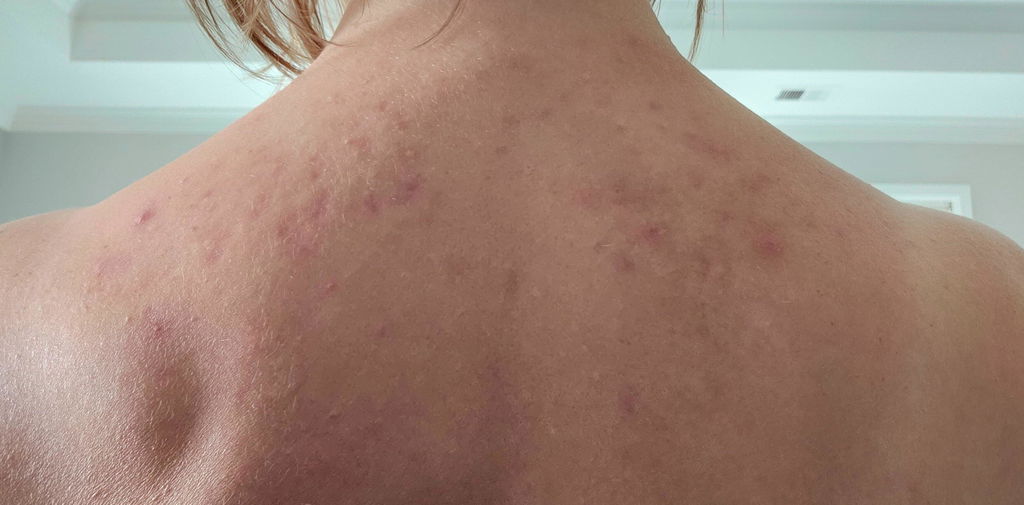
You cut out chocolate. You switched pillowcases. You spent a small fortune on serums. And still, the same jawline breakouts show up, on the same cycle, like clockwork. Here is the piece almost no dermatologist mentions in a ten minute visit. Dairy is very likely feeding those breakouts through three separate biological pathways, and the research linking them is now over two decades deep.
Why dairy keeps showing up on your skin
Dairy triggers acne through three overlapping mechanisms. A spike in insulin-like growth factor 1 (IGF-1) that fuels oil gland activity. A peptide called BCM-7 released from A1 casein that inflames the gut. And cow hormones that arrive intact in every glass, organic or not. Together, they nudge your skin toward the exact conditions acne loves.
In my practice, women arrive convinced they have "hormonal acne" as if it fell from the sky. What they usually have is diet-driven hormonal disruption. And dairy is often the loudest voice in that conversation.
The question is not whether dairy affects skin. The research settled that years ago. The question is why nobody told you sooner.
The IGF-1 problem, explained without a lab coat
IGF-1 is a hormone your liver releases in response to milk protein. It flips on mTORC1, a cellular growth switch, which tells sebocytes (the oil-producing cells in your skin) to multiply and pump out more sebum. IGF-1 also raises your skin's sensitivity to androgens, the hormones that widen pores and thicken oil.
More oil. Thicker oil. A pore lining that clogs faster. That is the acne recipe in three sentences.
Dermatology researcher Bodo Melnik has written extensively on this pathway, arguing that milk essentially acts as a hormonal signal from cow to human, promoting rapid growth in exactly the way a calf needs but a teenager does not. Cows are literally producing milk to double a calf's body weight in weeks. That growth signal does not evaporate when the milk lands in your latte.
Here is the twist most people miss. Skim milk raises IGF-1 more than whole milk. The fat, oddly, seems to buffer the insulin response. Which is why the Harvard studies I will get to in a moment found skim milk to be the worst offender. Not the full-fat version most people assume is the problem. A 2012 Korean study by Kwon and colleagues on low-glycemic diet and acne pointed in the same direction: insulin signaling matters more than fat content.
A1 versus A2 casein, and the BCM-7 story
Casein is the main protein in cow milk. It comes in two variants, called A1 and A2, which differ by a single amino acid. That one tiny difference has enormous downstream consequences. When your digestive enzymes break down A1 casein, they release a peptide called beta-casomorphin-7, or BCM-7, which behaves like a mild opioid inside the gut.
Researchers Bob Elliott and Keith Woodford spent years documenting how BCM-7 slows gut motility, elevates inflammatory markers, and appears to worsen a range of conditions including skin flare-ups. A2 casein does not produce BCM-7 during digestion. It behaves like a completely different protein.
Modern Holstein dairy herds are largely A1 dominant. Older heritage breeds, along with sheep, goats, and water buffalo, are naturally A2 dominant. Human breast milk is A2. So is the milk of every mammal outside of certain northern European cattle lines that mutated relatively recently in evolutionary terms.
Which means the milk in most cartons on your grocery shelf is producing a peptide our ancestors were never regularly exposed to. Your gut lining knows it. Your skin often does too.
The whey protein file
Ask any dermatologist who works with young men what the most common preventable trigger of adult male acne is, and you often hear the same answer. Whey protein. Whey is the dominant insulin-spiking milk protein, concentrated into a form that drives IGF-1, activates mTORC1, and lights up jawline and back breakouts in otherwise healthy young men.
Whey is dairy's most concentrated insulin spiker. It is nearly pure milk protein stripped of everything else, chugged in the exact quantities designed to drive up IGF-1. A widely cited Silverberg case series described young men whose whey-linked acne resolved within weeks of discontinuation. In 2017, a Norwegian study by Ulvestad and colleagues in young adults documented the same pattern in a larger group. Add whey. Get acne. Remove whey. Skin calms down.
If you are breaking out on the jaw, back, and shoulders, and you happen to drink protein shakes, you already know what to try first.
What Harvard actually found
The Nurses' Health Study is one of the largest, longest running datasets in nutrition research. Clarence Adebamowo and colleagues used this cohort to publish three landmark papers linking dairy intake to acne, across women, teenage girls, and adolescent boys. The signal was consistent, and one detail surprised almost everyone in dermatology.
In 2005, in the Journal of the American Academy of Dermatology, they analyzed retrospective data from roughly 47,000 women and found a clear association between adolescent milk intake and severe teenage acne. In 2006, they published a prospective analysis of about 6,000 teenage girls in Dermatology Online Journal, again showing higher acne rates with higher milk intake. In 2008, they published a similar analysis in adolescent boys.
Across all three studies, one finding stood out. Skim milk was more strongly associated with acne than whole milk. That result confused everyone at first, because we had been taught that fat was the problem. Once the IGF-1 and hormone story came together, it made perfect sense. Strip the fat, and the sugars and proteins hit your bloodstream faster and harder.
Additional case-control studies, including Ismail and colleagues in Malaysia in 2012 and Kaymak and colleagues in Turkey in 2007, replicated the association across different populations. This is not one weird study. It is a growing shelf of them.
Yes, organic dairy has hormones too
Here is a truth the organic dairy aisle does not advertise. A cow producing milk is a pregnant cow. That milk is naturally loaded with her hormones: estrogens, progesterone, prolactin, growth hormones. Organic certification means no added synthetic hormones. It does not, and cannot, remove the ones the cow's body makes on her own.
So the "clean" glass of organic whole milk you drink at breakfast still carries bovine estrogens designed to grow a calf. Your endocrine system processes them the same way it processes the milk from a conventional dairy. Organic is a better animal welfare choice. It is not a hormone-free choice. There is no such thing.
Which is why women in perimenopause, teens on the cusp of puberty, or anyone with a sensitive endocrine system, may notice dairy hitting harder than other foods. You are drinking a hormone cocktail on top of your own hormones. Cortisol swings and HPA axis stress amplify the effect.
Why some people drink milk and never break out
You know the one. That friend who eats cheese every day and has glass skin. Two mechanisms usually explain it. Lactase persistence, a genetic variant that lets adults digest lactose, and a resilient gut microbiome that neutralizes the inflammatory fragments dairy leaves behind. Neither is a moral judgment on you. It is biology.
First, lactase persistence. The LCT gene variant that lets adults digest lactose is relatively new in human history. Only about 35 percent of adults worldwide carry it. Most of the world stops producing lactase after weaning, which is the biologically normal setting. Persistence is the exception, not the rule. And if you carry the variant, you can process lactose, but you are still exposed to casein, BCM-7, IGF-1 signaling, and hormones. Lactase persistence protects your stomach, not your skin.
Second, the gut microbiome. Some people carry a robust community of Bifidobacterium and other beneficial bacteria that help break down A1 casein and buffer the inflammatory response. Others live with dysbiosis, lower microbial diversity, or a compromised gut barrier. When the barrier is leaky, larger casein fragments and BCM-7 cross into circulation, activate zonulin (the protein that regulates tight junctions between gut cells), and drive systemic inflammation that shows up on the face. Short-chain fatty acids drop. Sebum quality worsens.
This is the gut-skin axis in action. Same food, different guts, different faces.
Your skin is not overreacting. It is telling you what your gut cannot say out loud.
If your microbiome is out of balance, no topical will fix that. This is where a targeted gut cleanse and consistent prebiotic and postbiotic support can shift the terrain your skin is growing in. When Bifidobacterium recovers and short-chain fatty acids rise, the gut barrier tightens. Systemic inflammation drops. Sebum quality often changes within a cycle. For a longer arc, some readers work through the deeper 12-week reset alongside dietary changes.
Dairy alternatives that actually support your gut
Cutting dairy is only half the equation. What you replace it with matters just as much. A gut-supportive alternative is fermented when possible, minimally processed, free of carrageenan and seed oils, and ideally A2 dominant if it comes from an animal. Some plant milks are ultra-processed and loaded with ingredients that make skin worse, not better.
What to reach for:
- Coconut yogurt with live cultures. Fermented, dairy-free, and often carrying Lactobacillus and Bifidobacterium strains that feed the microbiome you are trying to rebuild.
- Unsweetened almond, cashew, or coconut milk. Check the label. You want the nut or coconut, water, and maybe a pinch of salt. That is it.
- Home-made nut milks. The fastest way to escape gums and stabilizers is a blender, soaked nuts, filtered water, and a nut bag. Ten minutes, once a week.
- Sheep or goat dairy in small amounts, if you tolerate it. Both are A2 dominant and typically much easier on the gut than cow milk. Not a green light for everyone, but a useful option for people who miss cheese.
What to leave on the shelf:
- Carrageenan. A seaweed-derived thickener linked to intestinal inflammation in animal and cell studies.
- Excess guar gum, xanthan, or gellan. Small amounts are fine for most people. Big amounts in every drink and yogurt add up and can worsen dysbiosis.
- Seed and industrial oils. If sunflower or canola oil is high on a plant milk ingredient list, put it back.
- Added sugars and syrups. Sugar spikes insulin, insulin drives IGF-1, and you are right back where you started.
Mineral support matters too. When you remove dairy, some people worry about calcium. Leafy greens, sardines, tahini, and 92 trace minerals from the ocean cover that territory without the hormonal load.
Where to go from here
Removing dairy for 60 to 90 days is the single fastest way to test its impact on your skin. Not two weeks. Skin cell turnover runs about 28 days, and sebum quality changes on a slower cycle. Give it a full quarter. Track your cycle, your breakouts, and your energy.
If your acne is entrenched and you're looking for extra support, a daily acai detox blend is a simple addition that plays a role in supporting your skin from the inside. And for barrier repair during the transition, when skin can feel dry as it rebalances, a barrier-repairing tallow cream is what I reach for at night. Gentle. Non-clogging. Nothing your grandmother would not recognize.
• • •
Frequently asked questions
After years of coaching women through dairy resets, the same questions come up again and again. How fast will I see results. Is Greek yogurt actually fine. What about A2 or goat milk. Which plant milks are worth buying. Here are the honest answers I give in practice.
Does cutting dairy really clear acne?
For many women I work with, yes, though rarely overnight. Give it a full 60 to 90 days. Sebum cycles are slow, and gut rebalancing takes weeks. If dairy was a major driver, most people notice fewer new breakouts within the first month and clearer skin by month three.
Is Greek yogurt as bad as milk for skin?
Greek yogurt is fermented, which lowers lactose and some casein content. But it is still concentrated milk protein and still contains hormones and A1 casein in most cases. Some people tolerate it. Many do not. If you are actively breaking out, remove it during the reset and reintroduce later.
Are A2 milk and goat milk safer for acne-prone skin?
They are often gentler because they do not release BCM-7 during digestion. But they still contain casein, IGF-1 signaling proteins, and bovine or caprine hormones. Better than A1 for most people. Not a free pass, especially in large daily amounts.
How long after quitting dairy will I see results?
Two to three weeks for reduced inflammation and fewer painful cystic breakouts. Six to twelve weeks for meaningful clearing and texture change. Cycle-linked breakouts often take a full three months to normalize because hormones need time to rebalance.
Are all plant milks safe for skin?
No. Read labels. Avoid carrageenan, high seed oil content, and added sugars. Choose unsweetened almond, cashew, or coconut milk, or make your own. Fermented coconut yogurt with live cultures is one of the best swaps for both skin and gut.