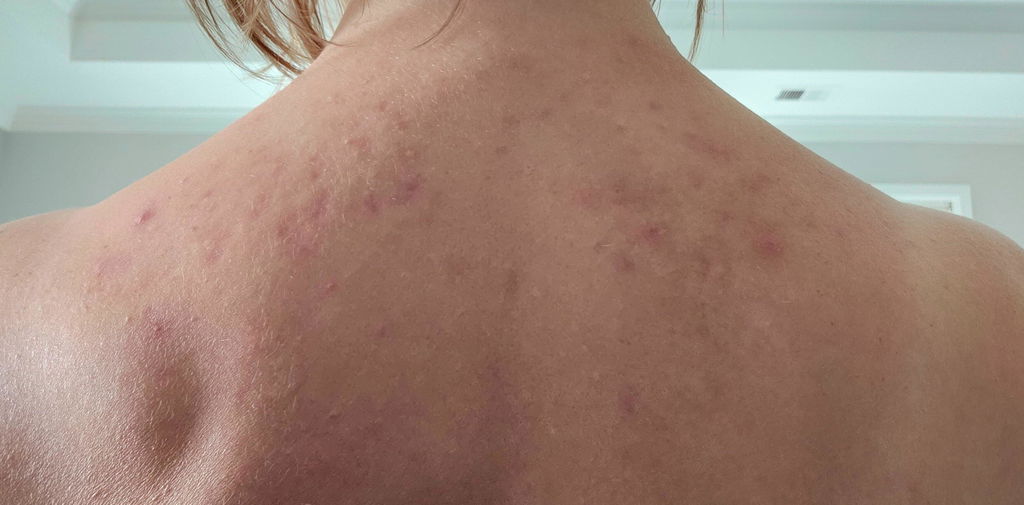
Here's the thing nobody tells you when you buy that expensive probiotic. Most of what's on the label never survives your stomach acid. And even if some of it does, the strains sitting in that capsule are probably not the ones your skin actually needs. If you're breaking out and eating clean and still confused, this is the piece nobody's explaining to you. Let me walk you through it, mom to mom, from the mechanism up.
Probiotics vs Prebiotics: The Real Difference
Probiotics are live bacteria you eat. Prebiotics are the food those bacteria eat once they're inside you. Think of it like a garden. Probiotics are the seeds. Prebiotics are the compost. Seeds without soil starve. Soil without seeds just sits there. Your skin needs both, working in that order.
In my practice, this is the first place I lose people. They swap yogurt for a supplement and expect their cheeks to clear in a week. When it doesn't happen, they blame themselves. The problem isn't willpower. It's biology.
Your gut hosts trillions of microbes. When that microbiome is diverse and balanced, it produces short-chain fatty acids that calm inflammation across your entire body, including your face. When it tips into dysbiosis, inflammation leaks upward through a compromised gut barrier, and your skin is often the loudest place it shows up. You cannot fix that with one bottle of pills. You have to feed the whole system.
Why Most Probiotic Supplements Never Reach Your Skin
Most probiotic capsules fail because their strains die in stomach acid before ever reaching the colon, arrive in doses too low to colonize, or contain species that have no research connection to skin outcomes. A shelf-stable bottle with one billion CFU of a random Lactobacillus is basically an expensive placebo.
Stomach pH sits between 1.5 and 3.5. That's roughly the acidity of battery fluid. Most bacteria don't survive that trip unless they're enteric-coated, delayed-release, or spore-forming. Look at the label. If it doesn't mention any of that, you're paying for a corpse.
Second problem: strain specificity. Not "Lactobacillus" broadly. The specific strain, right down to the sub-species number. Lactobacillus rhamnosus SP1 has clinical trial data on acne. Generic L. rhamnosus does not. The research is that narrow.
Third problem: dose. Trials that actually show skin improvement typically use one to ten billion CFU per day of the exact strain tested, run for at least eight to twelve weeks. Not one week. Not thirty days. A full season.
So if the pills mostly don't work, what does? Two things: feeding the bacteria you already have, and eating fermented foods that carry live communities through your gut the way nature designed.
The Prebiotic Foods That Feed Skin-Healing Bacteria
Prebiotic fiber is undigestible plant material that reaches your colon intact and feeds beneficial bacteria. When those bacteria ferment prebiotic fiber, they produce short-chain fatty acids like butyrate that repair the gut lining, lower systemic inflammation, and quiet the immune activation that drives breakouts.
The foods worth putting on your plate every day:
- Cooked and cooled potatoes and rice (resistant starch)
- Green bananas and plantains
- Jerusalem artichokes and chicory root (inulin)
- Garlic, onions, leeks (fructans)
- Asparagus and dandelion greens
- Oats (beta-glucan)
- Cocoa and berries (polyphenols that behave like prebiotics)
Notice something? These are cheap. They grow in dirt. They're what your great-grandmother ate on a random Tuesday. The supplement industry has spent thirty years selling us back what a normal plate of food used to include.
If your gut lining is already inflamed, whole-food fiber can feel like a fistfight. That's usually when I have women start with a targeted gut cleanse first, then layer prebiotic foods on top once the terrain has quieted down. Order matters.
What the Stanford Fermented Foods Study Actually Showed
In 2021, Stanford researchers led by Wastyk, Fragiadakis, and the Sonnenburg lab ran a 10-week randomized trial with 36 adults. One group ate a diet high in fermented foods like yogurt, kefir, kimchi, kombucha, and brined vegetables. The other ate a high-fiber diet. Published in Cell, the fermented food group showed increased microbiome diversity and a broad drop in 19 inflammatory markers.
Read that again. Fermented foods raised diversity and lowered inflammation, both. The high-fiber group did not see the same diversity jump, and participants who started with lower baseline diversity actually saw inflammatory markers rise on fiber alone. That matters. It suggests that if your gut is already dysbiotic, dumping fiber on top can backfire before it helps.
What worked was the daily consumption of foods that had already done fermentation for you. Six servings a day at peak intake. That's a small yogurt, a shot of kombucha, a spoon of sauerkraut, half a cup of kimchi, a glass of kefir. Not a supplement. Food.
Your skin sees the same anti-inflammatory signal your gut does, delivered through short-chain fatty acids and lowered cytokine load. Clearer face. Better mood. Calmer cycles. It's all one system.
You can't spot-treat your face if the fire is starting in your gut.
The Specific Bacterial Strains Linked to Clearer Skin
Two strains carry the most published clinical evidence for skin outcomes: Lactobacillus rhamnosus SP1 and Bifidobacterium longum. Both influence the gut-skin axis through immune regulation, reduced intestinal permeability, and downstream effects on insulin and IGF-1 signaling in the sebocytes that produce oil.
Lactobacillus rhamnosus SP1
Fabbrocini and colleagues published a 12-week randomized, double-blind trial in Beneficial Microbes (2016) using L. rhamnosus SP1 at three billion CFU per day in adults with acne. The probiotic group normalized skin gene expression tied to insulin signaling and showed clinical improvement in lesion counts. That's not marketing copy. That's a peer-reviewed trial with real skin scores.
Bifidobacterium longum
This one shows up across multiple studies for skin barrier repair. Research on B. longum 68S has documented up-regulation of ceramide synthesis and improved barrier integrity through the gut-skin axis. If your skin is red, reactive, or losing water too fast, this is a strain family worth paying attention to.
The 2011 Bowe and Logan review in Gut Pathogens revived theories that dermatologists John Stokes and Donald Pillsbury proposed in the 1930s: emotional stress alters gut microflora, increases intestinal permeability, and drives skin inflammation. Modern research has largely validated the loop. Everything since has been catching up to what old-school dermatologists suspected almost a century ago.
The Myths That Keep Your Skin Stuck
Let me knock down the ones I hear every week in my practice.
Myth 1: "I take a probiotic every day, so my gut is fine." Taking a probiotic tells you nothing about what's actually colonizing. Your symptoms tell you. Your skin tells you. If your face is still breaking out, whatever's in that bottle isn't reaching the seat of the problem.
Myth 2: "Fermented foods are the same as probiotic supplements." Not really. Real fermented food carries a broad microbial community plus organic acids, peptides, and postbiotics. A pill delivers one or two strains in isolation. The Stanford data suggests the community matters more than any single organism.
Myth 3: "Kombucha is basically soda with bacteria." Some brands are. Read labels. Anything with more than four grams of sugar per serving is doing more harm than the culture is doing good. The traditional ferments (real sauerkraut, live kefir, unpasteurized miso) are the workhorses.
Myth 4: "My skin has nothing to do with my gut." The vagus nerve, HPA axis, and cytokine loops beg to differ. Stress dysregulates gut motility. Gut dysbiosis dysregulates skin. The circuit runs both directions and the science on it is no longer fringe.
Myth 5: "Prebiotics make me bloated so I should skip them." Bloating usually means the gut is already dysbiotic. Feeding the wrong bacteria produces gas. Do the deeper 12-week reset first, then reintroduce prebiotic fiber slowly.
How to Rebuild the Gut-Skin Axis Without Wasting Money
The order that works, in my experience: reduce the offending load first, restore the mineral foundation, add prebiotic fiber slowly, layer fermented foods daily, and only then add a strain-specific probiotic if a symptom still calls for it.
Here's the sequence I walk women through:
- Clear the dysbiotic overgrowth with this microbiome reset. Two weeks to a month, not forever.
- Rebuild the mineral base. Skin cells, gut cells, and immune cells all need trace minerals to function. This is where 92 trace minerals from the ocean become foundational. Sea moss is one of the few whole foods that delivers iodine, selenium, zinc, and sulfur in a mucilaginous form that also acts as a gut-soothing prebiotic.
- Layer in prebiotic fiber gradually. Half a cooked-and-cooled potato. Two spoons of oats. Build up. Watch how your skin responds.
- Add fermented foods daily. One or two honest servings, no candy-bar kombucha.
- If a specific skin symptom is still there, only then consider a strain-specific probiotic. Not before.
- Support the skin from the outside while the inside catches up. Bioavailable collagen support helps the dermal matrix during turnover. A barrier-repairing tallow cream protects the surface while your microbiome rebuilds underneath.
The reason most women don't see results isn't that the science is wrong. It's that the order is wrong. Prebiotic before probiotic. Food before pill. Terrain before seeds.
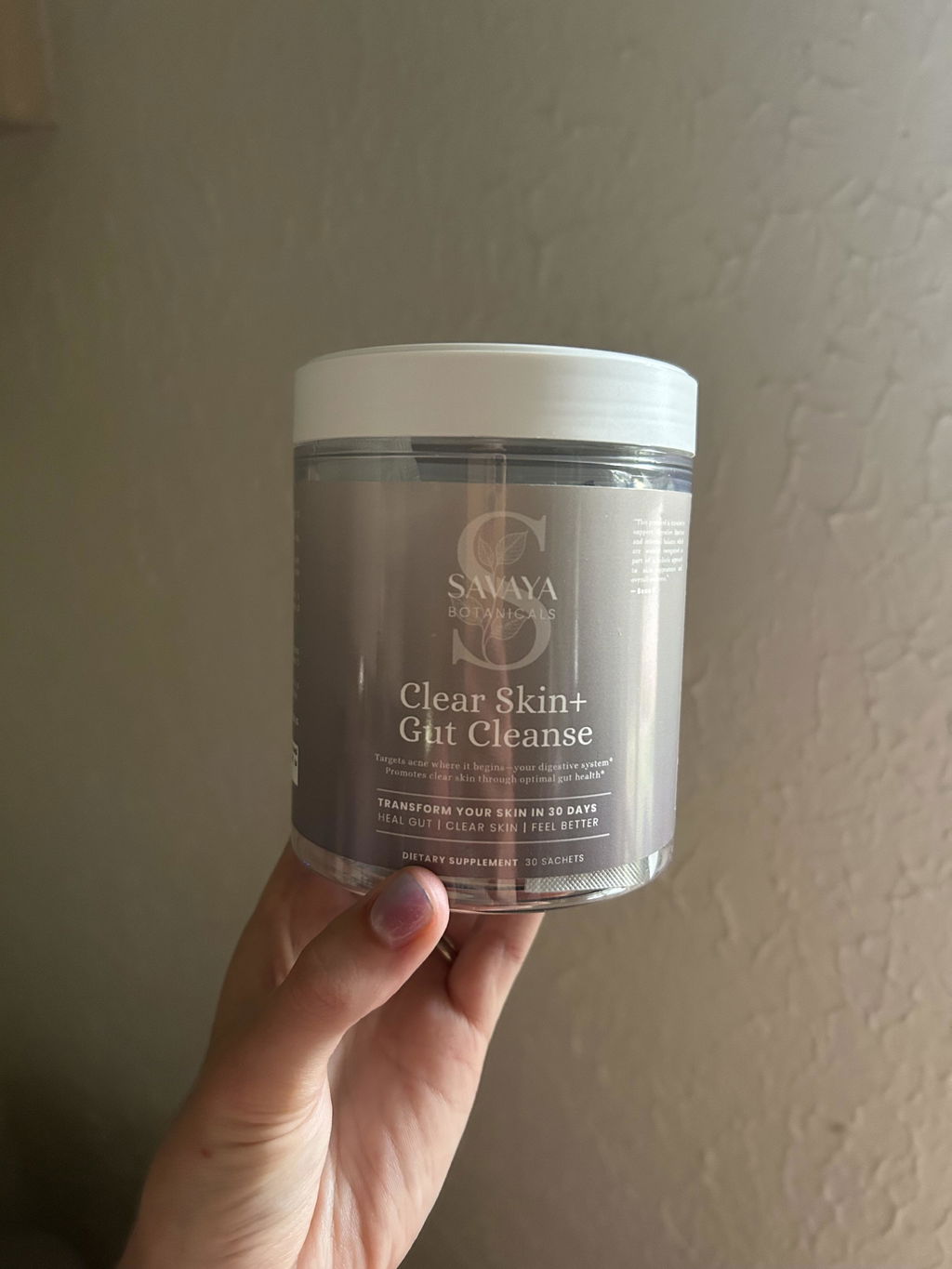
If you've done the trial-and-error thing with random capsules and you're ready for something simpler, Clear Skin+ Max Detox is a single daily acai blend that helps support the mineral and prebiotic intake most routines leave out. Slower than a topical. Deeper than a filter.
• • •
Frequently Asked Questions
What's better for skin, probiotics or prebiotics?
Prebiotics come first, then fermented foods, then strain-specific probiotics only if a symptom still demands it. Prebiotic fiber feeds the bacteria you already have, which is a faster path to short-chain fatty acids and lowered systemic inflammation than trying to reseed with a supplement that mostly dies in stomach acid on the way down.
How long until probiotics improve skin?
Published trials showing acne improvement typically ran eight to twelve weeks at one to ten billion CFU per day of a specific researched strain. If a bottle promises results in a week, that's marketing, not biology. Give any real protocol a full skin turnover cycle before you judge it.
Can I get enough probiotics from food alone?
For most people, yes. The 2021 Stanford fermented foods study showed measurable microbiome and inflammation improvements from six servings of fermented food per day for ten weeks. That's realistic if you actually enjoy the foods. If you don't, a targeted strain in supplement form can bridge the gap while you build the habit.
Is sea moss actually a prebiotic?
Yes. Sea moss contains soluble mucilaginous fiber that ferments in the colon and feeds beneficial bacteria. It also delivers trace minerals your microbiome and your skin both need for enzymatic function. That double role is why it shows up in nearly every serious gut-skin protocol I run.
Why did my skin get worse when I started a probiotic?
Two common reasons. Either the strains you added are shifting a dysbiotic community and provoking a temporary immune flare, or the capsule contains prebiotic fillers that feed the wrong bacteria first. Pause, reset the terrain, then reintroduce more slowly. If it keeps happening, the strain is likely wrong for you.