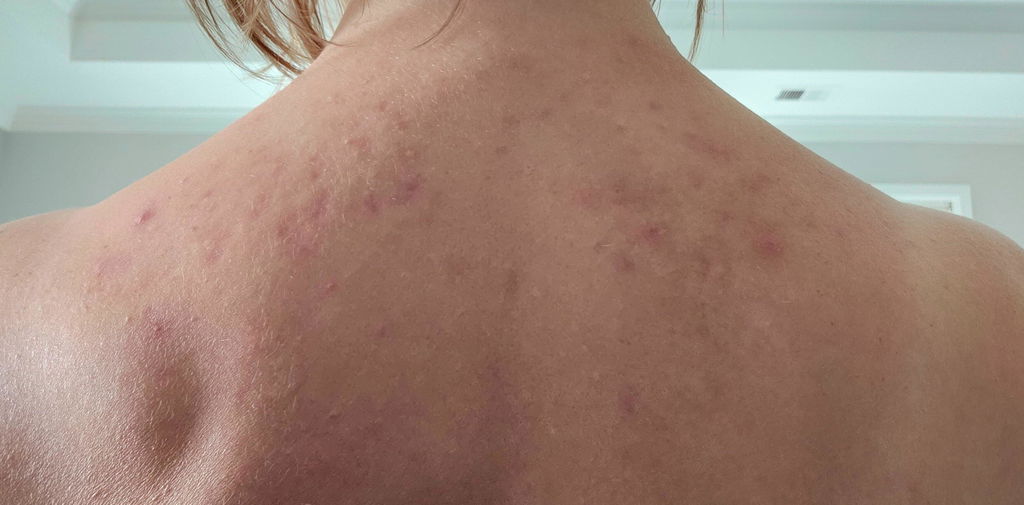
Here is something most dermatologists will not tell you. The glass of milk in your morning coffee might be the reason your chin still breaks out at 32. Not because dairy is universally bad. But because three specific mechanisms quietly activate hormonal pathways in your skin every time you drink it. The science is now strong enough that we can stop debating whether dairy affects acne. The real question is which type, how much, and for whom.
What Dairy Actually Does to Your Skin
Dairy triggers acne through three intersecting mechanisms. It elevates insulin-like growth factor 1 (IGF-1), introduces bioactive hormones from pregnant cows, and produces inflammatory peptides during digestion in many people. Together these stimulate sebocytes, clog follicles, and feed the inflammation cycle behind stubborn breakouts.
The interesting part is that this affects different people very differently. A person of Northern European descent with a robust microbiome might tolerate a cappuccino daily and have skin like glass. A person with a more inflammatory gut profile can break out from a single bowl of yogurt. The mechanism is the same. The body's response is not.
The IGF-1 Connection Behind Stubborn Breakouts
IGF-1 is the growth factor that tells your sebaceous glands to produce more oil. Dairy raises blood IGF-1 more reliably than almost any other food group. Studies consistently show that milk consumers have IGF-1 levels 10 to 20 percent higher than non-consumers, and elevated IGF-1 is one of the strongest biochemical predictors of moderate to severe acne.
Here is what happens at the cellular level. IGF-1 activates the mTORC1 pathway inside sebocytes and keratinocytes. It also downregulates a transcription factor called FoxO1, which normally keeps oil production in check. When FoxO1 is suppressed, sebum production climbs and dead skin cells fail to slough off the follicle wall properly. Hello, microcomedone.
This is one of the reasons low-fat and skim milk often correlate with worse breakouts than whole milk. With the fat removed, the protein concentration relative to volume goes up. More casein, more whey, more IGF-1 spike.
A1 vs A2 Casein and the BCM-7 Problem
A1 beta-casein and A2 beta-casein differ by a single amino acid. That tiny difference matters. When A1 casein is digested, it releases a peptide called beta-casomorphin-7, or BCM-7. BCM-7 acts as an opioid-like compound in the gut and can trigger localized inflammation and intestinal permeability in sensitive people. A2 casein does not produce BCM-7.
Most commercial milk in the United States comes from Holstein cattle, which are predominantly A1 producers. A2 milk comes from Jersey, Guernsey, and certain heritage breeds. A 2016 study by Jianqin and colleagues, published in Nutrition Journal, randomized adults to drink A1 versus A2 milk. The A1 group reported significantly more digestive discomfort and showed higher inflammatory markers.
This explains why some clients tell me they react to regular supermarket milk but feel fine on raw Jersey cow milk from a local farm. They are not imagining it. The protein really is different.
If you have stubborn acne and you still drink dairy, you are not lazy or non-compliant. You are missing a piece of biochemistry no one explained.
The Harvard Nurses Health Study Nobody Mentions
The Adebamowo group at Harvard ran the most cited dairy and acne research in modern dermatology. Using the Nurses Health Study II cohort of over 47,000 women, they asked participants to recall their dairy intake during high school and their acne history. The result. Women who drank two or more glasses of skim milk daily had roughly a 22 percent higher likelihood of having had severe acne compared to those who rarely drank it.
The same group replicated the finding in teenage boys and girls in follow-up cohorts. The pattern held. Skim milk had the strongest association. Whole milk had the weakest but still significant link.
In 2018 Juhl and colleagues pooled 14 studies covering 78,529 participants in a meta-analysis published in Nutrients. Any dairy intake increased acne odds by roughly 25 percent. Skim milk added about 24 percent. Whole milk around 12 percent. The protein appears to be doing the heavy lifting, not the fat.
Whey Protein and the Gym Acne Phenomenon
Walk into any gym and ask the lean bulkers about their skin. Whey, the concentrated protein fraction of milk, is one of the most insulinogenic foods we know. Higher than white bread on the insulin index by some measures. And insulin pulls IGF-1 right behind it.
Pontes and colleagues in 2013 documented a case series of young athletes who developed moderate to severe acne after starting whey supplementation. When the whey was discontinued, the acne resolved within weeks. Multiple follow-up papers have echoed the same pattern.
If you are using whey or casein protein and breaking out on your back, chest, jawline, or chin, this is the place to start. Switch to pea, hemp, or beef collagen protein and watch what happens in 60 days. In my practice this single swap is often the difference between confused frustration and visible progress.
Why Organic and Grass Fed Does Not Fix It
This is the part that frustrates a lot of my clients. They paid extra for organic. They drove to the farmers market. And the skin still breaks out.
Organic dairy contains the same A1 casein, the same whey, and the same growth factors. The cow's diet does not change her protein genetics. And there is another layer most people miss. Nearly all commercial dairy cows, organic or conventional, are kept in continuous pregnancy to maintain milk production. Their milk carries elevated estrone sulfate, progesterone, and IGF-1. Pasteurization does not destroy these hormones.
The only way to lower this load meaningfully is to source from a small herd of cows that are not pregnant, or to switch to a different species entirely such as sheep, goat, or water buffalo where the protein profile differs. Or skip dairy.
Why You Break Out and Your Best Friend Does Not
Three variables decide who reacts and who does not. Lactase persistence. Gut microbiome composition. Individual hormonal sensitivity. None of them are choices. All of them are changeable in part.
Lactase persistence is determined by the LCT gene. Roughly 35 percent of the global adult population retains the lactase enzyme into adulthood. In people of Northern European descent it is closer to 90 percent. In East Asian populations it can be under 10 percent. But here is the catch. Lactase only digests lactose, the sugar. It does nothing to handle casein or whey, which are the actual acne triggers. So a person with full lactase persistence can still react badly to dairy proteins.
The microbiome matters even more. Certain bacterial species, particularly Bifidobacterium and Akkermansia, help break down casein peptides before they cross the intestinal barrier and trigger immune activation. People with lower diversity, often after antibiotic use, chronic stress, or processed food heavy diets, tend to react more to the same glass of milk. This is the gut-skin axis in action. A compromised gut barrier with elevated zonulin lets food peptides into circulation, where they drive systemic inflammation that surfaces on the face.
The third variable is hormonal sensitivity at the skin level. Some people simply have more androgen receptors on their sebocytes, or higher 5-alpha reductase activity. Same hormonal load, more visible response.
Dairy Alternatives That Support Skin and Gut
Swapping milk is the easy part. The harder part is choosing alternatives that actually help your gut barrier instead of replacing one inflammatory food with another.
Best options I rotate with my clients:
- Coconut milk. Medium chain triglycerides, anti-microbial properties, gentle on most guts.
- Cashew milk. Creamy, low-inflammatory, no casein, lower oxalate than almond.
- Hemp milk. Omega-3, slight prebiotic potential, very gentle.
- Sheep or goat dairy. Predominantly A2 casein, often tolerated by people who react to cow.
- Oat milk. Fine for some, but watch the sugar and any gluten cross-contamination if you are sensitive.
Almond milk is fine, but skip the gum-stabilizer brands that tend to bother sensitive guts. Read labels.
The real upgrade is supporting your gut barrier so future food exposures cause less inflammation. 92 trace minerals from the ocean in the form of sea moss delivers gentle iodine, magnesium, and a soothing soluble fiber that feeds beneficial bacteria and helps produce short-chain fatty acids. A targeted gut cleanse can clear the dysbiosis that often drives dairy reactivity in the first place. For clients with a longer history of breakouts, Clear Skin+ Max Detox, a daily acai-based blend, can support skin-side efforts as part of the full picture. And on the outside, a barrier-repairing tallow cream rebuilds the skin lipid layer that inflammatory diets have stripped down.
Where I Tell Clients to Start
If you suspect dairy is part of your skin story, do this:
- Eliminate all dairy for 30 days. Read labels for hidden whey and casein in protein bars, baked goods, and sauces.
- Take photos of your face on day 1, day 15, and day 30. Skin changes are easier to see in pictures than in a mirror.
- While you eliminate, support your gut barrier with prebiotic fiber, trace minerals, and stress regulation that engages the vagus nerve.
- After 30 days, reintroduce one source at a time. Hard cheese first, then yogurt, then milk. Wait 72 hours between each.
- Track which one triggers the breakout. That is your answer.
Most clients see meaningful skin change between weeks 3 and 6, not in week 1. The gut barrier takes time to reseal. Follicles need a full cycle to clear what is already in motion. Patience matters more than intensity.
If you want a structured way to do this without guesswork, the deeper 12-week reset walks the same path with daily support, and bioavailable collagen support gives the skin matrix what it needs to rebuild while inflammation drops. Either route works. The mechanism is the same.
• • •
Frequently Asked Questions
How long until skin clears after stopping dairy?
Most people see noticeable improvement between weeks 3 and 6. Active breakouts may persist for a full skin cycle of roughly 28 days, because comedones already in formation will surface before the pipeline empties. Inflammation usually softens within 2 weeks. Texture and tone change closer to week 8.
Is butter okay if you have acne?
Butter is mostly fat with very little protein, which means minimal casein and whey content. Most clients tolerate butter even when other dairy triggers breakouts. Ghee, with the milk solids removed, is gentler still. If you are highly reactive, test both during a careful reintroduction.
Is goat milk safer than cow milk for acne?
Often, yes. Goat milk contains predominantly A2 beta-casein and smaller fat globules that are easier to digest. Many people who react to cow milk find goat dairy more tolerable. It still contains hormones and growth factors though, so it is not a free pass if you are very sensitive.
Can probiotics help me tolerate dairy again?
Sometimes, especially Bifidobacterium and Lactobacillus strains that help break down casein peptides and support the gut barrier. But probiotics work best alongside a clean gut environment and a diverse, fiber-rich diet. Pairing them with this microbiome reset often produces faster results than probiotics alone.
Is dairy the only food that causes acne?
No. High-glycemic foods such as sugar and refined carbs, plus ultra-processed seed oils, also drive acne through the same insulin and IGF-1 pathway. Dairy is usually the biggest single lever, but for full clarity you often need to address all three together while supporting the gut barrier.