Most acne protocols chase the pimple on your chin. They never look at the gut lining three feet south of it. I spend my days with women whose skin keeps flaring no matter how many retinoids they rotate through, and the pattern underneath is almost always the same. A quiet inflammation story the mirror cannot see. Here is the stack I keep coming back to, in order.
Zinc: The Trace Mineral That Quietly Lowers Sebum
Zinc is a trace mineral that quietly blocks one of the enzymes inside your oil glands that turns testosterone into its stronger cousin, DHT. Less DHT at the follicle means less androgen-driven oil. Zinc also calms the inflammatory cells that rush toward a forming pimple, and it holds C. acnes back from multiplying on the skin surface. Three mechanisms running from one small capsule.
Dreno and colleagues ran a multicenter randomized double-blind trial in 2001 comparing 30 mg of elemental zinc gluconate daily to minocycline 100 mg daily. Oral zinc significantly reduced inflammatory lesion counts. Minocycline came out slightly ahead on the final score, but the mineral held its own against a prescription antibiotic. That is unusual company for a supplement.
In my practice I look for zinc gluconate, picolinate, or bisglycinate at 30 mg of elemental zinc per day, taken with food so your stomach does not revolt in the afternoon. If you plan to run that dose longer than a couple of months, pair it with 1 to 2 mg of copper, because sustained high zinc without copper backup can quietly tank your copper stores. So what happens when you add the omega-3 piece on top?
• • •
EPA Omega-3: Why the Fish Oil Aisle Is Not Enough
EPA, or eicosapentaenoic acid, is the omega-3 that competes with arachidonic acid at the COX and LOX enzymes, pulling down the inflammatory messengers that drive the redness around a follicle. It also softens IGF-1 signaling inside your oil glands, which quiets both oil production and androgen-driven breakouts upstream.
Jung and colleagues in 2014 ran a ten week randomized controlled trial in forty-five patients with mild to moderate acne. They supplemented with 2000 mg of combined omega-3 daily, roughly 1000 mg EPA plus 1000 mg DHA, and saw significant reductions in both inflammatory and non-inflammatory lesion counts versus controls. Not fast. Steady.
Here is where most people go wrong at the drugstore. They grab the cheapest fish oil, see the words omega-3 on the label, and never check the EPA number. For skin, you want at least 1000 mg of EPA on its own, not 1000 mg of total omega-3 which usually breaks down to a third of that in actual EPA. Give it ten to twelve weeks before you decide if it worked. Take it with a fat-containing meal so your gut can actually absorb it.
Vitamin D3 and K2: The Partnership No One Tests For
Vitamin D3 slows oil gland proliferation through the vitamin D receptor sitting on your sebocytes, quiets the TLR2 alarm bell that C. acnes keeps ringing, and dampens the inflammasome output responsible for the red, painful lesions you can feel before you can see. K2 directs the calcium that D3 pulls in so it lands in your bones, not in your soft tissue.
Lim and colleagues published a case control plus RCT in PLoS One in 2016. Their case control arm showed serum 25(OH)D was significantly lower in acne patients than in controls. The randomized arm supplemented 1000 IU of D3 daily for eight weeks and saw significant reductions in inflammatory lesion count versus placebo. One thousand IU is a modest dose. Imagine what properly dosed looks like.
In clinic I like 2000 to 5000 IU of D3 paired with 90 to 180 mcg of K2 as MK-7, because the MK-7 form stays active in the body for days rather than hours and keeps calcium partitioning smoothly. The pair is synergistic:
- D3 raises how much calcium your gut absorbs.
- K2 activates matrix Gla protein and osteocalcin to carboxylate that calcium.
- Together they land calcium in bone, not in arteries or glandular tissue.
Dose to a target serum 25(OH)D of 40 to 60 ng/mL rather than guessing, and please do not run D3 solo at high doses for months without K2 alongside it.
• • •
Sea Moss: The Mineral Density Argument, Handled Honestly
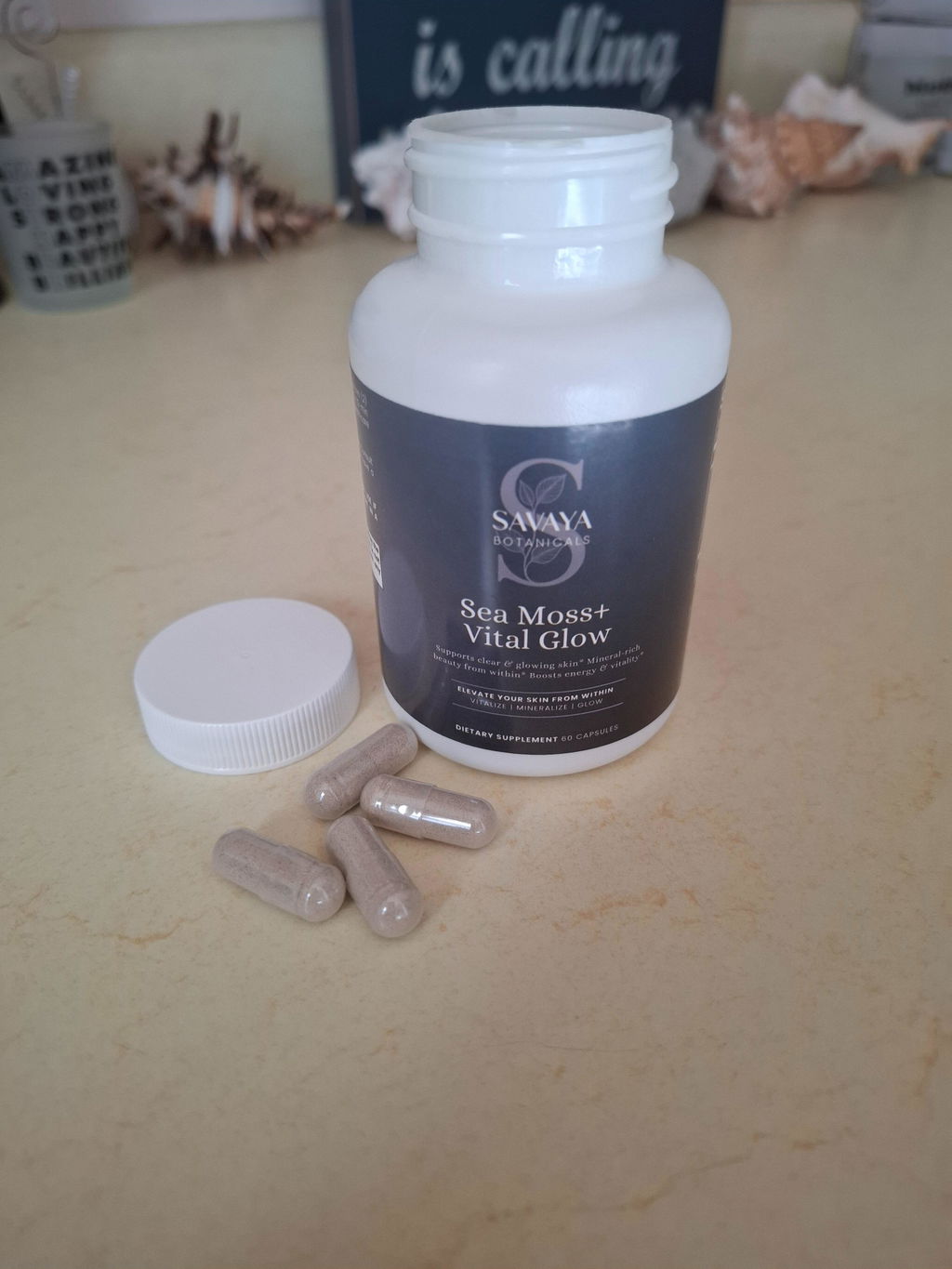
Sea moss is a red algae (Chondrus crispus or Eucheuma cottonii) prized in wellness circles for its mineral density, which per USDA FoodData Central includes iodine, iron, zinc, magnesium, and selenium. The skin-relevant mechanisms are indirect, running through thyroid-driven keratinocyte turnover, retinol-binding protein support, and tissue oxygenation.
I want to be straightforward with you. There is no randomized controlled trial of sea moss for acne. The evidence is nutritional and mechanistic, pulled from seaweed composition data and mineral biology, not from a dermatology trial. That matters.
What I do like about sea moss is that the mineral load is food-form, which many bodies absorb more easily than isolated mineral capsules. The caution is iodine. Species and harvest site vary wildly, so the iodine load in a given spoonful can swing much higher than you would ever expect. Excess iodine is itself a documented trigger of acneiform eruption, which is the exact opposite of what you want.
So I steer people toward 1 to 2 g of dry weight, roughly 1 teaspoon of gel, and I start low and watch the skin before I ever stack more on top. The formulation I feel comfortable with is our wild-harvested sea moss, which is what I keep in my own kitchen.
The Gut-Skin Axis: Why a Cleanse Beats a Toner
The gut-skin axis is the two-way inflammatory conversation between your intestinal lining and your oil glands. When the lining loosens, fragments of bacterial wall slip through into the bloodstream, your stress hormones jump to meet the alarm, and insulin and IGF-1 signaling climb along with them. Your skin inherits every bit of that inflammation.
Fabbrocini and colleagues ran a 12 week randomized trial in adults with acne using Lactobacillus rhamnosus SP1 at 3 billion CFU per day. They measured something most acne trials ignore. They biopsied skin and watched gene expression. The strain normalized IGF-1 and FOXO1 expression in the skin itself, which is the exact pathway that drives oil gland lipogenesis and androgen-driven comedogenesis. Clinical lesion counts improved significantly versus placebo.
Read that again. An oral probiotic rewrote a gene expression pattern in the skin.
Behind the scenes, short-chain fatty acids like butyrate from fermenting prebiotic fiber tighten the junctions in your gut lining and quiet the alarm receptors that keep inflammation rolling. Vagus nerve tone softens. The stress loop that drops substance P into your sebocytes gets quieter. Postbiotic metabolites feed back into immune regulation.
For a stack I like 10 to 50 billion CFU per day of a mixed Lactobacillus plus Bifidobacterium formulation, taken on an empty stomach, run for at least 8 to 12 weeks. Short runs will not do it. When leaky gut is already on the table, our microbiome gut reset is the one I recommend most often, usually paired with the 12 week clear skin protocol for women who want the full root cause reset on one timeline.
Collagen Peptides: What They Fix and What They Do Not
Hydrolyzed collagen peptides are not an acne treatment. They are a skin rebuilding tool for the post-breakout stage, cleaved into Pro-Hyp and Hyp-Gly fragments that reach the dermis and signal fibroblasts to lay down fresh type I collagen, elastin, and hyaluronic acid. They repair matrix. They do not quiet sebum.
Proksch and colleagues published a double blind placebo controlled trial in 2014 showing that 2.5 g or 5 g of specific bioactive collagen peptides daily for eight weeks significantly improved skin elasticity in women aged 35 to 55. The gains held four weeks after the end of treatment. That is the data you want for a scar and texture tool.
The honest framing is this. If you still have active comedones, do not expect collagen to clear them. If you have post-inflammatory erythema, atrophic scarring, or barrier damage after a long year of active breakouts, 2.5 to 10 g per day for a minimum of eight weeks is where I would place my attention. Our beauty collagen strips are the format I recommend when swallowing powder is a dealbreaker.
• • •
Why Topical-Only Approaches Keep You Stuck
Topical therapy acts on the surface of the pilosebaceous unit, but the engine of adult acne runs upstream, in the gut barrier, stress hormones, androgen receptor sensitivity, and IGF-1 signaling. When you treat only the final two millimeters of skin, you are managing the smoke while leaving the fire burning.
Here is the pattern I watch over and over. A client of mine walks in with four years of benzoyl peroxide, three rounds of doxycycline, two retinoids, and she is still flaring on her jawline every cycle. The jawline is hormonal. Topicals do not change hormones. They dry the top layer, strip the barrier, and leave sebocyte signaling exactly where it was.
Topicals also compete with your microbiome at the skin surface. Benzoyl peroxide is bacteriostatic across the board, which means it does not just thin out C. acnes. It thins out the commensals keeping your face in balance. You patch, then you flare, then you patch harder. If your barrier is already stripped, a barrier-first tallow balm gives the lipid matrix something to rebuild with instead of another drying agent.
Your skin is not asking for a stronger cream. It is asking for a quieter inflammatory signal from the inside.
Why Most Dermatologists Default to Antibiotics and Retinoids
Dermatology training is structured around pharmacologic monotherapy with FDA labeling, decades of industry-funded RCTs, and insurance-coded reimbursement. Antibiotics, retinoids, benzoyl peroxide, and isotretinoin all clear those bars easily. Nutritional interventions do not, so they fall off the standard flowchart even when the mechanism is sound.
This is not a conspiracy. It is incentive design. A seven minute visit does not have room for a 25 minute conversation about gut dysbiosis, cortisol curves, and the IGF-1 feedback loop. The visit code pays for a prescription pad, not for an afternoon of root cause work.
There is also the unpatentable supplement problem. Zinc, EPA, D3, and probiotics are OTC minerals and food compounds. No pharmaceutical sales force walks into clinics with lunch and glossy brochures showing effect sizes for a trace mineral. The result is a generation of excellent dermatologists who were simply never trained on the full stack.
Many women find their skin flares most after antibiotic courses, because broad-spectrum antibiotics wipe out gut commensals as collateral damage, feeding the same dysbiosis their topicals cannot reach. That is the exact loop a thoughtful supplement protocol breaks.
Frequently Asked Questions
What is the best supplement stack for adult acne?
In my practice the core stack is zinc at 30 mg daily, EPA at or above 1000 mg daily, D3 at 2000 to 5000 IU with K2 as MK-7 at 90 to 180 mcg, a mixed Lactobacillus and Bifidobacterium probiotic at 10 to 50 billion CFU, and collagen peptides at 2.5 to 10 g per day for scar and barrier support.
How long before I see results from these supplements?
Give the stack 8 to 12 weeks before judging. Skin turns over on a roughly 28 day cycle, and the gene expression changes seen with probiotics plus the serum 25(OH)D response seen with D3 both take months, not days. Short runs underdeliver.
Can I take zinc, EPA, D3, probiotics, and collagen together?
Yes, these do not compete for absorption in any meaningful way. I usually place zinc and EPA with meals, D3 with K2 in a fat-containing meal, probiotics on an empty stomach in the morning, and collagen whenever you remember.
Is sea moss safe for everyone with acne?
No. Sea moss can deliver a lot of iodine, and iodine excess is a documented trigger of acneiform eruption. If your skin flares after you add it, treat that as the signal to pull it back out of your routine.
Why does my dermatologist not recommend any of these?
Because dermatology training rewards drugs with FDA indications and industry-funded RCTs, and supplements sit outside that framework. The mechanisms are real and the trials exist, but they live in nutrition and GI journals that most dermatologists are not trained to read.
If you want the full root cause reset in one place, our whole system reset was built to quiet gut-skin axis inflammation first and let the surface follow.