Most women blame their skin on hormones. Or the wrong cleanser. Or that one slice of pizza at midnight. What almost no one looks at is the night before. The way you sleep, or fail to, sends signals down to your gut within hours. And your gut sends them back up to your face. There is a whole nighttime conversation between your microbiome, your stress hormones, and your skin barrier. Let me walk you through it.
Your Gut Microbiome Runs on a Clock
Your gut bacteria follow a 24-hour rhythm, just like your sleep cycle. They shift their composition, their location along the intestinal wall, and their metabolic activity based on whether it is day or night. When your sleep gets disrupted, theirs does too. And the ripple effects show up on your skin within days.
A landmark 2014 paper in Cell, led by Eran Elinav and Christoph Thaiss at the Weizmann Institute, tracked the gut microbiome across 24 hours. They found that many bacterial species oscillate in a daily rhythm. Your microbiome essentially has a morning shift and a night shift. Jet-lagged mice in the same study, and a human passenger followed across time zones, showed disrupted microbial cycling within days.
What does this have to do with your skin? A microbiome that loses its rhythm drifts toward dysbiosis. And dysbiosis is one of the loudest triggers of inflammatory skin conditions I see in my practice. The client who tells me her flare-ups always start a few days after a stressful week of bad sleep is not imagining it. Her bugs are out of sync.
Your Belly Makes More Melatonin Than Your Brain
The gastrointestinal tract contains around 400 times more melatonin than the pineal gland in your brain. This was mapped in detail by Dr. George Bubenik in a widely cited 2002 review in Digestive Diseases and Sciences. Gut melatonin is made by enterochromaffin cells. It regulates motility, protects the gut barrier, and quiets local inflammation overnight.
Here is the part that matters for your skin. Melatonin is one of the strongest antioxidants your body makes. In the gut, it scavenges free radicals before they can damage the tight junctions that hold your intestinal wall together. Less oxidative damage at night means less inflammation in the morning. Less inflammation means a calmer face.
When you go to bed late, scroll under blue light, or wake up at 3 a.m. wired, you are blunting both pineal and gut melatonin. The gut takes the hit twice. Less melatonin means more permeable junctions, slower motility, and a more inflamed gut wall overnight. That is the setup for tomorrow's breakout.
How Sleep Loss Cracks Open the Gut Wall
Sleep deprivation raises cortisol. Elevated cortisol activates the HPA axis. And the HPA axis, when chronically switched on, increases intestinal permeability, often called leaky gut. The pathway from one bad night to a more reactive gut is short and well-documented in the stress biology literature.
A 2014 paper in the journal Gut by Tim Vanuytsel and colleagues showed that even short-term psychological stress, mediated by corticotropin-releasing hormone, was enough to measurably increase intestinal permeability in healthy humans within hours. The mechanism involves mast cells in the gut wall releasing inflammatory mediators that loosen the tight junctions between cells.
When the junctions loosen, bacterial fragments called lipopolysaccharides slip into circulation. Your immune system flags them as a threat. Inflammatory cytokines like IL-6 and TNF-alpha rise. Those cytokines travel everywhere, including your skin. They tell sebocytes, the cells that make sebum, to produce more oil. They tell keratinocytes to overproduce and clog pores. They tell mast cells in your dermis to release histamine.
This is the gut-skin axis in action. Not vague. Not woo. A measurable inflammatory cascade that starts with a loose junction and ends with a cyst on your jawline. For clients caught in this loop, I often suggest a targeted gut cleanse alongside the sleep work, because cleaning up the microbial inputs gives the barrier a real chance to seal.
There is also a daily curve to this. Cortisol naturally peaks in the early morning, about 30 to 45 minutes after you wake. When your sleep is fragmented, the curve flattens and stays elevated through the night. A flat cortisol curve is one of the most predictable patterns I see in clients whose skin keeps cycling through breakouts. The body never gets the signal that it is safe to rest.
The Brain Wash Cycle You Are Skipping
While you sleep, your brain runs a cleaning system called the glymphatic system. It flushes metabolic waste, including inflammatory proteins, out of your central nervous system. The system runs much more actively during deep sleep than during waking hours. Skip the sleep, skip the wash.
The discovery came out of Maiken Nedergaard's lab at the University of Rochester, in a series of papers including the 2013 Science paper by Lulu Xie and colleagues. They showed that during sleep, the interstitial spaces between brain cells expand by roughly 60%, allowing cerebrospinal fluid to flow through and clear waste at a much higher rate than during waking hours.
What does brain cleaning have to do with your gut and your skin? Plenty. The vagus nerve connects gut, brain, and skin into one feedback loop. When the brain is inflamed because the waste did not get cleared, vagal tone drops. Low vagal tone means weaker gut motility, more dysbiosis, and a less effective parasympathetic shutdown of inflammation at night. The whole system stays tilted toward fight-or-flight.
What the Sleep and Acne Research Shows
Dermatology research has consistently linked poor sleep quality with worse acne severity. The mechanism is layered. Higher cortisol, higher insulin-like growth factor 1, more sebum, and more cutaneous inflammation. Sleep is not a finishing touch on your skin routine. It is one of the load-bearing pillars of a clear face.
Multiple cross-sectional studies in adult acne patients have found that poor self-reported sleep quality correlates with greater acne severity and lower skin-related quality of life. A separate body of work on shift workers shows higher rates of inflammatory skin conditions overall, which fits the circadian disruption story above. The biology and the surveys point the same direction.
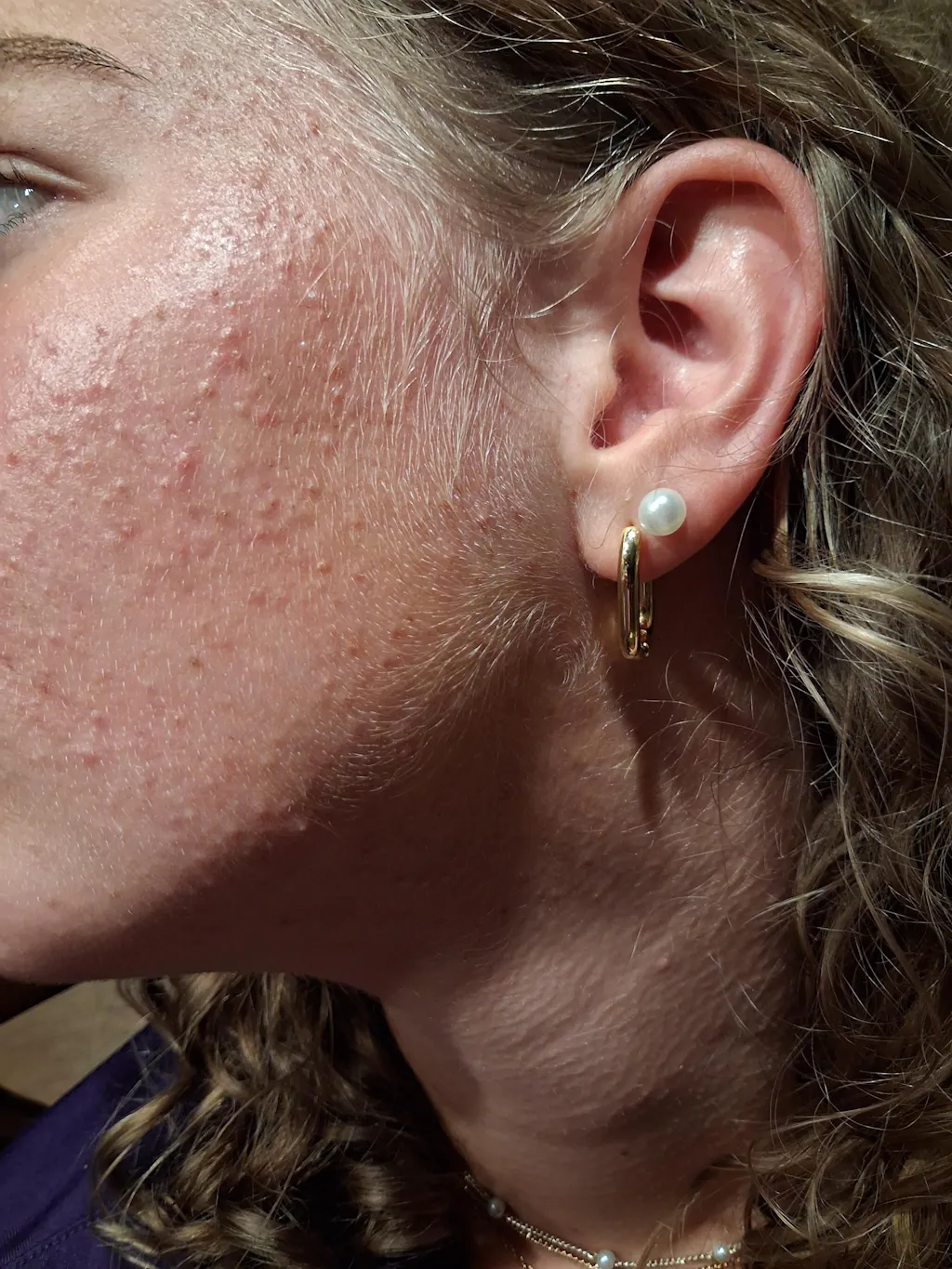
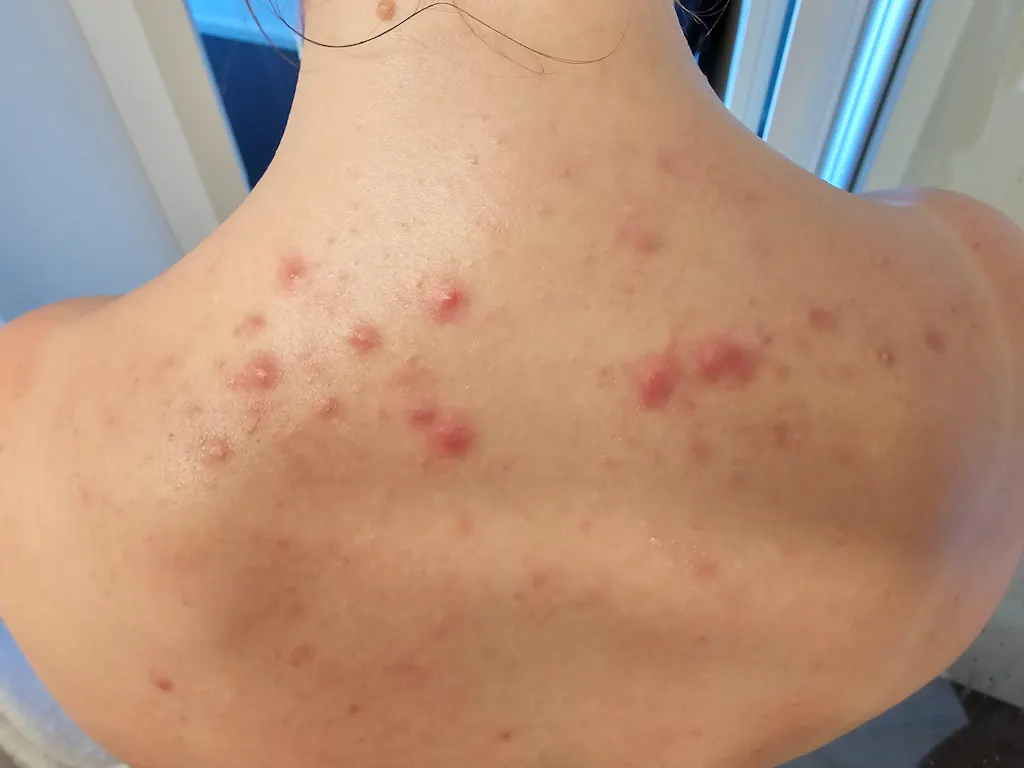
You do not really need a study to confirm what your mirror already shows. Three nights of five hours sleep, and you can usually predict where the next breakout will land. Often the jaw. Sometimes the temples. Frequently both. IGF-1, the growth factor that drives sebocyte activity and follicular hyperkeratinization, climbs when sleep is poor and when diet is inflammatory. That is the same hormone that makes high-glycemic foods and dairy hit acne-prone skin so hard, which is why poor sleep and a sweet breakfast are such a brutal combination.
Your skin does not just reflect what you eat. It reflects what your microbiome did between midnight and four a.m. while you were supposed to be sleeping.
A Practical Evening Routine for Gut-Supported Sleep
The goal of an evening routine is not to perform self-care. It is to give your gut and your nervous system the right signals so the overnight repair work can actually happen. The signals are simple. Light, food, temperature, and touch. Here is the routine I walk most of my clients through.
- Stop eating three hours before bed. Your gut needs a fasted window for the migrating motor complex to sweep bacteria out of the small intestine. Late eating disrupts that sweep and feeds small intestinal overgrowth.
- Dim every light in the house after sunset. Wear amber glasses if you have to look at a screen. Blue light suppresses both pineal and gut melatonin.
- Take minerals, not stimulants. Magnesium glycinate, glycine, and trace minerals all support GABA, the calming neurotransmitter. Mineral-rich sea moss is one of my favorite sources because it delivers a full spectrum of trace minerals your nervous system needs to wind down.
- Warm your belly, cool your bedroom. A warm bath or a hot water bottle on the abdomen activates the vagus nerve. A bedroom around 65 to 67 degrees Fahrenheit improves deep sleep duration.
- End with a slow skin ritual. Two minutes of slow, mindful application of a clean balm calms the nervous system through skin-to-hand contact. I use a barrier-repairing tallow cream as my final step. Grass-fed tallow mirrors the lipid profile of human skin and supports the moisture barrier overnight.
- Box-breathe for two minutes in bed. Four seconds in, four hold, four out, four hold. This tells the vagus nerve the day is done.
When the Routine Is Not Enough
If you have been doing the basics for a month and your skin still flares with every poor night, the issue is probably deeper than sleep hygiene. Long-term dysbiosis, candida overgrowth, or chronic intestinal permeability create their own inflammatory load that no bedtime routine alone can outrun. The body needs a structured reset.
For women in this loop, I move them into the 12-week gut-to-skin program, which combines microbial work with skin-side support. Some need the deeper layer first, which is where a full detox protocol earns its place, especially after years of antibiotics, hormonal birth control, or chronic stress. And because the overnight repair window also asks for raw materials, many clients add bioavailable collagen support at bedtime so the body has what it needs while you sleep.
Sleep is not a luxury. It is the window during which your gut seals, your brain washes, and your skin actually repairs. Protect that window like your face depends on it. Because it does.
• • •
Frequently Asked Questions
How does sleep affect your skin through your gut?
Poor sleep raises cortisol, which increases intestinal permeability and shifts the gut microbiome out of its 24-hour rhythm. The resulting inflammation travels through circulation and triggers more sebum production, clogged pores, and skin inflammation. This is the gut-skin axis under sleep stress.
How long does it take for better sleep to improve your skin?
Most women notice the first changes in skin reactivity within two to three weeks of consistent seven to nine hour nights, especially along the jawline. Deeper improvements in texture and tone usually take 8 to 12 weeks, which matches the full skin cell turnover cycle.
Can melatonin supplements help acne?
Melatonin is both a circadian regulator and a potent antioxidant. Some small studies suggest supplementation may reduce oxidative stress on the skin barrier. That said, restoring your own gut and pineal melatonin through light hygiene, evening fasting, and a regular bedtime is usually more sustainable than long-term supplementation.
What is the best time to take probiotics for the gut-skin connection?
Most clinical literature supports taking probiotics either first thing in the morning on an empty stomach or right before bed. The evening dose pairs well with the overnight repair window, when gut melatonin is highest and the migrating motor complex is most active.
Why do I break out the day after a bad night's sleep?
Within hours of sleep loss, cortisol rises, sebum production climbs, and gut barrier permeability goes up. Inflammatory cytokines from the gut reach the skin within 24 to 48 hours, which is why a single bad night can show up on your face the very next day. The fix is upstream, not on the face.