7 Signs Your Acne May Be Hormonal, Not Just Diet or Stress

Key Takeaways
- Breakouts that flare 3 to 7 days before your period, in the luteal phase, are the strongest hormonal clue.
- Hormonal breakouts form as deep, tender cysts and nodules rather than small surface whiteheads.
- Slow-healing bumps that linger 2 or more weeks, instead of clearing quickly, suggest a hormonal driver.
- Jawline, chin, and lower-face clustering is a secondary clue worth noting alongside cycle timing and texture.
- Tracking cycle day, location, and texture for 2 to 3 cycles reveals patterns a single month can miss.
Hormonal acne is easiest to identify through timing and texture: breakouts that repeat around the same days before your period and show up as deep, tender, slow-healing bumps rather than quick whiteheads are the clearest signs, with jawline or chin clustering as a secondary clue worth tracking alongside them.
Do Your Breakouts Follow the Same Point in Your Cycle Every Month?
The clearest hormonal clue is a repeating pattern: breakouts that show up around the same day of your cycle, month after month, rather than randomly. Diet and stress can trigger flares too, but a monthly rhythm that repeats independent of what you ate or how busy you were points toward hormonal timing.
One of the most reliable ways to separate hormonal acne from a random flare is to look at timing, not triggers. Instead of asking "what did I eat" or "how stressed was I," ask "where am I in my cycle." Hormonal breakouts tend to show up like clockwork, around the same phase every single month.
This happens because estrogen, progesterone, and androgens rise and fall in a predictable rhythm across roughly four weeks, and that rhythm can influence how much oil your skin glands produce. A diet-driven or stress-driven breakout is more likely to be scattered and tied to a specific event, while a hormonal one repeats on a schedule you could almost mark on a calendar.
A simple way to check: note the date of your next three breakouts alongside the date your period starts. If the gap between "breakout day" and "period day" stays roughly consistent, that's a pattern worth paying attention to.

Does It Show Up in the Days Right Before Your Period?
For many women, hormonal acne clusters in the week before menstruation, during the luteal phase, when progesterone rises and estrogen drops. That hormonal shift can increase oil gland activity and skin sensitivity, making breakouts that consistently appear in this pre-period window a strong signal of hormonal timing rather than diet or stress.
The week or so before your period, known as the luteal phase, is when progesterone is at its highest and estrogen has started to fall. This shift changes the chemical environment around your skin's oil glands, and for many women that can translate into more oil production and more reactive skin right before their period is due.
If you notice new bumps forming three to seven days before your period starts, almost like clockwork, that pre-period window is one of the most commonly reported hormonal signals. It's different from a breakout that follows a greasy meal or a stressful week, which tends to be less tied to a specific calendar window.
Marking the first day of each breakout on a period-tracking app for two or three cycles is usually enough to see whether this pattern holds for you.

Are the Bumps Deep, Tender, and Under the Skin Rather Than Surface Whiteheads?
Texture is the second major clue: hormonal acne tends to form as deep, tender cysts or nodules felt under the skin before anything is visible, rather than small surface whiteheads or blackheads. This deeper, more painful quality reflects oil and inflammation building lower in the follicle, a pattern androgens are known to influence.
Not all acne feels the same, and the way a breakout feels often says more than the way it looks. A surface whitehead or blackhead sits close to the top of the skin, is usually not very painful, and you can often feel a clear head to it. Hormonal breakouts tend to behave differently.
They often start as a firm, tender knot you can feel before you can really see it, sometimes a day or two before it becomes visible. That tenderness and depth come from oil and inflammation building up lower in the hair follicle, a process androgens (hormones present in all women, just at lower levels than in men) are known to influence.
- Surface acne: small, comes to a visible head, minimal tenderness
- Hormonal acne: deep, tender to the touch, often no visible head for days
If most of what you're dealing with fits the second description, texture is pointing you toward a hormonal pattern.

Does It Take Weeks to Heal Instead of Days?
Hormonal breakouts often linger far longer than surface acne, sometimes taking two or more weeks to fully resolve instead of clearing within days. They also tend to cluster along the jawline, chin, and lower face or back, a secondary clue worth noting alongside how long a bump actually takes to heal.
Duration is another texture-related clue. A surface whitehead often runs its course in a few days. A deep, hormonal bump can sit under the skin, tender and slow-moving, for two weeks or longer before it fades, and it may leave a mark behind even after the bump itself is gone.
Location can add a small piece of supporting evidence here too. Hormonal breakouts are more likely to show up along the jawline, chin, and lower face, or sometimes the back and chest, areas with a higher concentration of oil glands. Location alone isn't a diagnosis, though — plenty of hormonal acne shows up elsewhere, and plenty of jawline breakouts have nothing to do with hormones.
The combination that matters most is a slow-healing, tender bump that also happens to follow your cycle. That pairing is a stronger signal than either clue on its own.

Does Your Usual Skincare Routine Barely Touch It?
If cleansers, spot treatments, and exfoliants that normally clear surface breakouts barely make a dent, that resistance can be a hormonal clue. Topical products mainly address the skin's surface, while hormonal breakouts originate deeper, from oil-gland activity influenced by hormone shifts, which topical care alone often can't fully reach.
If your skincare routine handles the occasional surface pimple just fine but seems to do almost nothing for these specific breakouts, that mismatch itself is informative. Salicylic acid, benzoyl peroxide, and most spot treatments work primarily on the surface of the skin and the upper part of the follicle.
Hormonal breakouts, by contrast, are driven from below, by oil-gland activity that responds to hormone signals circulating in the bloodstream. A topical product applied to the surface has limited ability to influence what's happening at that level, which is part of why the same routine can perform inconsistently depending on which type of breakout you're dealing with.
This doesn't mean your routine is wrong. It's more that a topical-only approach is answering a surface question when the underlying trigger may be coming from somewhere else.

Does It Ease Up Once Your Period Actually Starts?
A breakout that noticeably calms down within the first few days after your period begins is following a hormonal rhythm. As progesterone drops and the cycle resets, oil production tends to settle, and skin that flares reliably before your period and quiets down after it starts is showing a hormonal, not random, pattern.
The flip side of the pre-period flare is just as telling. If breakouts that show up before your period start to calm down within the first several days after it begins, that resolution is part of the same hormonal rhythm as the flare itself.
Once menstruation starts, progesterone drops sharply and the hormonal environment resets for the next cycle. Oil production tends to settle along with it, which is why skin that looked angry a week earlier can look noticeably calmer by the time your period is in full swing.
A breakout that just as reliably fades as it flares, on a schedule tied to your period rather than to how your week went, is one of the clearest full-picture signs of a hormonal pattern.

Does It Show Up No Matter What You Eat or How Calm Your Week Was?
When breakouts appear on schedule regardless of diet, sleep, or stress levels, that consistency points away from external triggers and toward an internal hormonal rhythm. Diet and stress can still influence skin, but a pattern that holds even during genuinely low-stress, clean-eating weeks suggests hormones are the primary driver, not the exception.
Diet and stress genuinely affect skin, so it's worth ruling them out before assuming a breakout is purely hormonal. A useful test: think back to a week when you ate cleanly, slept well, and weren't particularly stressed. Did the breakout still show up around the same point it usually does?
If the answer is yes, that consistency is meaningful. External triggers tend to make breakouts less predictable, not more. A pattern that persists through your calmest, cleanest weeks and still lands in the same window of your cycle is telling you the primary driver is coming from inside the hormonal cycle itself, not from your plate or your calendar.
The most useful diagnostic isn't any single breakout — it's whether the pattern survives a genuinely "good" week.

What Should You Actually Do If This Sounds Like You?
Track cycle day, texture, and breakout location for two to three months to confirm a real pattern, then look at sleep and added sugar intake, both linked to skin changes. If irregular periods accompany the breakouts, mention that to a provider, since it can sometimes signal PCOS.
Before anything else, confirm the pattern is real. Keep a simple log for two or three cycles: the date each breakout starts, roughly where it shows up, how it feels (tender and deep, or more surface-level), and the day of your cycle. Two or three months of notes will tell you more than any single flare-up can.
A few other free things worth adjusting while you track: notice how added sugar and refined carbohydrates affect your skin over a full cycle, not just one meal; pay attention to sleep, since poor sleep is linked to higher stress-hormone output; and if breakouts come along with irregular periods or other cycle changes, that combination is worth discussing with a healthcare provider, since it can sometimes point toward conditions like PCOS.
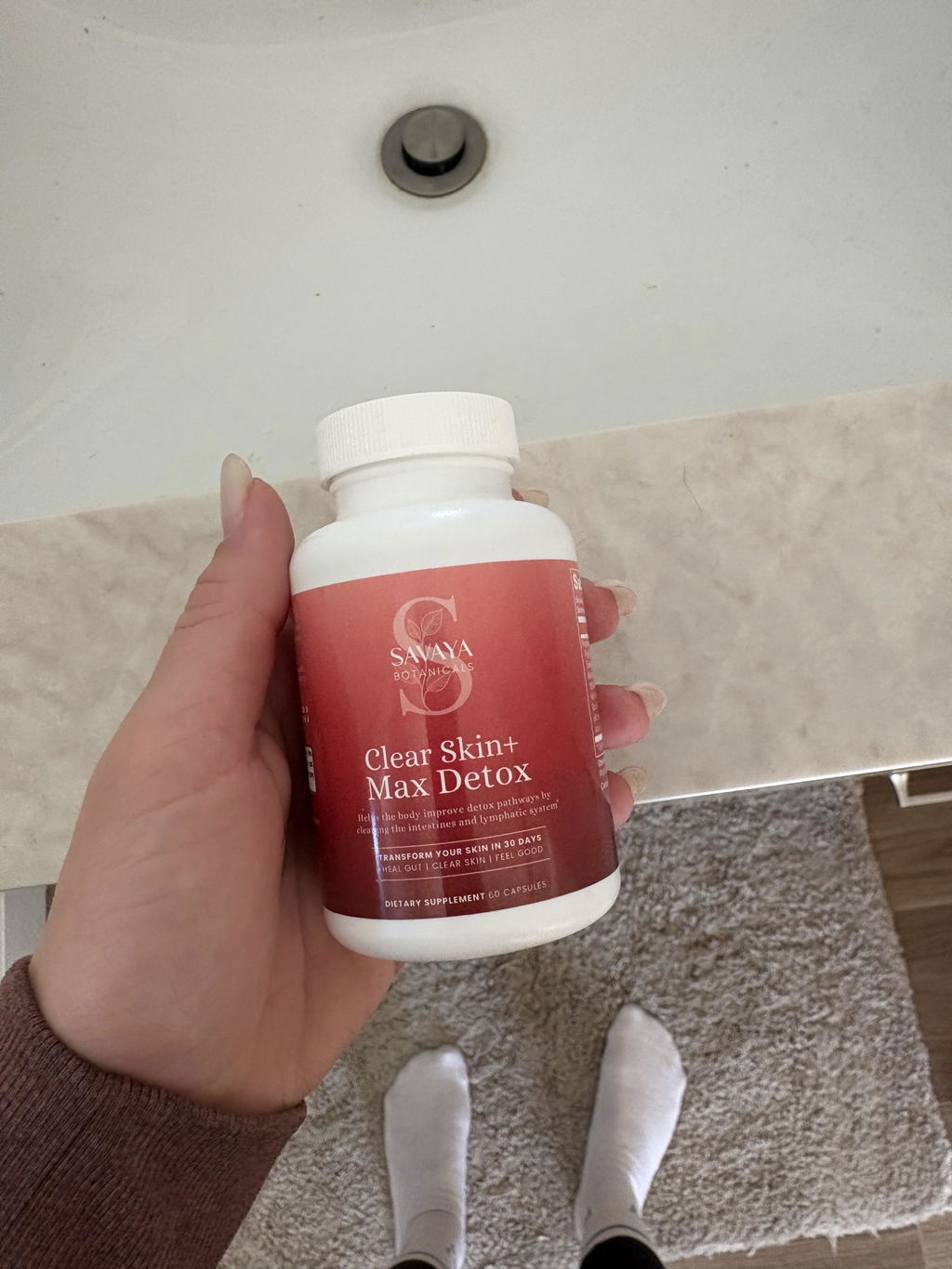
Once you have a pattern you trust, a daily habit like Savaya's Max Detox can be a reasonable addition to that routine — it's formulated to support the body's natural detoxification pathways and healthy gut function, both of which play a role in overall skin health alongside whatever else you're already doing.

The Bottom Line: Let Timing and Texture Be Your Guide
Cycle timing and breakout texture are the two most reliable signs of hormonal acne: flares that repeat around the same days of your cycle and form as deep, tender, slow-healing bumps rather than quick whiteheads. Location adds a small supporting clue, but timing and texture are what actually confirm the pattern.
Seven signs, but really two questions carry most of the weight: does it repeat at the same point in your cycle, and does it feel different from a typical surface pimple — deeper, more tender, slower to heal? If both answers are yes, you're very likely looking at a hormonal pattern.
Jawline and chin clustering, resistance to your usual routine, and calming down after your period are all supporting evidence, useful for building confidence in what you're seeing, but they work best alongside cycle timing and texture, not instead of them.
A short tracking window turns a guess into a pattern you can actually act on, whether that's adjusting your routine, talking to a provider, or simply understanding your skin a little better.

See if Max Detox is right for you
Frequently Asked Questions
How can I tell if my acne is hormonal or just from stress?
Stress-related breakouts tend to appear irregularly, tied to a specific stressful stretch, and clear once that stress passes. Hormonal breakouts follow your menstrual cycle instead, showing up around the same days each month regardless of how stressful that particular week was, and forming as deeper, more tender bumps.
Why does hormonal acne often show up in the same spot each time?
Areas like the jawline, chin, and lower face carry a higher concentration of oil glands that are particularly responsive to hormone shifts, which is why breakouts often repeat in the same location. Location is a helpful supporting clue, but cycle timing and how deep or tender a bump feels matter more.
Can hormonal acne start well after your teenage years?
Yes, hormonal acne is common in adult women well into their twenties, thirties, and forties, since hormone fluctuations continue with every menstrual cycle, not just during puberty. Many women who had clear skin as teenagers first notice a cyclical, jawline-leaning pattern showing up for the first time in adulthood.
Does hormonal acne look physically different from typical teenage acne?
It can. Hormonal breakouts are more often deep, tender cysts or nodules rather than the blackheads and surface whiteheads typical of teenage acne, and they cluster more toward the jawline, chin, and lower face than the forehead and nose, where puberty-related acne often starts.
How many cycles should I track before I trust the pattern?
Two to three menstrual cycles is usually enough to see whether breakouts genuinely repeat around the same cycle day and location. One month can be misleading, since other factors can overlap, but a pattern that holds across two or three cycles is a strong, reliable signal.
This content is for general wellness and educational purposes and is not medical advice. These statements have not been evaluated by the Food and Drug Administration. This product is not intended to diagnose, treat, cure, or prevent any disease. Consult your healthcare provider before starting any supplement, especially if you are pregnant, nursing, or managing a health condition. Individual results vary.