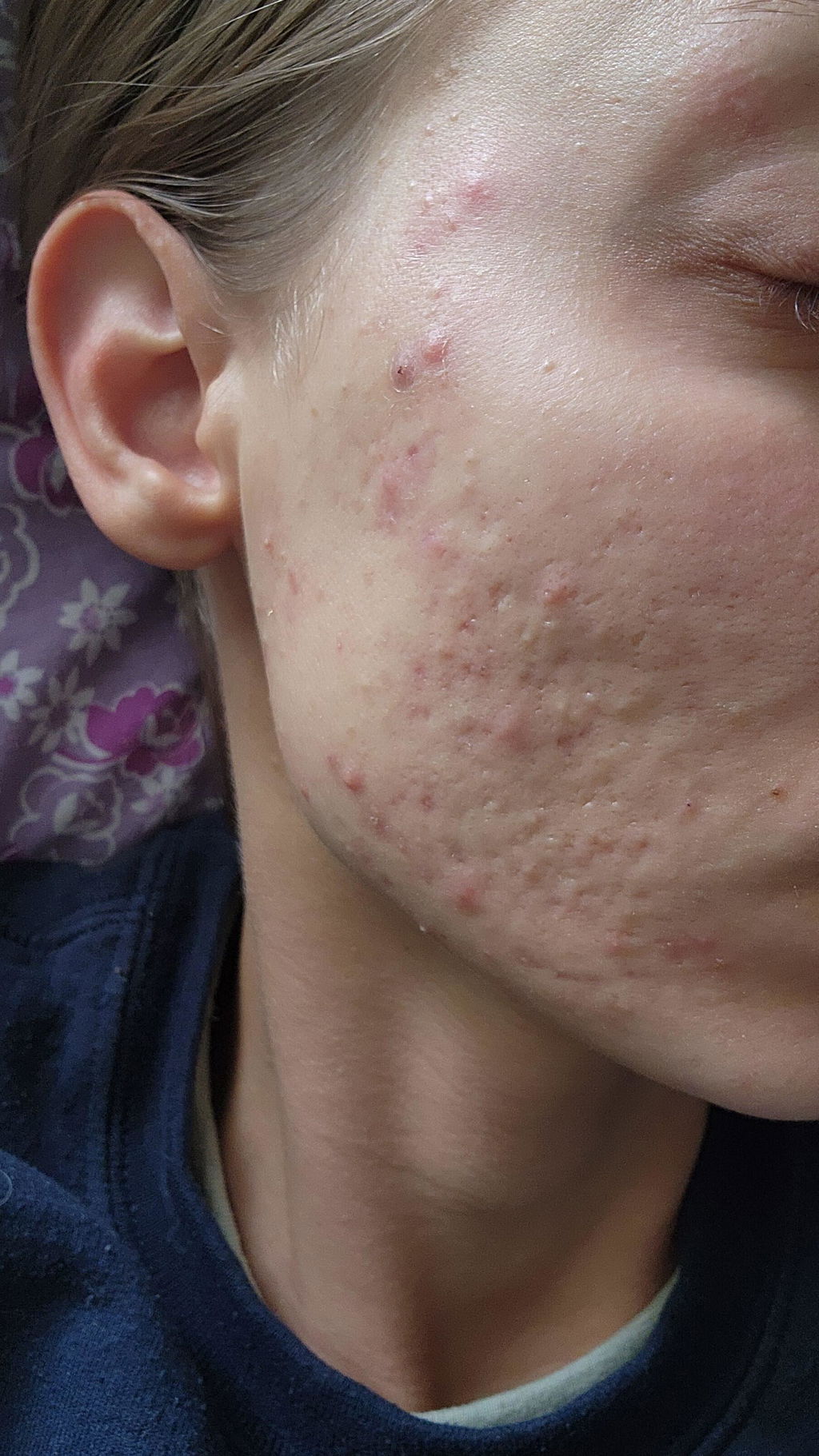
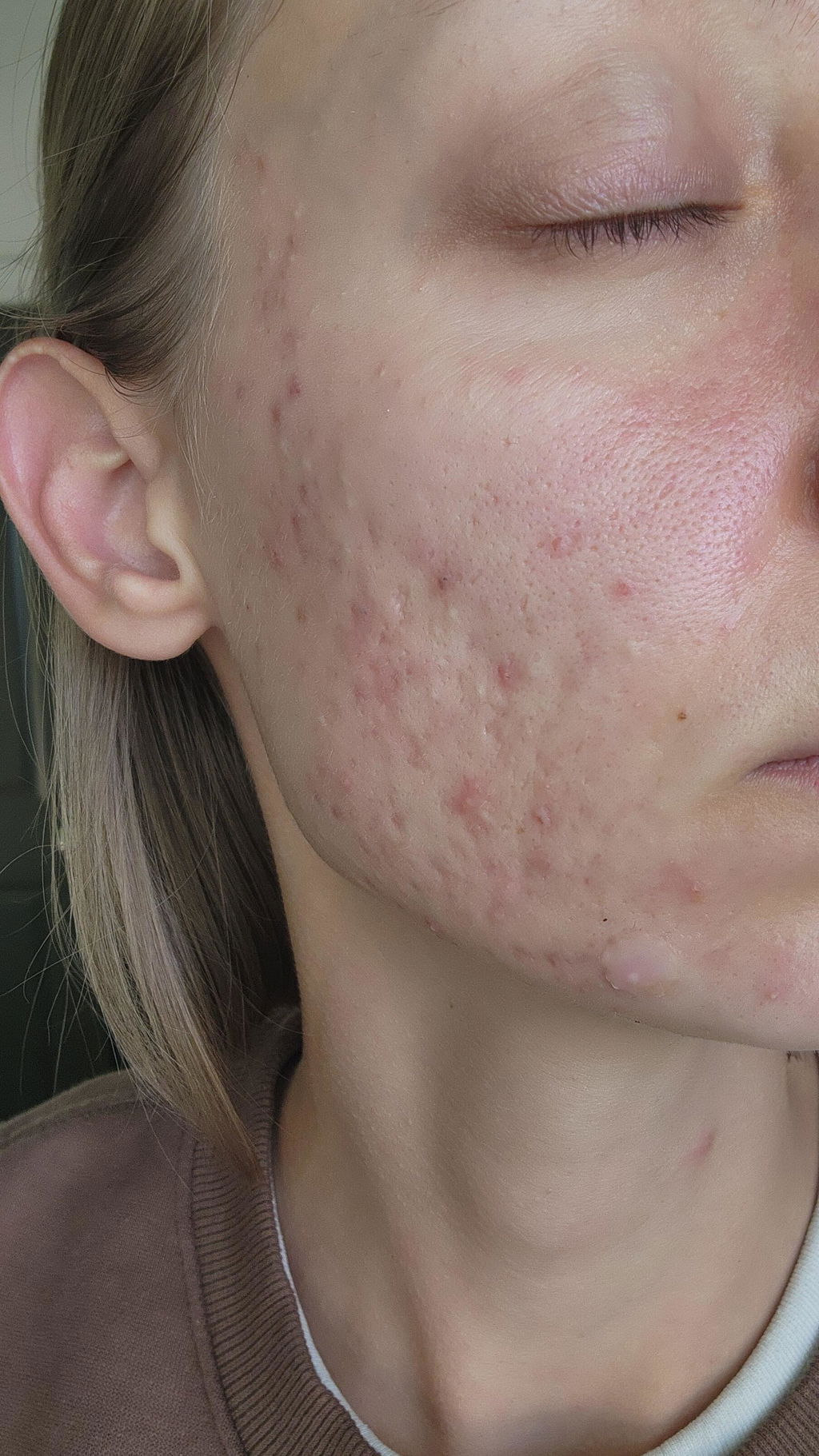
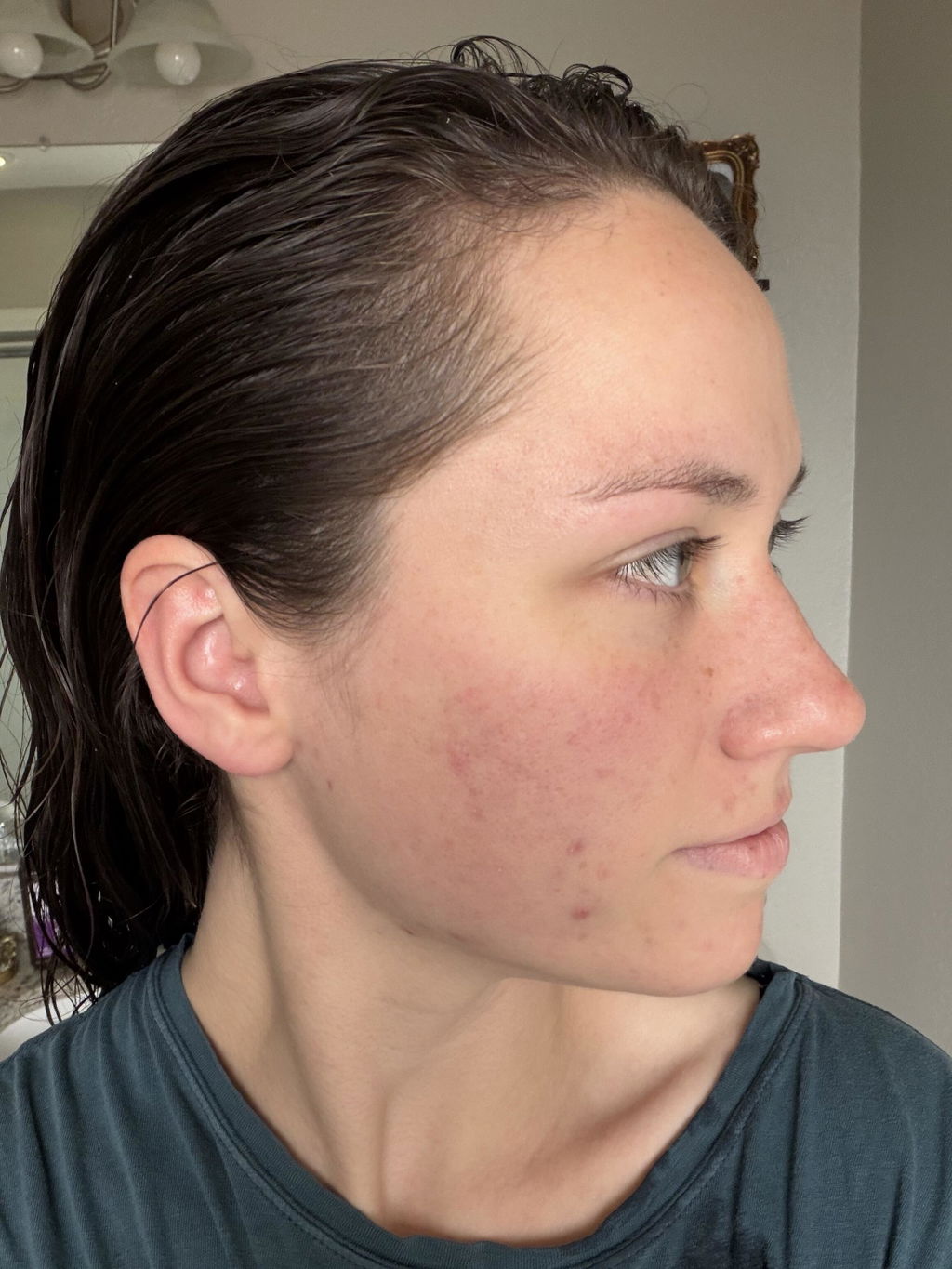
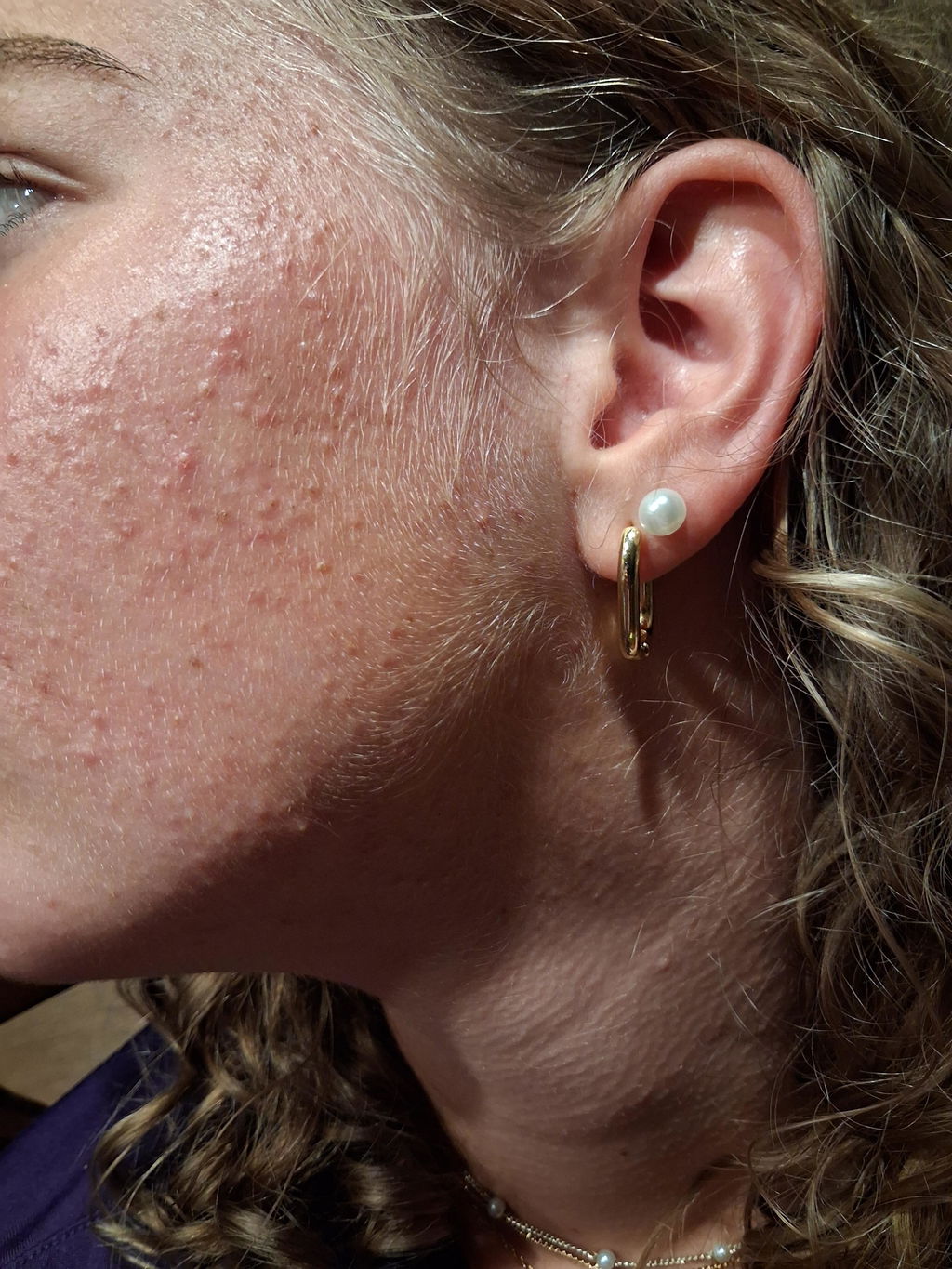
You can spend two hundred dollars on serums and still wake up to the same angry skin. I know, because I watched it happen for years in my own bathroom mirror. Here is the part nobody told me. The problem was never on my face. It was about thirty feet of intestine working quietly against me, and your skin may be sending the same distress signals right now.
Dermatology has a name for this now. The gut-skin axis. Your gut lining and your skin are both barriers, both packed with immune cells, both in constant conversation through your bloodstream and your nervous system. When the gut barrier leaks, the skin pays the bill. Here are the seven signs I look for first:
- Chronic acne that ignores topicals
- Eczema that flares after eating
- Rosacea that flares with stress
- Dull, tired skin despite good skincare
- Dark circles concealer cannot fix
- Cuts and blemishes that heal slowly
- Skin that reacts to every new product
1. Chronic Acne That Shrugs Off Every Topical
When acne ignores even well-chosen topicals, the trigger is usually internal, not surface deep. Research on the gut-brain-skin axis links intestinal dysbiosis to higher systemic inflammation and elevated IGF-1, a hormone that tells your sebocytes to pump out more sebum. More oil plus more inflammation equals breakouts no cream can reach.
Back in 2011, dermatologist Whitney Bowe and researcher Alan Logan revived a forgotten idea in the journal Gut Pathogens. Two physicians named Stokes and Pillsbury had proposed it all the way back in 1930. Stress, gut bacteria, and skin were one connected loop. Bowe and Logan put modern science behind it.
Here is what that means for your jawline. When the balance of bacteria in your gut tips toward the wrong species, your gut barrier gets leaky. Inflammatory messengers slip into your bloodstream. Your insulin and IGF-1 climb. And IGF-1 is rocket fuel for the oil glands in your skin. Bodo Melnik's work on milk, IGF-1, and the mTORC1 pathway maps this out in detail.
So you can keep drying out the surface. Or you can ask why the oil keeps coming. In my practice, the women whose acne finally calmed were the ones who reset the gut first. A targeted gut cleanse is often where I start, because it addresses the bacteria driving the oil, not just the oil itself.
But what if your skin barrier itself was never really the problem either?
2. Eczema That Flares Within Hours of Eating
Eczema that worsens after meals points to a leaky gut barrier. When intestinal permeability rises, partly digested food proteins cross into the bloodstream where they do not belong. Your immune system flags them as invaders, and the resulting inflammation surfaces as red, itchy, flaring patches on your skin.
The gatekeeper here is a protein called zonulin. Alessio Fasano, the researcher who discovered it, showed in Physiological Reviews that zonulin loosens the tight junctions between the cells of your gut lining. A little is normal. Too much, and the gate stays propped open. That is the mechanism behind what people casually call leaky gut.
Studies of people with atopic dermatitis keep finding the same pattern. Their gut microbiome is less diverse, and their intestinal barrier is more permeable than people with clear skin. The food does not cause the eczema. The leaky barrier lets the food become a trigger.
This is why I rarely chase eczema with creams alone. Closing the gate matters more. A barrier-repairing tallow cream can calm the surface while you work upstream, and tallow is close to our own skin lipids, so reactive skin tends to tolerate it.
Now, what does stress have to do with any of this?
3. Rosacea That Flares the Moment You Are Stressed
Stress-triggered rosacea runs through the HPA axis and the vagus nerve, the wiring connecting your brain to your gut. Stress shifts your gut bacteria and slows digestion, which can fuel small intestinal bacterial overgrowth. SIBO is strongly associated with rosacea, and clearing it often calms the flushing.
This is one of the most striking findings in the whole gut-skin field. In 2008, Parodi and colleagues published a study in Clinical Gastroenterology and Hepatology. They found that people with rosacea had far higher rates of small intestinal bacterial overgrowth than healthy controls. When they cleared the SIBO, the rosacea cleared in 20 of 28 patients and greatly improved in 6 more. Treating the gut treated the face.
Then in 2017, a large Danish cohort study by Egeberg and colleagues in the British Journal of Dermatology found that rosacea patients had significantly higher rates of celiac disease, Crohn's disease, ulcerative colitis, and irritable bowel syndrome. The gut connection was not a fluke. It showed up across millions of records.
When you are stressed, cortisol rises, your vagus nerve goes quiet, and digestion stalls. Food sits. Bacteria overgrow. The flush you see is the tail end of that chain. Calming the nervous system and supporting digestion does more for stubborn redness than any green-tinted primer.
Your skin is not overreacting. It is reporting. Every flare is a message from a gut that needs help.
4. Dull, Tired Skin Despite a Flawless Routine
Dull skin despite great products usually signals poor nutrient absorption. Your skin is the last organ to get fed. If a damaged gut lining cannot absorb the minerals and fats that build a glowing complexion, no topical can supply them from the outside. Radiance is built from the inside.
Healthy gut bacteria ferment prebiotic fiber into short-chain fatty acids like butyrate. These postbiotic compounds feed the cells of your gut lining and calm inflammation body wide. When dysbiosis sets in, short-chain fatty acid production drops, the lining suffers, and absorption falls with it.
A 2018 review by Salem and colleagues in Frontiers in Microbiology, titled the gut microbiome as a major regulator of the gut-skin axis, pulled this evidence together. A thriving microbiome shows up as skin that looks alive.
This is where minerals matter. I am a fan of mineral-rich sea moss for exactly this reason. It delivers a broad spectrum of trace minerals your skin uses to stay plump and luminous, and it doubles as gentle prebiotic support for the very bacteria making your short-chain fatty acids. For someone who wants a more structured reset, the deeper 12-week reset gives the gut lining real time to repair.
Which brings us to the shadows under your eyes.
5. Dark Circles Concealer Cannot Touch
Persistent dark circles can reflect chronic low-grade inflammation and poor iron absorption rooted in the gut. When the gut lining is inflamed, nutrient uptake drops and histamine can rise, dilating and darkening the delicate vessels under the eyes. Concealer hides the shadow. It cannot fix the source.
The skin under your eyes is the thinnest on your body, so whatever is happening in your blood shows through fast. Two gut-linked culprits stand out.
First, absorption. If your gut cannot pull iron and B vitamins from your food, mild deficiency follows, and pale, poorly oxygenated under-eye skin looks blue and bruised.
Second, histamine. A dysbiotic gut often struggles to break histamine down. Excess histamine dilates blood vessels, including the ones ringing your eyes. Many women notice their circles deepen alongside bloating and food reactions. That is not a coincidence. It is the same gut barrier story wearing a different face.
Supporting digestion and rebuilding the microbiome with this microbiome reset tends to lift the whole picture, not just the eyes.
6. Cuts and Blemishes That Take Forever to Heal
Slow wound healing often traces back to the gut. Repairing skin demands protein, zinc, vitamin C, and a calm immune system. A compromised gut barrier limits the absorption of these building blocks and keeps the body in a low-grade inflammatory state that stalls every stage of healing.
Think of a healing wound as a construction site. It needs materials and a clear schedule. Zinc and protein are the bricks. Vitamin C builds collagen. The short-chain fatty acids your gut bacteria make help regulate the immune cells that run the repair crew.
When dysbiosis and intestinal permeability are in play, two things go wrong. The materials do not arrive, because absorption is poor. And the site stays inflamed, so the crew never gets the all-clear to finish. Marks linger. Spots take weeks to fade.
This is where I lean on building blocks directly. Bioavailable collagen support gives the skin the raw protein it needs while the gut work continues underneath. Heal the gut, supply the materials, and the skin starts closing wounds the way it is supposed to.
There is one last sign, and it is the one most women quietly blame on themselves.
7. Skin That Reacts to Every New Product
Skin that stings or breaks out with every new product is often a sign of a primed, overreactive immune system, not a parade of bad products. When the gut barrier leaks, the immune system stays on high alert. That hypervigilance shows up as a skin barrier that treats mild ingredients as threats.
The largest share of your immune system lives in and around your gut. The gut-associated lymphoid tissue is the biggest immune organ you have. When that system is constantly fielding leaked food particles and inflammatory signals, it becomes trigger happy.
A trigger-happy immune system means mast cells release histamine at the smallest provocation. A new moisturizer, a different sunscreen, and your skin flares. It feels like sensitivity. It is really an overwhelmed immune system looking for something to react to.
Calm the gut, and the immune system stops treating every novelty as an emergency. In my practice this is often the first thing women notice. They stop bracing before they try something new. For a thorough reset, a full detox protocol gives the gut lining and the immune system room to settle.
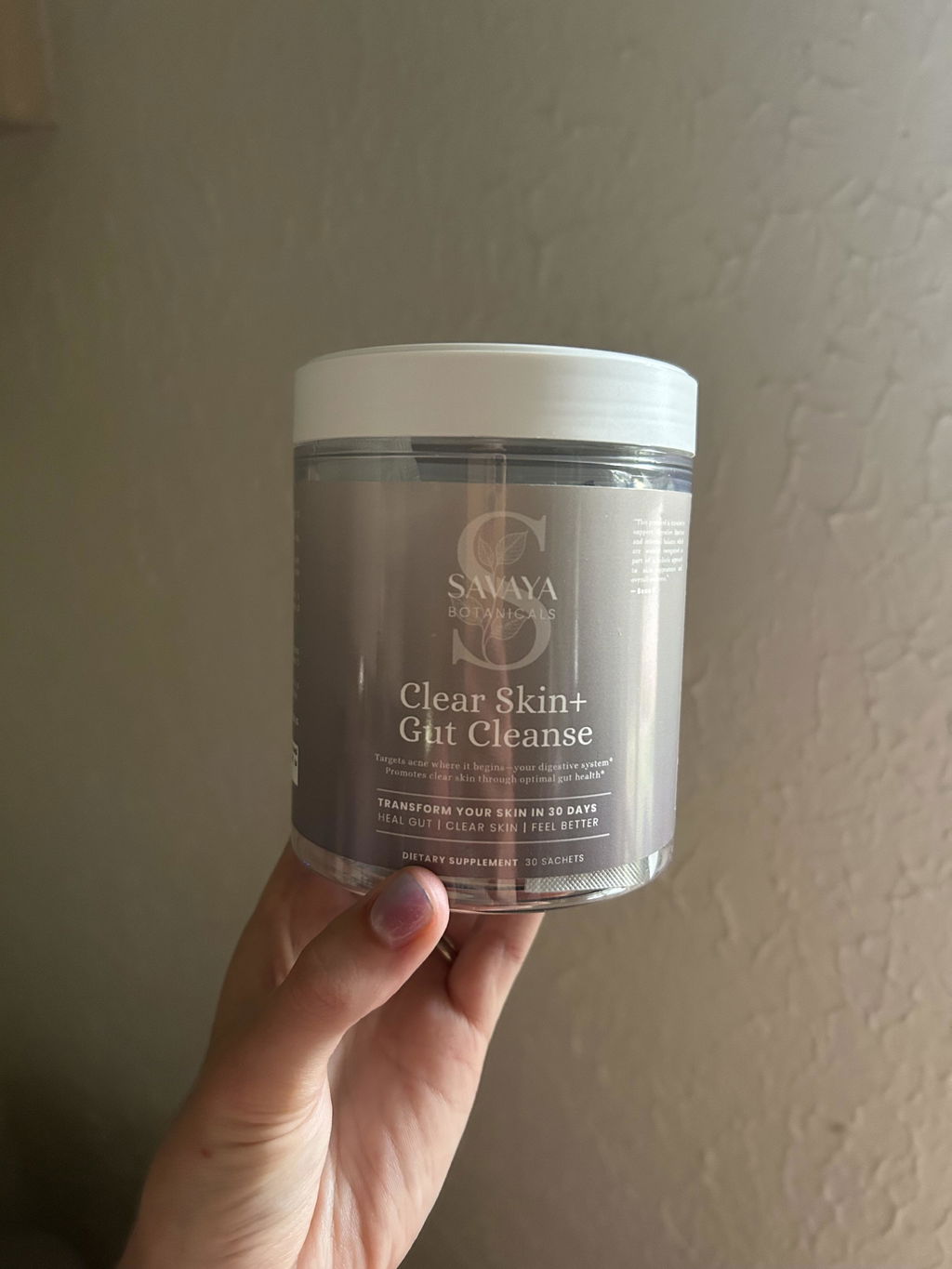
If you recognized your skin in more than one of these signs, the pattern is the point. They share a single root, and Clear Skin+ Max Detox, a daily acai-based blend, is formulated to support that root at the gut barrier.
• • •
Frequently Asked Questions
What is the gut-skin axis?
The gut-skin axis is the two-way communication between your digestive system and your skin. They are linked through the immune system, the bloodstream, and the nervous system. When the gut microbiome falls out of balance or the gut barrier becomes leaky, the resulting inflammation often surfaces as skin problems.
Why does my skin break out when my gut is off?
An imbalanced gut raises systemic inflammation and can elevate IGF-1, a hormone that drives your oil glands to produce more sebum. Combined with a leaky gut barrier letting inflammatory signals into the blood, this creates the perfect conditions for breakouts that topical products simply cannot reach.
How long does it take for gut healing to improve skin?
Most women start noticing changes in their skin within four to twelve weeks of supporting their gut, though it varies with the person and the issue. The gut lining renews quickly, but rebuilding a balanced microbiome and calming an overactive immune system takes consistent weeks, not days.
Can I fix gut-related skin issues with skincare alone?
Skincare can soothe and protect the surface, but if the root cause is in the gut, topicals alone rarely resolve it. A barrier cream or a gentle routine helps you stay comfortable while you address absorption, the microbiome, and intestinal permeability from the inside.
Is a gut cleanse safe for sensitive skin?
A gentle, well-formulated gut cleanse is generally well tolerated, and people with sensitive, reactive skin are often the ones who benefit most, since their sensitivity frequently traces back to an overactive gut-driven immune response. Start slow, and support your body with minerals and fiber as you go.