Why Hormonal Shifts May Be Linked to Acne in Your 30s, 40s, and 50s

Key Takeaways
- First-time acne in your 30s, 40s, or 50s often coincides with slowing estrogen clearance through the liver and gut, not new skin damage.
- The liver processes used estrogen through phase I and phase II detoxification steps before it can be cleared from the body.
- Gut bacteria carrying the enzyme beta-glucuronidase, sometimes called the estrobolome, can send already-tagged estrogen back into circulation.
- Perimenopause typically begins in the mid-to-late 30s or 40s, years before a woman's final period.
- Jawline and chin breakouts in midlife are a pattern researchers associate with relative androgen activity as estrogen clearance slows.
Adult-onset acne that first shows up in your 30s, 40s, or 50s is often linked to slowing estrogen clearance through the liver and gut as hormone metabolism shifts with age — a pattern distinct from diet, dairy, or skincare habits that gets far more attention in most explanations of hormonal breakouts.
Why Does Acne Sometimes Show Up for the First Time in Your 30s?
First-time acne in your 30s often coincides with perimenopause, when ovarian estrogen production starts fluctuating years before periods change. As estrogen output becomes less steady, the body's downstream systems for processing and clearing it — primarily the liver and gut — take on a bigger role in how skin responds to those shifts.
Many women assume acne is a teenage problem, so a first breakout at 32 or 35 feels confusing. But ovarian estrogen production doesn't decline in a straight line — it becomes erratic well before perimenopause is diagnosable by symptoms like hot flashes or irregular cycles.
During this stage, estrogen can spike and dip within the same month, while androgens like testosterone and DHEA-S tend to hold steadier. That shifting ratio, not necessarily a dramatic 'hormone imbalance,' is one reason skin that was clear for two decades can suddenly start producing more oil along the jaw and chin.
The mechanism worth understanding isn't just that estrogen changed. It's what happens to estrogen after your ovaries release it — how efficiently your liver and gut process and clear it before it can keep circulating.

What Role Does the Liver Play in Clearing Used Estrogen?
The liver breaks down circulating estrogen in two stages, called phase I and phase II metabolism, before tagging it for elimination through bile and urine. When this hepatic clearance process runs less efficiently, estrogen and its byproducts may stay in circulation longer, potentially affecting oil production in skin.
Every hormone your body produces eventually needs to be broken down and removed, and estrogen is no exception. The liver handles most of this work through a two-step process: phase I enzymes chemically modify the estrogen molecule, and phase II enzymes attach it to a compound that makes it water-soluble enough to exit through bile or urine.
This system tends to work efficiently through most of a woman's reproductive years. But hepatic function is also influenced by age, nutrient status, alcohol intake, and overall metabolic load — all of which can shift in your late 30s and 40s.
When this clearance pathway slows, used estrogen has more opportunity to recirculate rather than exit the body on schedule. Supporting the body's natural detoxification pathways is one piece of the picture — not a fix, but a foundational input the liver relies on.

How Can Gut Bacteria Affect Estrogen Levels? (The Estrobolome)
A collection of gut bacteria known as the estrobolome produces an enzyme called beta-glucuronidase, which can free estrogen the liver had already tagged for excretion. Research suggests this gut-based process plays a role in how much estrogen recirculates rather than leaves the body, connecting gut balance to hormone metabolism.
The liver's job is only half the story. Once estrogen is packaged for elimination, it travels through the digestive tract — and that's where certain gut bacteria can intervene.
Researchers use the term 'estrobolome' to describe the specific set of gut microbes capable of producing beta-glucuronidase, an enzyme that can cleave the very bond the liver used to mark estrogen for removal. When that happens, the estrogen may be reabsorbed into circulation instead of leaving the body as intended.
- Fiber intake, which feeds the bacteria research associates with typical estrogen clearance
- Antibiotic history, which can temporarily shift gut microbial diversity
- Overall microbial diversity, which researchers link to more consistent beta-glucuronidase activity
This is a different mechanism from stomach acid levels or single-food triggers — it's about the balance of the broader gut microbial community and how it interacts with hormone metabolism as a whole.

Why Do Estrogen and Androgen Balance Shift Skin Patterns in Midlife?
As estrogen clearance slows, the ratio between estrogen and androgens like testosterone can shift even without a formal hormone imbalance. Because androgens stimulate oil glands, a relative increase in their influence is associated with the jawline and chin breakout pattern many women first notice in their late 30s through 50s.
Estrogen and androgens exist in a constant push-and-pull relationship. Estrogen tends to keep oil production in check, while androgens — a category that includes testosterone and DHEA-S — encourage the sebaceous glands to produce more.
When estrogen clearance slows and circulating estrogen becomes less predictable, that balance can tip, even if total androgen levels stay technically normal on a lab panel. It's the ratio, not just the raw number, that appears to matter for skin.
This helps explain why hormonal acne in midlife tends to cluster along the jawline, chin, and lower cheeks rather than the forehead and nose pattern more common in teenage acne — the areas with the highest concentration of androgen-sensitive oil glands.

Why Does This Look Different in Your 30s vs. Your 40s and 50s?
In your 30s, hormonal acne often reflects erratic estrogen swings during early perimenopause. By your 40s and into the menopause transition, overall estrogen output declines more steadily, and clearance efficiency plays an even larger role in how much residual hormone stays active in circulation over time.
The 30s, 40s, and 50s aren't interchangeable when it comes to hormonal skin changes, even though all three decades can bring first-time acne.
In the 30s, the picture is usually early perimenopause: estrogen levels swing unpredictably from cycle to cycle rather than falling in any consistent direction. That volatility, layered on top of however well the liver and gut are clearing each surge, is often what shows up on skin.
By the 40s and into the menopause transition, average estrogen output trends downward more consistently. At this stage, how efficiently the body clears what estrogen remains can matter as much as the total amount being produced. Two women with similar hormone panels can have very different skin outcomes depending on that clearance step.

Where to Start If This Sounds Like You
Start with a two-to-four-week log tracking breakout location, cycle timing, fiber intake, and alcohol use, since these all interact with estrogen clearance. Prioritize fiber-rich meals, consistent sleep, and reduced alcohol before adding anything new — then consider whether ongoing gut and liver support fits into that same foundation.
Before changing anything about your routine, spend two to four weeks tracking what's actually happening. A simple log turns a vague sense that something's off into a pattern you can act on.
- Map your breakouts to your cycle. Note the date of each new blemish alongside where you are in your cycle — flare-ups clustering in the two weeks before your period point toward the hormonal pattern described above.
- Track location, not just frequency. Jawline, chin, and lower-cheek breakouts fit the androgen-sensitive pattern; forehead or scattered breakouts may have other drivers worth investigating separately.
- Add fiber deliberately. Vegetables, legumes, and whole grains give gut bacteria what they need to function normally, which is relevant given the estrobolome mechanism above.
- Look at alcohol intake honestly. Alcohol competes for some of the same liver enzymes involved in hormone metabolism, so even modest reductions are worth testing for a few weeks.
- Protect sleep. Poor sleep is associated with disrupted hormone rhythms more broadly, and it's free to prioritize before anything else.
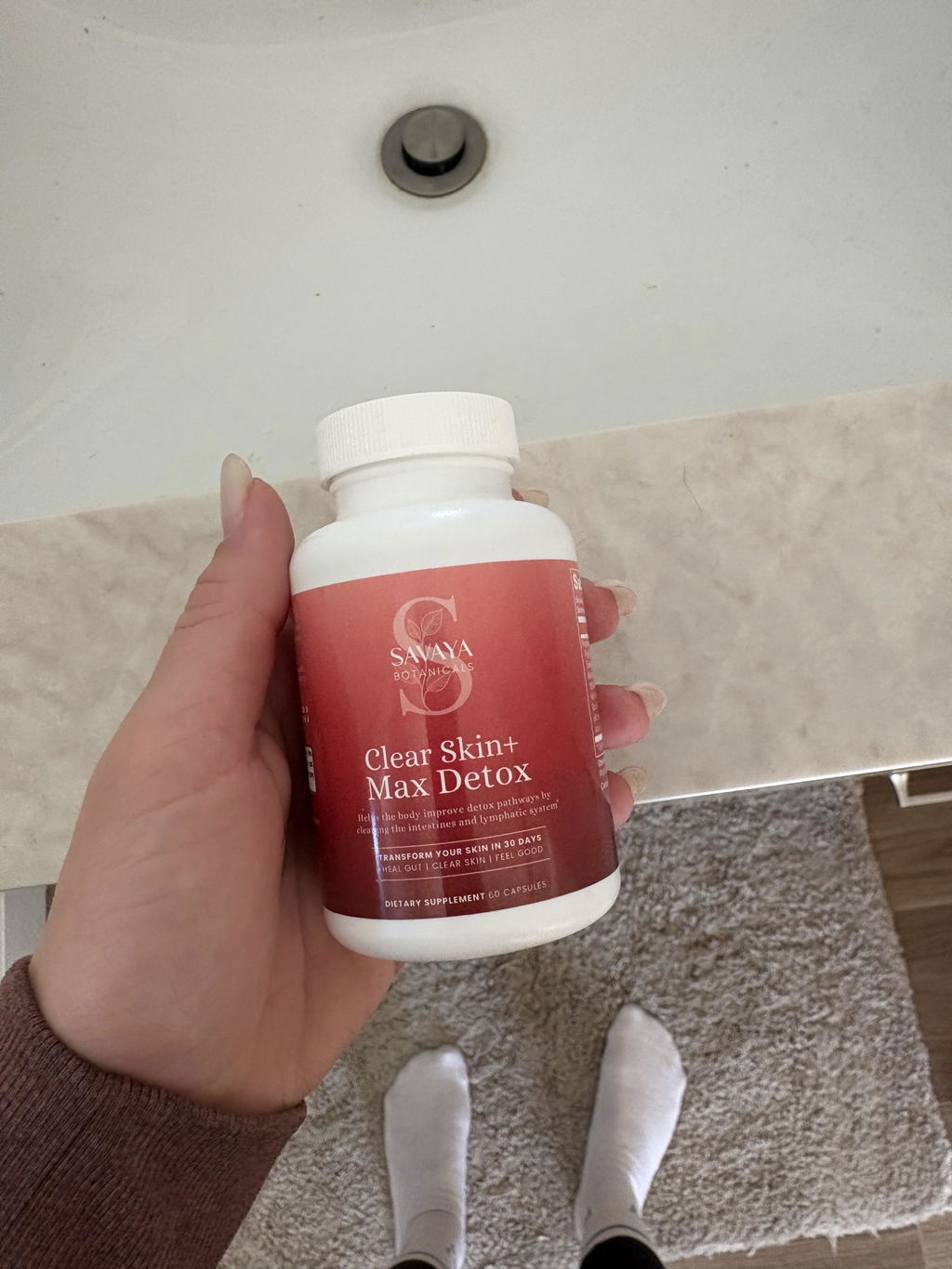
Once those basics are in place, some women look at ongoing gut and liver support as the next layer. Max Detox was formulated with that same clearance pathway in mind, combining acai with ingredients that support the body's natural detoxification processes as part of a broader routine, not a replacement for it.

Bottom Line: What's Really Driving Adult-Onset Hormonal Acne
First-time acne in your 30s, 40s, or 50s often has less to do with what touches your skin and more to do with how efficiently your liver and gut clear used estrogen. Supporting that clearance process, alongside diet and lifestyle basics, addresses a mechanism many skincare-only approaches don't touch.
Adult acne isn't a sign that your skincare routine failed, and it isn't purely a diet problem either. For many women, first-time breakouts in midlife trace back to a shift in hormone metabolism — specifically, how well the liver and gut clear estrogen once it's done its job.
Understanding that mechanism doesn't replace a dermatologist's evaluation, especially for persistent or cystic breakouts. But it does explain why so many women are surprised to develop acne well past their teenage years, and why the fix often lives upstream of the skin itself.
Tracking your patterns, supporting your gut and liver through diet, and considering additional support like Max Detox as part of that foundation are all reasonable next steps — grounded in a mechanism worth understanding, not a guaranteed outcome.

See if Max Detox is right for you
Frequently Asked Questions
Can acne really start for the first time in your 30s or 40s?
Yes. Many women experience their first breakouts during perimenopause, when estrogen production becomes erratic years before periods stop. This isn't unusual — hormonal shifts in your 30s and 40s can influence oil production and breakout patterns even if your skin was clear throughout your teens and twenties.
What is the estrobolome and how does it relate to acne?
The estrobolome is the group of gut bacteria capable of producing beta-glucuronidase, an enzyme that can free estrogen the liver had already tagged for removal. Research suggests this process plays a role in how much estrogen recirculates, which some researchers connect to skin's oil production over time.
Is hormonal acne in your 40s different from teenage acne?
Often, yes. Teenage acne tends to cluster on the forehead and nose, while hormonal acne in your 40s more commonly appears along the jawline, chin, and lower cheeks — areas with a higher concentration of androgen-sensitive oil glands affected by shifting estrogen and androgen ratios.
Does diet alone explain hormonal acne, or is gut health also involved?
Diet is one piece, but it's not the whole picture. Gut bacteria composition affects how much estrogen is reabsorbed versus cleared, independent of any single food. That's why a fiber-rich, diverse diet — not just cutting out one ingredient — is more closely tied to supporting normal estrogen metabolism.
When should I see a dermatologist about adult-onset acne?
Consider a dermatologist if breakouts are painful, cystic, scarring, or not improving after consistent lifestyle changes over several weeks. A professional can also evaluate whether other factors are contributing and discuss options suited to your specific skin and health history.
This content is for general wellness and educational purposes and is not medical advice. These statements have not been evaluated by the Food and Drug Administration. This product is not intended to diagnose, treat, cure, or prevent any disease. Consult your healthcare provider before starting any supplement, especially if you are pregnant, nursing, or managing a health condition. Individual results vary.