I stared at my reflection in a hotel mirror in Kyoto, three deep cystic spots throbbing along my jawline, and burst out laughing. I had flown 6,000 miles to interview a 78-year-old herbalist about traditional skin protocols. I looked like a teenager who had eaten cheese pizza for breakfast.
"You don't sleep enough," she said before I sat down. "And your large intestine is angry."
I hadn't told her anything. She had glanced at my chin for maybe two seconds.
That afternoon she walked me through something Western dermatology has only recently started taking seriously: face mapping. The idea that the location of a breakout — not just its presence — is a readable signal from your gut, hormones, and internal organs. Traditional Chinese Medicine (TCM) has used this diagnostic tool for over 3,000 years. And in the last decade, gut-skin axis research has quietly validated a startling amount of it.
If you've ever wondered why your chin flares the week before your period, why your forehead breaks out after a weekend of takeout, or why one cheek seems to hold breakouts longer than the other — keep reading. Your face is trying to tell you something.
What Is Face Mapping (and Why Modern Science Is Finally Paying Attention)
Face mapping divides the face into zones that correspond to specific internal systems. In TCM, each zone is linked to an organ meridian. In modern functional medicine, those same zones are increasingly linked to specific imbalances: hormonal shifts, gut dysbiosis, liver congestion, inflammation patterns.
Here's what's wild: a 2021 review in the Journal of Clinical Medicine on the gut-skin axis confirmed that intestinal permeability — what most people call leaky gut — directly influences inflammatory skin conditions including acne, rosacea, and eczema. Other research has tied jawline acne to androgens and insulin signaling, exactly where TCM said it would be 30 centuries earlier.
Your skin isn't broken. It's reporting.
Let's translate the report, zone by zone.
———
Forehead Acne: The Digestive Distress Signal
In TCM, the forehead maps to the small intestine and bladder — the workhorses of digestion and elimination. When breakouts cluster across your forehead in little bumpy waves (not deep cysts, but persistent texture and small whiteheads), your body is usually telling you one of three things:
- Food is moving too slowly through your gut
- Your microbiome is overrun with the wrong bacteria
- You're not absorbing nutrients properly
Modern translation: this is the breakout pattern most strongly associated with dysbiosis — the imbalance between beneficial and pathogenic bacteria in your gut. Sugar, refined carbs, alcohol, and ultra-processed seed oils feed the wrong microbes. Those microbes produce endotoxins. Those endotoxins leak into circulation. Your skin pushes them out the only way it knows how.
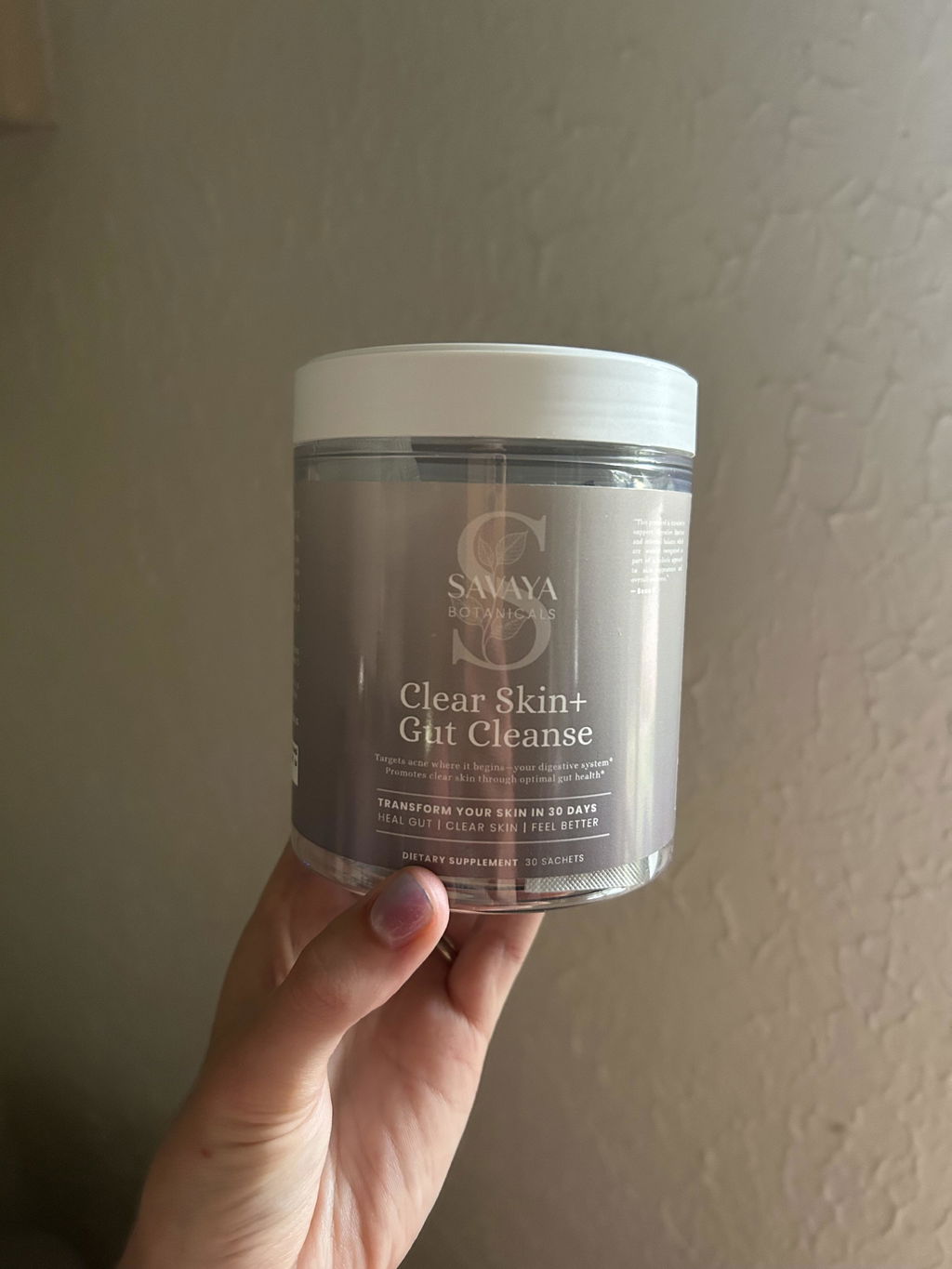
What to do: Stop trying to scrub the forehead clean from the outside. It won't work because the issue isn't on your skin. Focus on reseeding the gut. I'm a huge fan of starting with a structured microbiome gut cleanse — gentle sachets that bind to gut irritants and feed the right bacteria — for about 30 days before reaching for any topical. Drink more water than you think you need. Cut the snacking window and give your digestive system longer rests between meals.
Temple Acne: The Kidney and Liver Conversation
The temples are the quiet zone — until they aren't. Breakouts here are less common, which is exactly why people miss what they mean. TCM links the temples to the kidneys and gallbladder, with strong overlap into liver function.
Modern functional medicine reads temple acne almost the same way: a sign that your detoxification pathways are overloaded. Your liver processes everything — hormones, alcohol, medications, environmental toxins, the chemical residue from skincare, even excess estrogen. When it's running over capacity, the overflow shows up on your temples and along your hairline.
Signs your temples are flaring for this reason:
- You wake up between 1 and 3 AM regularly (peak liver hours in TCM)
- You feel sluggish even after eight hours of sleep
- You hold weight around your midsection
- Your cycles feel heavier or more painful than they used to
What to do: Support, don't punish. Aggressive juice cleanses do more harm than good here. What works is sustained, gentle detox support — bitter greens, milk thistle, dandelion root, sweat (sauna or movement), and significantly less alcohol. A full protocol like Max Detox walks the liver through phase 1 and phase 2 detoxification properly instead of just dumping toxins back into circulation, where they re-deposit somewhere else (usually the skin).
Nose Acne: The Heart-Stomach Axis
If breakouts appear directly on or around the nose, TCM points to the heart and stomach. The bridge of the nose connects to the stomach line. The tip and sides relate to cardiovascular function and blood quality.
This is the zone that surprises people. Persistent nose breakouts often correlate with:
- High blood pressure or unaddressed chronic stress
- Excess refined sugar (which damages blood vessels and feeds inflammation)
- Poor circulation
- Stomach acid imbalances (often too little stomach acid, not too much)
Modern research backs this up indirectly: chronic systemic inflammation — the kind that leads to cardiovascular issues — shows up early in the skin as redness, broken capillaries, and persistent papular acne on the nose and central face. It's not coincidence. The same inflammatory cytokines that thicken arterial walls also dilate facial capillaries and clog pores.
What to do: Mineralize. Most people with persistent nose breakouts are deficient in foundational minerals — magnesium, zinc, selenium, iodine. Sea moss delivers 92 of the 102 minerals your body needs, and it has been my non-negotiable for the last two years. Pair it with regular movement (it doesn't have to be intense — walking 45 minutes a day moves lymph and blood beautifully) and dramatically reduce added sugar.
Cheek Acne: The Respiratory and Gut Inflammation Zone
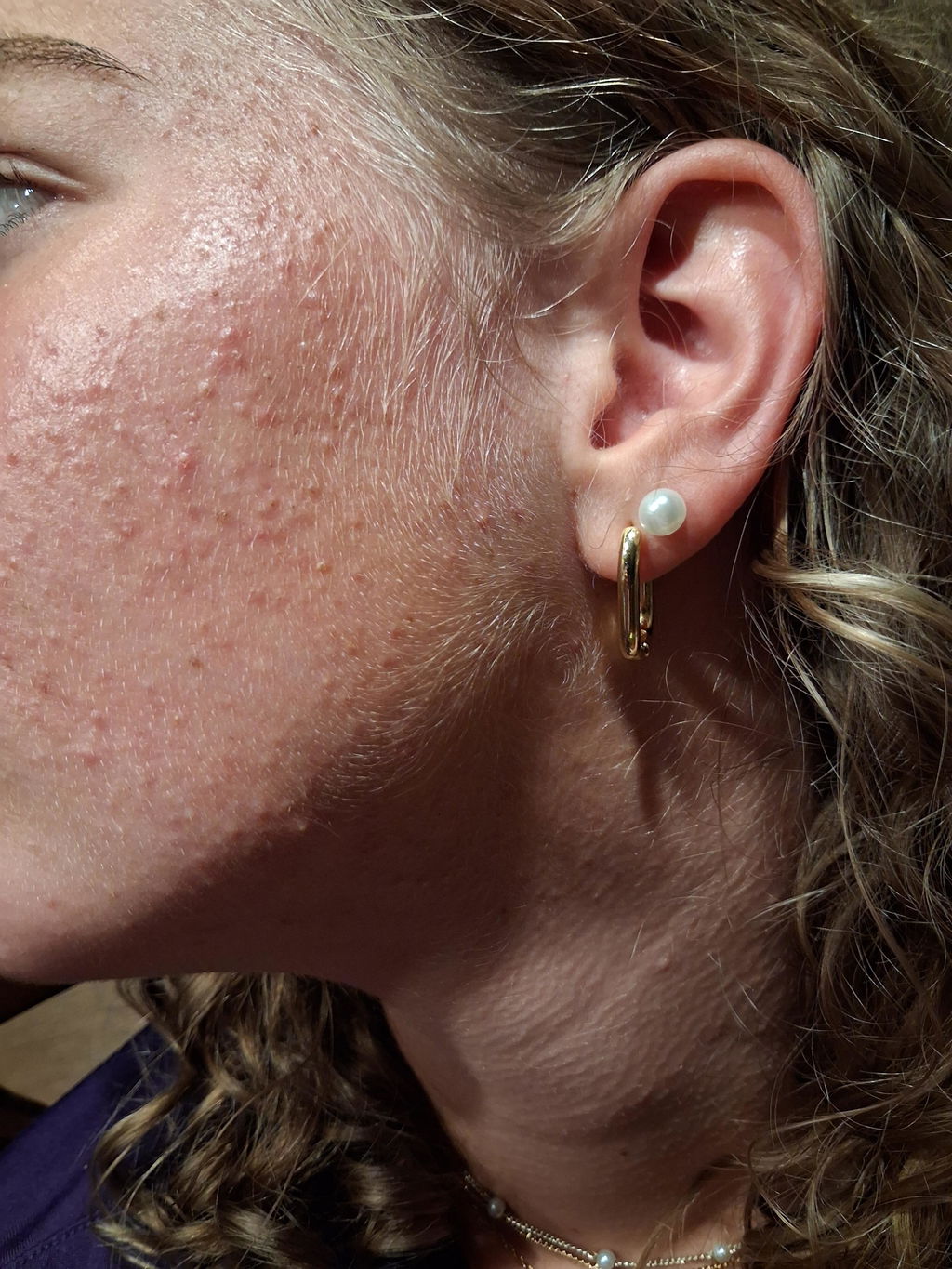
Cheek breakouts are the most common pattern I see — and the most misdiagnosed. TCM splits the cheeks between the lungs and large intestine. Both relate to inflammation, both to elimination, both to what you're breathing in and what you're not letting out.
The modern interpretation lines up almost exactly. Cheek acne is the signature pattern of:
- Gut inflammation from food sensitivities (dairy and gluten are the top two culprits)
- Histamine intolerance when the gut can't process histamine properly
- Pillowcases, phone screens, and air quality — yes, these matter too, but they're usually the third factor, not the first
One side worse than the other? Check which side you sleep on, which side you hold your phone, and which nostril you breathe through more easily. The asymmetry is information.
What to do: This is where I'd focus on daily habits rather than a single big fix. Cheek inflammation has usually been building for years, so small, steady choices tend to add up. Clear Skin+ Max Detox, a daily acai-based blend, is one easy habit that helps support your skin day to day. Skip dairy for 90 days as a test. Wash your pillowcase every three nights. Try slow nasal breathing for two weeks and watch what happens.
Chin and Jawline Acne: The Hormonal-Gut Loop
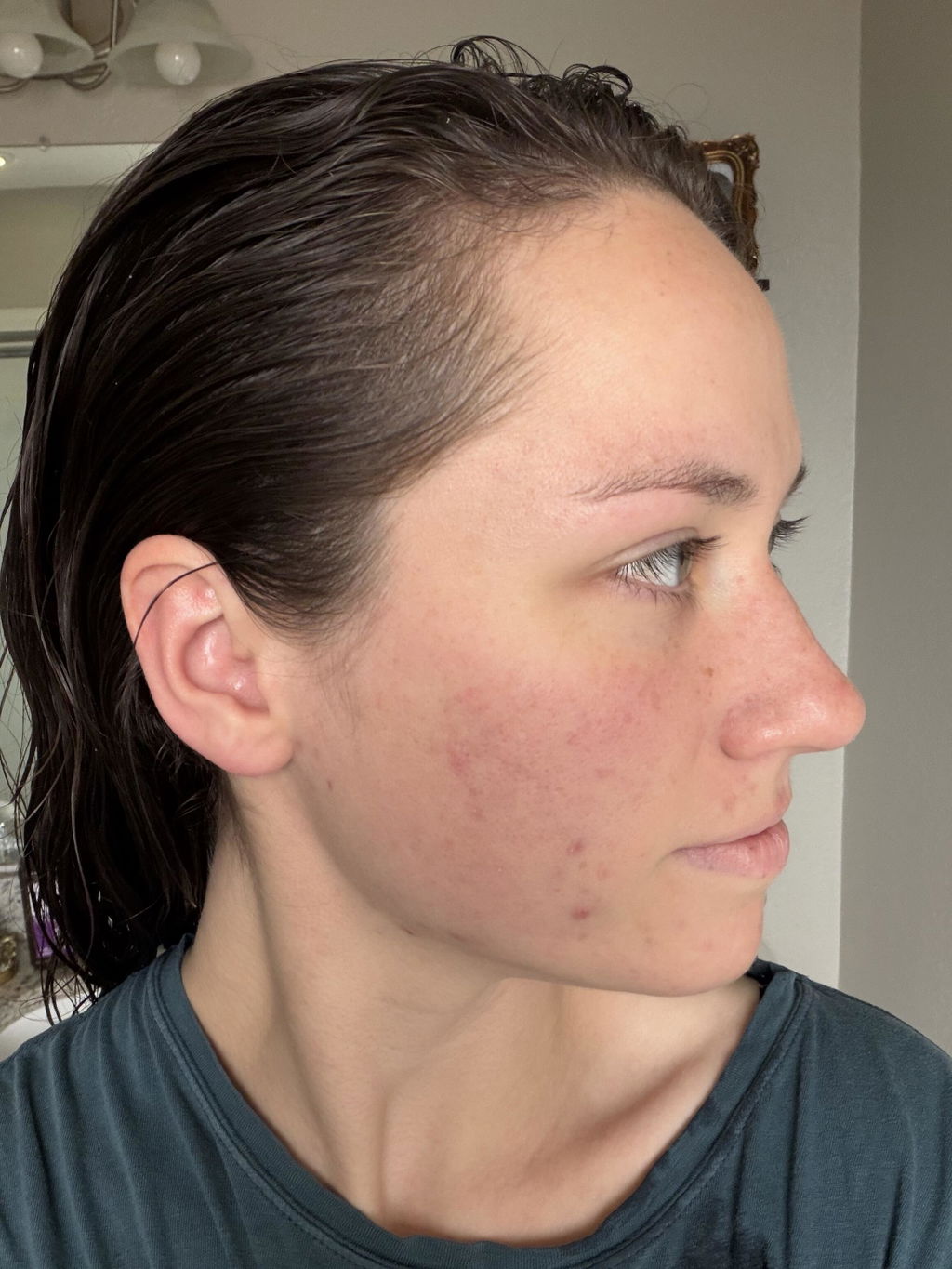
Now we get to the one everyone asks about. Deep, painful, cystic breakouts along the jawline and chin — the kind that show up in the same exact spot every month. TCM maps this to the stomach, small intestine, and reproductive system. Modern dermatology and endocrinology call it hormonal acne.
Both are right. They're describing the same loop from different angles.
Here's what's actually happening: your gut microbiome regulates the metabolism of estrogen through a collection of bacteria called the estrobolome. When the estrobolome is disturbed — by antibiotics, by alcohol, by chronic stress, by a sugar-heavy diet — estrogen recirculates instead of being properly cleared. This shifts the ratio of androgens to estrogens, which increases sebum production in androgen-sensitive areas (the jawline and chin). The skin then becomes a breeding ground for inflammatory bacteria. The cycle repeats every month, often peaking in the luteal phase a week before your period.
So no, it's not "just hormones." It's hormones and the gut, and they are talking to each other constantly.
What to do:
- Heal the gut first. Without this, no hormonal protocol will hold.
- Support estrogen metabolism with cruciferous vegetables (broccoli sprouts, kale, cauliflower) daily.
- Stabilize blood sugar — chin acne flares hard with insulin resistance.
- Support your skin barrier topically while the inside heals. A clean, non-comedogenic balm like tallow cream rebuilds the lipid layer that hormonal acne strips away. Real tallow contains the same fatty acids your skin already makes, so it doesn't suffocate or feed bacteria the way most creams do.
- Consider collagen support to help the dermal layer recover faster between cycles.
The jawline doesn't lie. If you've been treating it with prescription topicals for years and it keeps coming back in the same place — the issue isn't your skin. It's the conversation happening in your gut.
———
The Pattern Behind the Pattern
Notice something? Every zone — every single one — traces back to the gut. Forehead via dysbiosis. Temples via the liver, which is the gut's drainage system. Nose via systemic inflammation that starts in the gut lining. Cheeks via food sensitivity and histamine. Jawline via the estrobolome and insulin signaling.
This is the part TCM has always understood and Western medicine is finally catching up to: the gut is the soil. The skin is the fruit. You can polish, peel, and prescribe at the fruit forever — but if the soil is depleted, the fruit will keep coming back damaged.
What worked for me, after years of cycling through dermatologists, was deceptively simple: I stopped trying to fix my face and started fixing what my face was reporting. Twelve weeks in, the jawline cysts stopped showing up. Six months in, my forehead texture smoothed out. A year in, the only person who could still see traces of what I'd been through was me.
Where to Start If You're Reading This Today
Don't try to fix everything at once. The face map is a diagnostic, not a to-do list.
- Stand in front of a mirror in natural light and map where your breakouts actually live.
- Pick the zone that's most active right now.
- Address the system behind it — not the spot on your skin.
- Give it 30 days minimum. Skin turns over slowly.
- Track in photos, not feelings. Memory lies; pixels don't.
If most of your breakouts cluster on your forehead or cheeks, start with the gut cleanse. If they're concentrated on temples or hairline, lead with Max Detox. If they're jawline and chin and cycle-locked, reach for Max Detox and rebuild your skin barrier with tallow cream while you wait for the inside to catch up.
Frequently Asked Questions
Is face mapping for acne scientifically proven?
Face mapping originated in Traditional Chinese Medicine over 3,000 years ago. Modern research hasn't validated the zone-to-organ map exactly as TCM drew it, but it has confirmed the underlying principle: the gut-skin axis is real, and specific breakout patterns correlate strongly with specific internal imbalances. Hormonal jawline acne, dysbiosis-related forehead acne, and inflammation-driven cheek acne are all backed by peer-reviewed research in functional medicine and dermatology journals.
How long does it take to clear acne by healing the gut?
Most people see initial changes (less inflammation, fewer new breakouts) within 3 to 4 weeks of starting a serious gut protocol. Visible smoothing of the skin takes 8 to 12 weeks because that's how long it takes for the dermis to fully turn over and the lipid barrier to rebuild. Hormonal acne can take an additional cycle or two on top of that. Patience here is non-negotiable.
Can stress alone cause breakouts in specific face zones?
Yes. Chronic stress raises cortisol, which directly impacts both the gut microbiome and androgen levels. Stress-driven acne typically shows up first on the chin and jawline (cortisol-androgen pathway) and later on the forehead (because cortisol disrupts the gut barrier and slows digestion). If you can't sleep and your skin keeps flaring in those zones, treat the nervous system alongside the gut.
What's the difference between hormonal acne and gut-related acne?
It's a false binary. Hormonal acne is largely gut-related — the gut microbiome regulates how your body metabolizes and clears estrogen, which in turn determines your androgen ratio, which drives sebum and breakouts. Treating one without the other usually fails. The protocols that actually work address both: gut repair plus blood sugar stabilization plus estrogen metabolism support.
Should I stop using topical acne products while I heal my gut?
Not necessarily — but reassess what you're using. Most prescription topicals strip the skin barrier, which makes the underlying problem worse over time. Replace harsh actives with barrier-supportive products like clean tallow cream while the internal work does the real lifting. Once your skin starts responding to internal changes, you'll need far fewer topicals than you think.
———
Your Skin Is Talking. Are You Listening?
If there's one thing that herbalist in Kyoto left me with, it's this: the skin is the last to break and the last to heal. By the time it speaks, your body has been whispering for months. Face mapping is just the translation key.
Pick your zone. Address the system. Give it 90 days. Then come back to the mirror and notice what's different — not just on your face, but in your energy, your cycles, your digestion, your sleep. The face was always pointing inward.
Start where your skin is loudest: make Clear Skin+ Max Detox part of your daily routine—a single acai-based detox blend that helps support your skin from within. If you want to test the waters first, a single round of the microbiome gut cleanse will tell you a lot in 30 days.
Whatever you do — please stop scrubbing your face raw. Your gut is begging you to listen.
— Sarah Mitchell