Does Sugar Cause Acne? What the Blood Sugar and Insulin Research Shows

Key Takeaways
- A 12-week randomized trial found a low-glycemic-load diet improved acne symptoms more than a typical high-glycemic diet.
- Sugar spikes insulin, which can raise IGF-1 and androgen activity that stimulate sebum (oil) production in skin follicles.
- The Dietary Guidelines for Americans recommend limiting added sugars to under 10 percent of daily calories.
- A 2002 population study found acne was rare in non-westernized societies eating traditional low-glycemic diets.
- Glycemic load, not just total sugar grams, is the specific metric researchers use to link diet to acne severity.
Too much sugar doesn't directly cause acne, but a growing body of research links high-glycemic diets to worse breakouts. Sugar spikes blood glucose and insulin, which can raise IGF-1 and androgen activity — hormones that increase oil production and inflammation in skin follicles, potentially worsening existing acne.
How Does Eating Sugar Affect Blood Sugar and Insulin?
Refined sugar and other high-glycemic foods raise blood glucose quickly, prompting the pancreas to release a large burst of insulin. This rapid spike-and-crash pattern, repeated meal after meal, is the first step researchers point to when explaining how diet may influence acne through hormonal pathways rather than through sugar touching the skin directly.
Not all carbohydrates behave the same way in the body. White bread, sugary cereal, soda, and candy are digested fast, so blood sugar rises sharply — a pattern researchers measure using glycemic index and glycemic load. Whole grains, legumes, and vegetables release glucose more slowly.
Every time blood sugar spikes, the pancreas answers with insulin to move that glucose into cells. Eating high-glycemic foods often and in large amounts means asking the pancreas for those big insulin bursts repeatedly, day after day.
It's this repeated insulin spiking — not sugar "sitting on" the skin — that researchers believe connects a sweet tooth to breakouts for some people.

Why Might Higher Insulin Increase Oil (Sebum) Production?
Insulin doesn't just manage blood sugar — it can also signal the sebaceous glands in skin to produce more sebum, the oily substance that mixes with dead skin cells and bacteria to clog pores. More frequent insulin spikes may mean more frequent signals for skin to produce excess oil.
Sebaceous glands, the tiny oil factories attached to hair follicles, have insulin receptors. When insulin levels rise, these glands can respond by ramping up sebum output.
Extra sebum on its own isn't a problem. But combined with dead skin cells that don't shed normally and acne-related bacteria that thrive in oil, it can contribute to the clogged follicles that show up as blackheads, whiteheads, and inflamed breakouts.
This is one reason the sugar-acne conversation centers on insulin rather than sugar itself — it's the downstream hormonal signal, not the sweetness, that appears to matter for skin.

What Role Does IGF-1 Play in Acne-Prone Skin?
Chronically elevated insulin can raise insulin-like growth factor 1 (IGF-1), a hormone that may increase androgen activity and speed up skin cell turnover in hair follicles. Both effects are part of the process researchers associate with clogged pores and acne, making IGF-1 a key link in the sugar-skin pathway.
IGF-1 is a growth hormone that rises alongside insulin, especially with diets heavy in refined carbohydrates. Because it's a growth signal, IGF-1 can prompt skin cells lining the hair follicle to multiply faster than normal.
IGF-1 has also been studied for its potential to increase the activity of androgens, hormones already known to stimulate oil glands. Together, this can create the conditions — more skin cells, more oil — that make follicles more likely to clog.
Randomized trials comparing high- and low-glycemic-load diets have specifically measured these biochemical markers to see whether diet could shift them.

What Does the Clinical Research Actually Show?
Two published randomized controlled trials found that participants assigned to a low-glycemic-load diet had greater improvement in acne lesion counts than those eating a conventional high-glycemic diet. A separate population study found acne was rare in non-westernized groups eating traditional low-glycemic diets, though many factors likely play a role.
The strongest evidence comes from controlled feeding studies. In one trial, young men with acne were randomly assigned to either a low-glycemic-load diet or their usual high-glycemic diet for 12 weeks; the low-glycemic-load group saw a greater reduction in acne lesions.
A related trial from the same research group measured blood markers tied to the insulin/IGF-1 pathway and found they shifted favorably on the lower-glycemic-load diet.
Separately, researchers have observed that acne is uncommon in societies eating traditional, minimally processed diets low in refined sugar — a pattern that doesn't prove cause and effect on its own, but lines up with the controlled-trial findings.

How Much Sugar Counts as "Too Much" for Skin?
There's no acne-specific sugar limit established in research, but the general federal guideline is to keep added sugars under 10% of daily calories. Reaching for whole, minimally processed carbohydrates instead of sugary drinks, refined snacks, and desserts is the practical way most low-glycemic-load study diets were built.
No study has pinned down an exact "acne threshold" for sugar — bodies, genetics, and skin type vary too much for one universal number. What the research diets have in common is a lower overall glycemic load, achieved by swapping refined carbohydrates for whole ones.
The Dietary Guidelines for Americans offer a useful general benchmark: less than 10% of daily calories from added sugars. That's a reasonable ceiling to work toward even before considering skin.
- Sugary sodas, sweet tea, and juice drinks
- White bread, white rice, and refined cereal
- Candy, pastries, and packaged desserts

How Long After Cutting Sugar Might Skin Change?
Research hasn't established a fixed timeline, but skin cell turnover and sebum regulation happen gradually, so any change from reducing added sugar is more likely to unfold over several weeks to a few months of consistent habits than overnight. Individual results vary widely and depend on many other factors.
It's tempting to want a day-by-day countdown, but no study has produced one specific to acne and sugar — and any source that promises exact results by a certain day is guessing, not citing research.
What is well understood is that skin renews itself on a multi-week cycle, and hormone levels shift gradually with sustained diet changes, not a single low-sugar day. That's why the low-glycemic-load research trials ran for weeks and months, not days, before measuring results.
Patience and consistency matter more than any single "clean" day.

What Can You Do About Sugar-Related Breakouts?
Start by lowering overall glycemic load: swap refined carbs for whole grains and produce, cut back on sugary drinks, and read labels for hidden added sugars. Track your skin alongside diet changes for a few weeks before drawing conclusions, and treat any single product as a support to that routine, not a replacement for it.
Before reaching for anything new, these are free changes worth trying first:
- Swap sugary drinks (soda, sweet tea, juice) for water or unsweetened options for a few weeks and note any change.
- Choose whole grains, legumes, and vegetables over white bread, white rice, and refined snacks to lower overall glycemic load.
- Read nutrition labels for added sugars — they hide in sauces, dressings, and "healthy" snack bars.
- Keep a simple weekly log of diet and skin so patterns are easier to spot than by memory alone.
- Give any change several weeks before judging it, since skin responds on a gradual cycle, not a daily one.
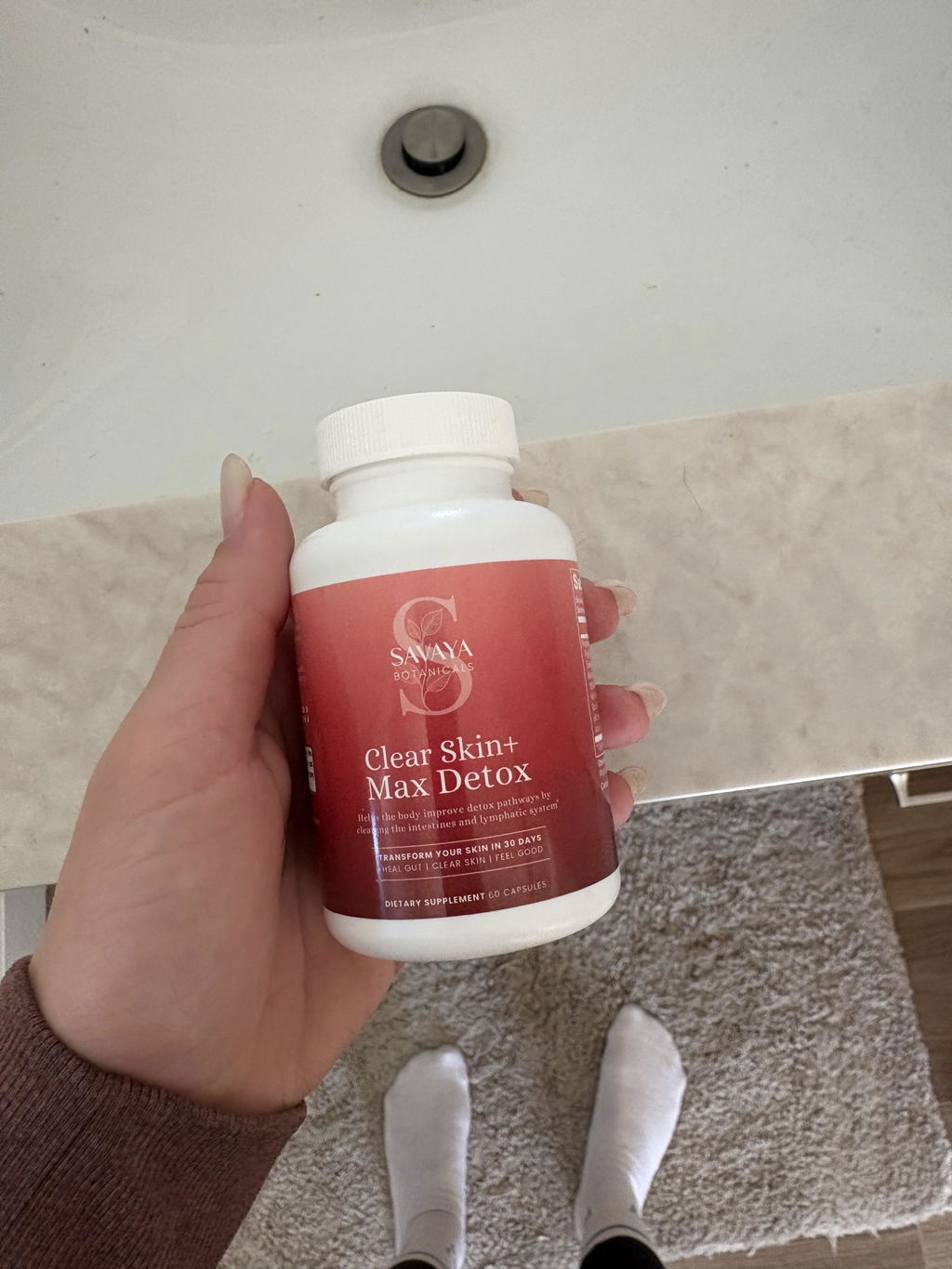
Once those basics are in place, some people look for extra support for overall diet and detox habits alongside a lower-glycemic-load routine. Savaya's Max Detox is formulated to support the body's natural detoxification pathways as part of that broader routine — a complement to the diet changes above, not a substitute for them.

The Bottom Line: Does Too Much Sugar Cause Acne?
Sugar alone doesn't cause acne, but a diet consistently high in glycemic load may worsen it for some people by driving insulin and IGF-1 activity that increases oil production. Lowering added sugar and refined carbs is a reasonable, evidence-informed step — just don't expect it to be the only variable at play.
The research on glycemic load and acne is more consistent than research on many other diet-and-skin questions, which is why it's the pathway with the clearest mechanism: sugar to insulin to IGF-1 and androgens to sebum.
Sugar isn't the only dietary thread researchers are pulling on — dairy and gluten each have their own proposed mechanisms — but blood sugar and insulin currently have the strongest controlled-trial evidence behind them.
Treat this as one input among several: genetics, hormones, skincare habits, and stress all play a role too. Consistent, moderate changes over weeks — not a single perfect day — are what the research diets that worked actually looked like.

See if Max Detox is right for you
Frequently Asked Questions
Does eating sugar directly cause acne breakouts?
Not directly — sugar doesn't touch the skin from the inside. Research links high-glycemic diets to acne through an indirect hormonal pathway: sugar raises insulin, insulin can raise IGF-1 and androgen activity, and those hormones can increase oil production in skin follicles, which may worsen breakouts in some people.
What is glycemic load and why does it matter for skin?
Glycemic load estimates how much a food raises blood sugar, factoring in both how fast (glycemic index) and how much carbohydrate is eaten. Diets with a lower overall glycemic load produced fewer insulin spikes in clinical trials, which researchers link to milder acne symptoms compared with higher-glycemic-load diets.
Is the natural sugar in fruit as concerning as added sugar?
Whole fruit contains fiber that slows sugar absorption, producing a gentler blood sugar response than refined sugar or sugary drinks with the same sugar content. Most low-glycemic-load research diets kept whole fruit while cutting back on refined sugar, added sugars, and processed high-glycemic carbohydrates instead.
How much added sugar is considered high for skin health?
No acne-specific limit exists, but the Dietary Guidelines for Americans recommend keeping added sugars under 10% of daily calories overall. Research diets linked to milder acne symptoms generally lowered glycemic load well below typical Western intake patterns, not just trimmed sugar slightly.
This content is for general wellness and educational purposes and is not medical advice. These statements have not been evaluated by the Food and Drug Administration. This product is not intended to diagnose, treat, cure, or prevent any disease. Consult your healthcare provider before starting any supplement, especially if you are pregnant, nursing, or managing a health condition. Individual results vary.