I spent years watching women pour money into retinoids, acids and lasers while their skin kept flaring. The real culprit was never on their face. It was in their gut. Breakouts, flushing, dullness and that stingy new sensitivity to products you used to love often start a few feet below your chin, in a quiet battle between bacteria, hormones and a leaky barrier most of us never think about.
1. Chronic acne that won't respond to topicals
When acne keeps coming back no matter how many actives you layer, the driver is usually not on your face. A leaky gut barrier lets bacterial fragments slip into your blood, feeding systemic inflammation that reaches the oil glands and keeps generating fresh lesions from the inside.
Research by Bowe and Logan (2011) in Gut Pathogens described this gut-skin axis in detail, showing how intestinal permeability and dysbiosis feed acne severity. Deng and colleagues (2018) in Acta Dermato-Venereologica sequenced the microbiomes of 43 acne patients and found a clear loss of diversity, with a drop in the bacteria that produce short-chain fatty acids.
Those short-chain fatty acids are your calming signal. Without them the brake comes off and sebocytes stay inflamed. Stress makes it louder. The HPA axis cranks up cortisol, androgen signaling climbs, and sebum production thickens. Topicals cannot reach any of that.
When I see cystic breakouts along the jawline in a woman who has tried three dermatologists already, I stop looking at her face. I ask about her bloating, her bowel habits and how many rounds of antibiotics she had as a teenager. The answers are almost always revealing.
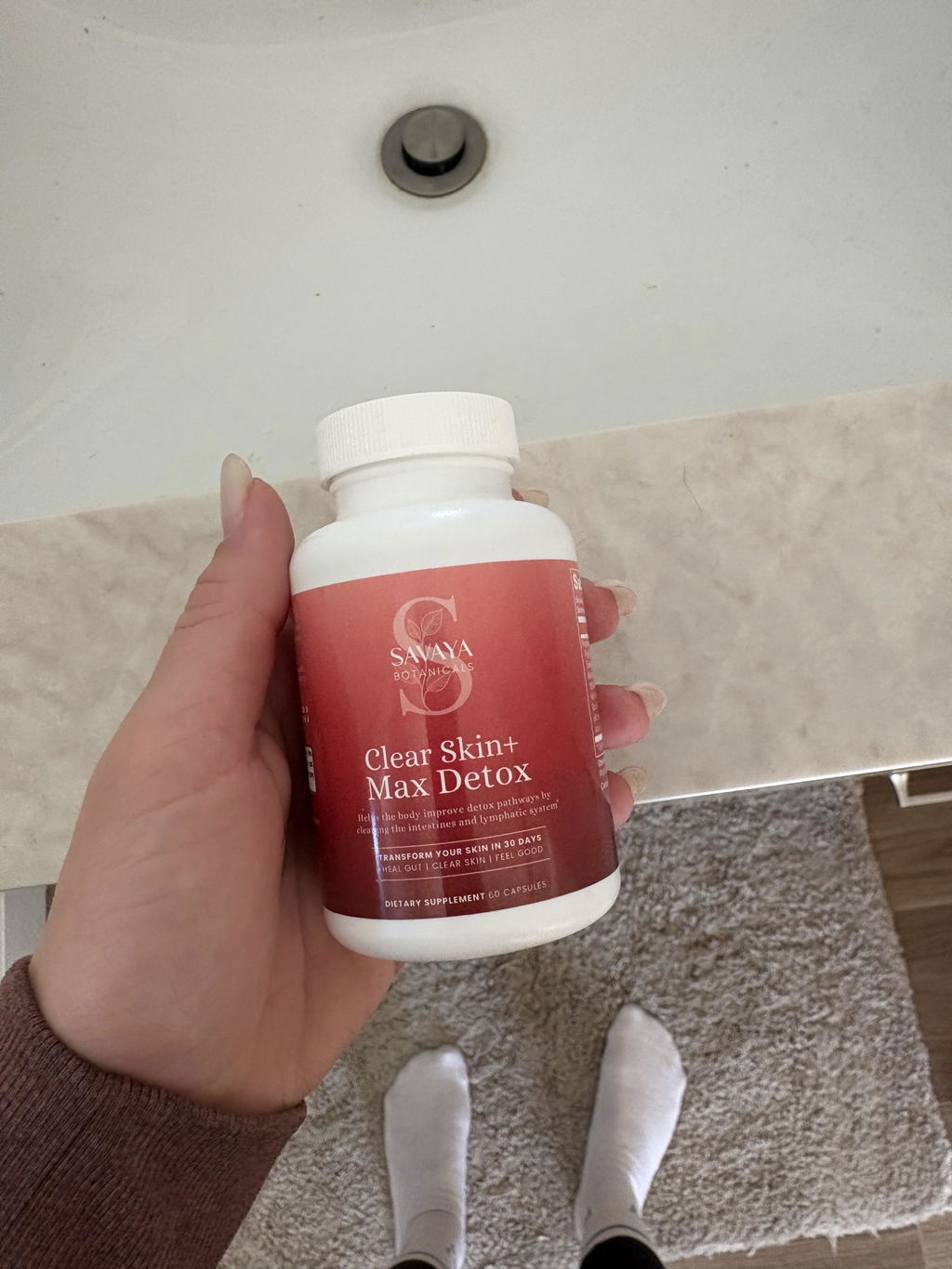
If the gut is the engine, a targeted gut cleanse is often the first lever to try before another retinoid. What happens in your mouth matters more than what sits in your cabinet, and the next sign shows you why.
2. Eczema flares after eating
Eczema that flares a few hours after dinner is almost never a mystery allergy. It is usually a leaky gut barrier letting undigested food proteins and bacterial LPS slip into circulation, where they prime mast cells to dump histamine into your skin as itch and redness.
Rosenfeldt and colleagues (2004) in the Journal of Pediatrics showed that children with atopic dermatitis who received lactic acid bacteria saw their gut symptoms calm and their small intestinal permeability measurably drop. Penders and the KOALA cohort (2007) in Gut went further: infants with specific gut colonization patterns in the first month were more likely to develop eczema by age two. The dysbiosis came first. The skin followed.
So why does one dinner trigger it and another one not? The gut barrier does not have a steady floor. Stress, poor sleep, a glass too many of wine, a stretch of low fiber, and the tight junctions loosen. On a tight day you tolerate the meal fine. On a loose day the same plate lands on your cheeks.
A client of mine was convinced she had developed a tomato allergy. We rebuilt her barrier instead. Tomatoes came back on the menu.
If you can see the pattern between your plate and your skin, the right next step is often the 12-week gut-to-skin program, not an elimination diet that leaves you with four safe foods. There is a stress-driven cousin to this story, and it hides in the next sign.
3. Rosacea triggered by stress
Rosacea that flares after a hard week is a HPA-axis story, not just a capillary one. Chronic cortisol loosens tight junctions in your gut, lets bacterial LPS leak into circulation, and primes mast cells to vasodilate the exact facial capillaries that flush and sting.
A 2008 study by Parodi in Clinical Gastroenterology and Hepatology found that rosacea patients had far higher rates of small intestinal bacterial overgrowth than controls, and a rifaximin protocol cleared or greatly improved facial lesions in most of them. Yang (2018) in BMC Infectious Diseases pulled together 27 studies linking Helicobacter pylori to rosacea and showed that targeting H. pylori often outperformed standard rosacea routines. Translation: calm the gut, calm the face.
The vagus nerve is the quiet hero here. When you breathe slowly, eat without screens, and sleep enough, vagal tone rises and the gut lining tightens. When you are wired and bracing, vagal tone drops and the gut leaks.
Your cheeks are a mirror of your microbiome, and your microbiome is a mirror of your nervous system.
Nine times out of ten when a client's cheeks are flaring, I find her digestion is off too. Bloating. Irregular stools. A tender belly. We calm the gut. The face follows. So what does it look like when there is no flare, just skin that reads tired? That is the next sign, and it is one of the most frustrating ones.
4. Dull or tired skin despite good skincare
Dull skin that resists every serum is often a fuel problem, not a surface problem. When dysbiosis cuts short-chain fatty acid production, your skin cells lose the energy they need to differentiate and build a reflective barrier, so light scatters off a flat canvas instead of a lit one.
Trompette and colleagues (2022) in Mucosal Immunology showed that gut-derived short-chain fatty acids, especially butyrate, strengthened the skin barrier by driving keratinocyte differentiation and loading the stratum corneum with ceramides, cholesterol and long-chain fats. Van Puyvelde and team (2014) in Nutrition Reviews reviewed 17 studies and found that higher advanced glycation end-product intake raised inflammatory markers, while low-AGE diets lowered them. Dullness has a biochemistry.
There is also an absorption piece. A chronically inflamed gut lining does not absorb B12, iron or B-complex vitamins the way a healthy one does, so your microcirculation stays sluggish and the pink lit-from-within tone fades. Topicals cannot build what the gut did not deliver.
A client of mine had been using a prescription-grade routine for a year and still looked exhausted in photos. We did not change her serums. We fed her gut. Three months later her coworkers kept asking what she was doing.
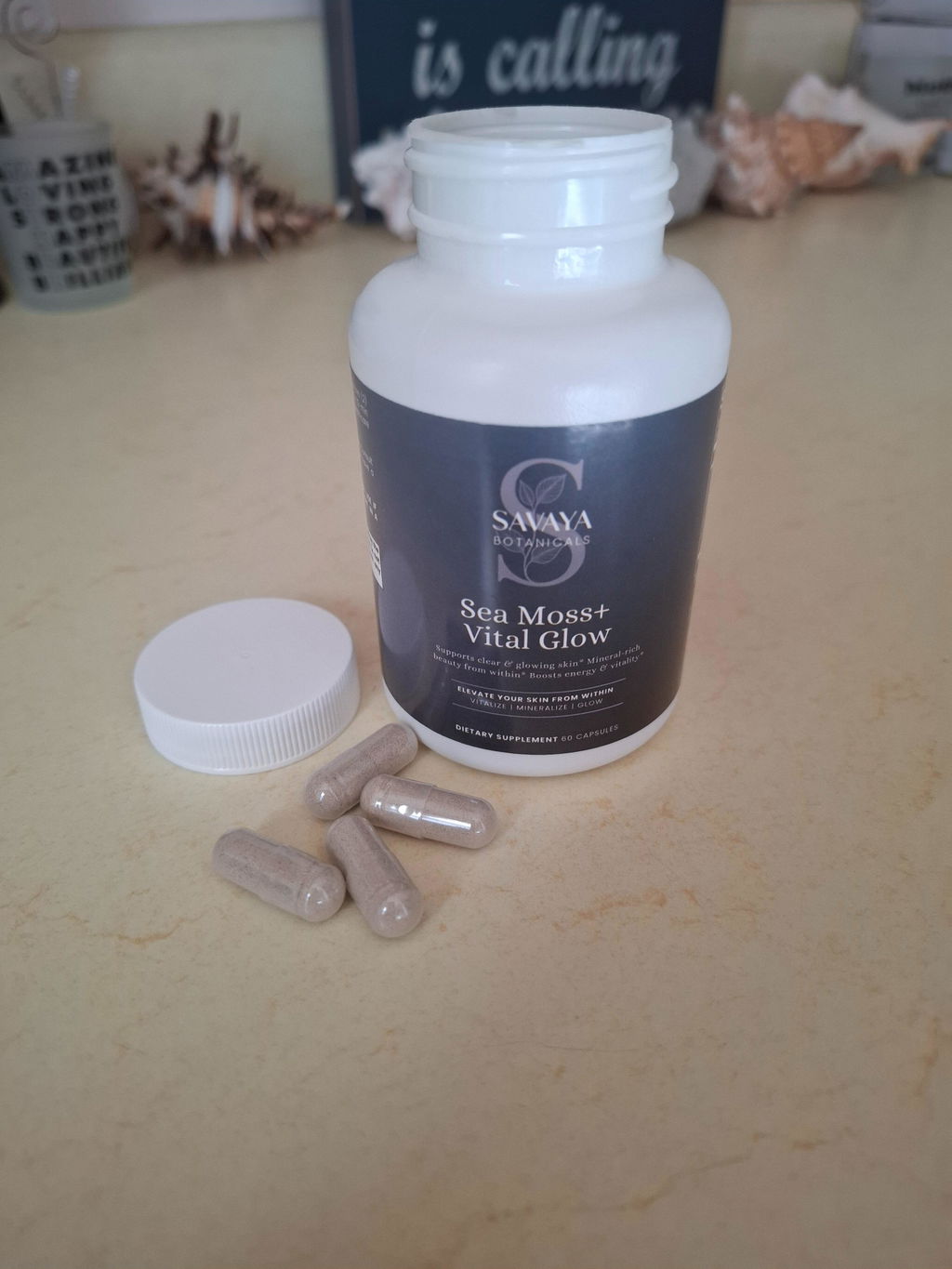
For many women, bringing in 92 trace minerals from the ocean plus prebiotic fiber from real food is the shift that unlocks the glow. Dullness is quiet. The next sign is louder, and it sits right under your eyes.
5. Persistent dark circles under the eyes
Dark circles that do not budge for sleep or eye cream are rarely about tiredness. They are usually a gut story: low-grade LPS leak drives sub-clinical inflammation and pigment, while gut-driven histamine congests sinuses and backs up the delicate veins under the thinnest skin on your face.
Ranu and colleagues (2011) in Dermatologic Surgery looked at 200 patients with periorbital hyperpigmentation and found that the vascular type, meaning visible under-eye veins and redness, was the single most common form at 41.8 percent. Sarkar and team (2016) in the Journal of Clinical and Aesthetic Dermatology reviewed the whole landscape and flagged post-inflammatory pigmentation, periorbital edema, excess vascularity and iron deficiency as leading drivers.
So the gut gets involved in three ways:
- Chronic inflammation deposits pigment in the thin skin under the eyes.
- Gut-driven histamine clogs your nose, which backs up those infraorbital veins.
- Poor absorption of iron and B12 lowers hemoglobin, so the pooled blood looks even darker.
A client of mine spent two years testing eye creams. Her ferritin was in the basement and her gut was quietly inflamed. Six months of gut and nutrient work later, the circles were visibly lighter.
Eye cream will polish the top. The pigment and the vessels sit three layers down. Which brings us to a different clue your gut is unhappy, and it shows up when any small spot refuses to heal.
6. Slow wound healing and lingering blemish marks
When a tiny spot leaves a mark that stays for months, your gut is often the slow link. Elevated intestinal permeability keeps your immune system in a low-grade pro-inflammatory state, stalls the switch from inflammation to repair, and starves the healing bed of the zinc and vitamin A it needs.
Lin and colleagues (2018) in Nutrients walked through every phase of wound healing and showed that zinc is a required cofactor in each one, so impaired gut absorption of zinc measurably delays closure and worsens scarring. Coppola and team (2022) in Molecules reviewed the postbiotic role of butyrate and found it modulates skin inflammation, barrier integrity and fibroblast activity. If your gut is not making butyrate, your skin is not finishing wounds cleanly.
There is a protease story too. In a chronically inflamed body, matrix metalloproteinases chew up new collagen faster than your fibroblasts can lay it down, so blemish marks hang around as red or brown shadows.
A client of mine was convinced her hormonal spots were leaving scars. They were not scars. They were post-inflammatory marks waiting on an impaired gut to catch up. Zinc is not a vitamin you can just megadose your way out of either. If the gut lining is inflamed, you will not absorb more by swallowing more.
For stubborn healing patterns like this one, many women find that a deeper 12-week reset creates the steady anti-inflammatory tone the skin needs to clear its marks. The last sign is the sneakiest one, because it feels like your products changed when they really did not.
7. Sudden sensitivity to products you used to tolerate
Products that suddenly sting when they never used to are almost never the fault of the product. Research by Fasano (2012) in Clinical Gastroenterology and Hepatology showed zonulin-driven leaky gut lets antigens and LPS loose, priming mast cells and histamine pathways so your skin reacts to things it tolerated last month.
Maintz and Novak (2007) in the American Journal of Clinical Nutrition added the enzyme angle: when gut mucosa is inflamed, diamine oxidase drops, histamine stops getting cleared, and even a mild surfactant or fragrance piggybacks on an already-saturated histamine pool. The sting that feels like allergy is often an overflow.
There is a receptor piece on top. Chronic LPS exposure sensitizes TLR4 on your skin cells, lowering the irritation threshold of the barrier itself. Your skin has not changed. Its baseline has.
A client of mine was convinced her moisturizer had been reformulated. It had not. Her gut had shifted three weeks earlier after a stressful move and a round of antibiotics. The face just caught up last.
When the barrier is this reactive, the smartest move is to drop everything exfoliating and lean on a barrier-repairing tallow cream while the gut quiets down. Fancy actives on an inflamed canvas is like scrubbing a wound. Rebuild the inside, and the outside stops rejecting ingredients it loved for years.
What this really means: all 7 of these signs are the same story told through different cells. A gut barrier that is loose, a microbiome that is thin, and a nervous system that is wired keep inflammation elevated in a way no serum can outrun. The surface is downstream of the inside, which is why so many women find lasting change only after they stop treating skin as if it starts and ends at the stratum corneum.
If your pattern lives in two or three of these signs at once, that overlap is the signal to work with the gut, not against the skin. Mechanism first, products second.
People also ask
What are the main signs my gut is affecting my skin?
The most common patterns I see are acne that laughs at topicals, eczema that flares after meals, stress-triggered rosacea, dull skin that resists serums, stubborn dark circles, lingering blemish marks, and sudden product sensitivity. When two or more show up together, the gut-skin axis is almost always involved.
Why does my eczema flare after eating certain foods?
Food triggers often point to a leaky gut rather than a true allergy. When tight junctions loosen, food proteins and bacterial fragments slip into circulation and activate mast cells, which release histamine into the skin. Rebuilding the gut barrier is usually what calms the pattern, not endless elimination.
How long does it take to see skin changes from gut work?
Many of my clients notice less bloating and calmer flares within two to four weeks. Visible shifts in tone, texture and healing speed usually take 8 to 12 weeks, because the skin cell cycle, the gut lining and the microbiome all need time to turn over and settle together.
Can I heal my skin without changing my skincare routine?
Often, yes. If the driver is systemic, calmer skin tends to show up as the gut, nervous system and diet shift, even on a simple routine. I usually recommend simplifying skincare down to a gentle cleanser, a barrier-support cream and SPF while the inside catches up.
Is it safe to do a gut cleanse while working on acne?
For most women, pairing gentle gut support with their current skin routine is well tolerated. I suggest avoiding harsh exfoliants during the first few weeks, because gut shifts can briefly stir things up and the skin may feel busier before it settles. Slow and steady wins here.