Express US Shipping

10,000+ Happy Customers

60 Day Money Back Guarantee

60 Day Money Back Guarantee

Cart (0)

The question I wish every acne patient was asked before their thirteenth prescription

Most acne care attacks the face. This is the internal pattern I look for before another cream, antibiotic, or Accutane round.

Clinical notes from 13 years in practice
savaya mirror anatomy
Author avatar

By Sarah Johnsen, ND

Gut-Skin Axis Clinical Letter | Updated May 2026

Hello, I am Sarah Johnsen, a naturopathic doctor and gut-skin axis specialist. For thirteen years, I have watched the same acne story repeat in different women with different faces.

Rebecca was thirty-two, a software designer in Brooklyn, and she had already spent $4,200 trying to fix her skin. Three rounds of antibiotics. Two courses of hormonal medication. One run of Accutane. Every topical that promised to finally work.

When she sat down in my office, she did not ask me what cream I recommended. She asked how many practitioners I had been before her. "Twelve," she said. "You are the thirteenth."

She had photos on her phone organized by month. January jawline flare. March forehead texture. June cysts. October post-Accutane relapse. The pictures were not vanity. They were evidence. She was trying to prove to someone, anyone, that this was not random.

That is the part of adult acne most people do not see. It is not only the breakout. It is the tracking, the guessing, the fear of a new product, the hesitation before making plans, and the private calculation of whether your skin will be calm enough to leave the house without thinking about it.

Rebecca did not need another person to tell her to wash gently or avoid picking. She needed someone to ask why the same inflammatory pattern kept rebuilding itself after every treatment ended.

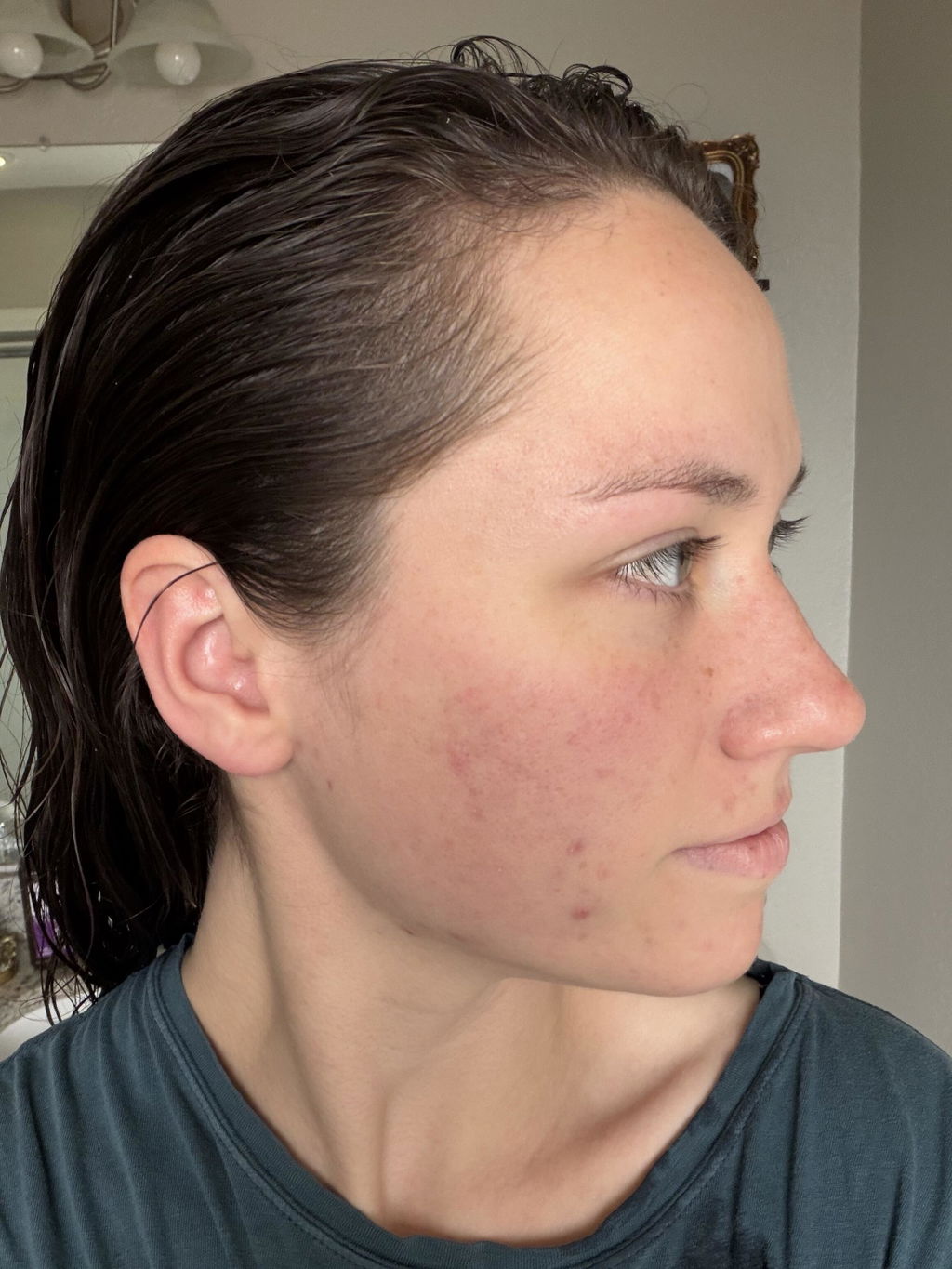
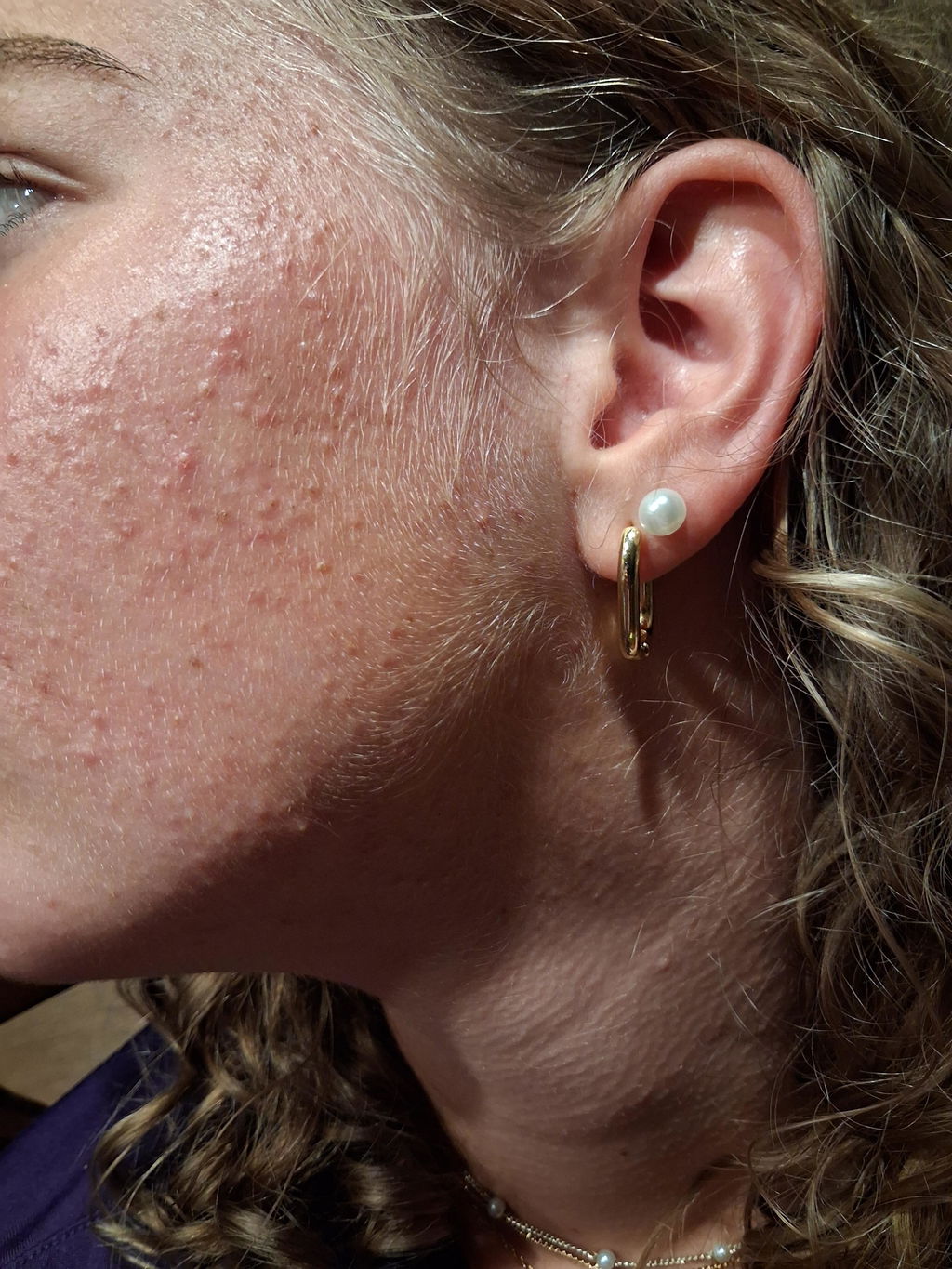
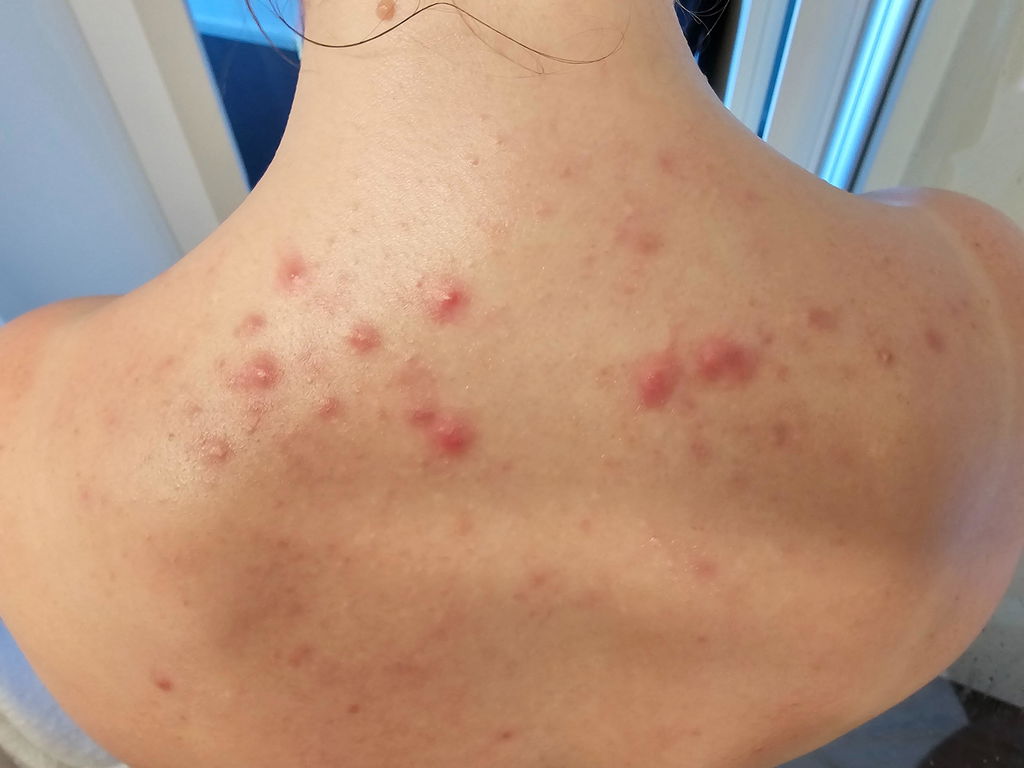
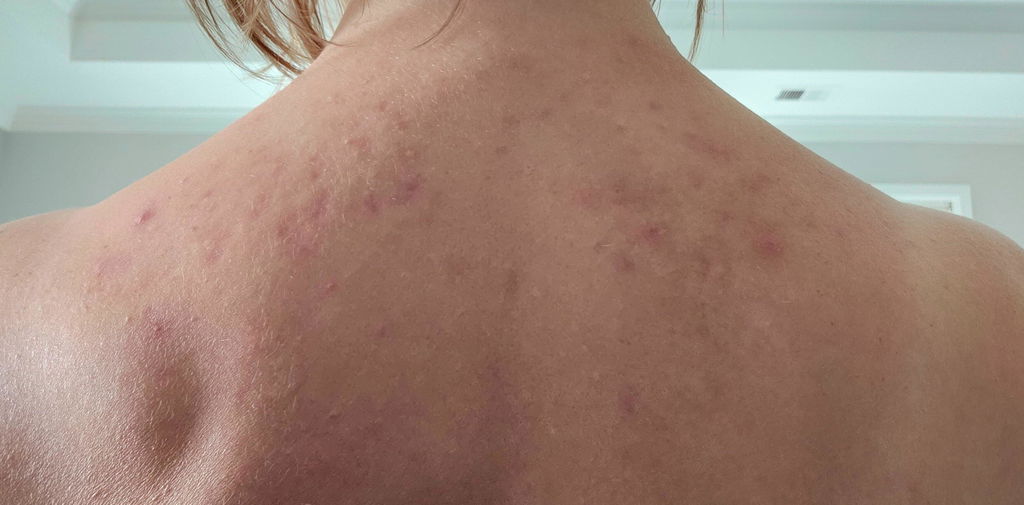
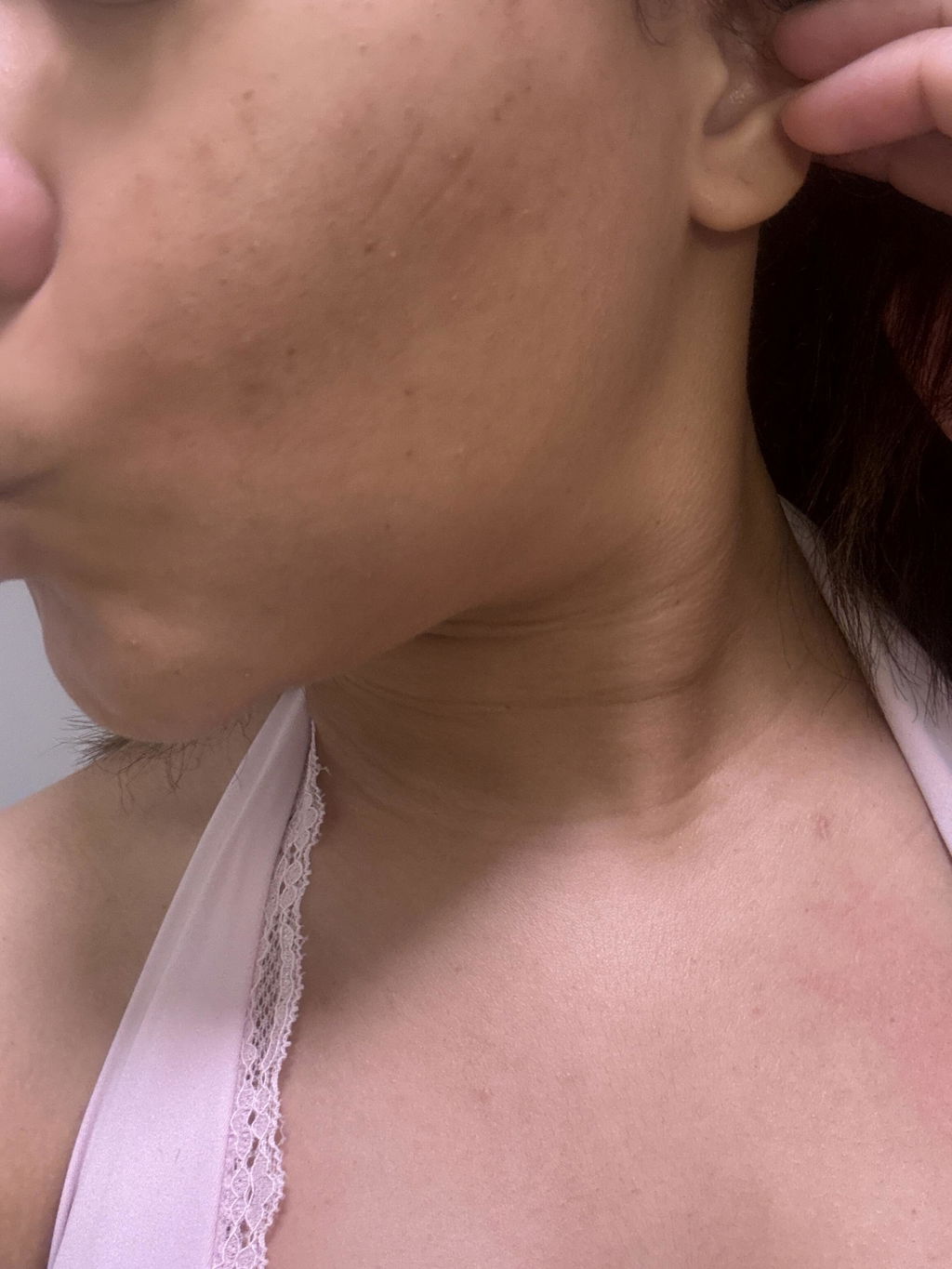
Chest décolletage acne before after
  • 15 prescriptions and topical routines since her teens
  • 3 rounds of doxycycline that left her digestion worse
  • 2 courses of spironolactone that helped, then faded
  • 1 six-month Accutane run before the breakouts returned
  • 12 providers who looked at her face, not the system underneath it

The question I asked Rebecca was simple: "What is your gut trying to push through your skin?"

That is not the question most acne patients hear. Most are told to dry the oil, kill the bacteria, exfoliate harder, or try a stronger prescription. Sometimes that helps for a while. But if the breakouts keep coming back, the surface is usually not the whole story.

In my office, recurring acne is not treated like a dirty-skin problem. It is treated like an inflammation pattern with a visible exit point.

That shift changes the entire conversation. The face still matters. Skincare still matters. But the face is no longer treated as the only place where the problem lives.

The sentence that made Rebecca stop trusting the playbook.

Rebecca told me she had once asked why no one had tested or even discussed her gut after years of relapsing acne.

The answer she remembered was: "That is not part of the protocol."

That sentence matters because it reveals the whole problem. Standard acne care is organized around what can be seen on the face: oil, bacteria, pores, irritation. But the skin is not separate from the gut, liver, immune system, and hormones. It is connected to all of them.

If every treatment only attacks the final symptom, the deeper pattern can keep feeding new breakouts.

I am not anti-dermatology. I send patients to dermatologists when they need that level of care. But I am against pretending a relapsing pattern has been solved when the only thing we have done is suppress it for a few months.

When Rebecca listed what she had tried, the pattern was obvious: each treatment had a job, and each job was mostly surface-level or hormone-level suppression. None of them had been designed to ask whether her body was clearing inflammatory load well enough in the first place.

That is why the question matters. Not because the gut is trendy. Because recurring acne often behaves less like a local skin problem and more like a traffic jam that keeps finding the same exit.

What Korean acne protocols made me look at differently.

Years ago, I started studying acne approaches used outside the usual American topical-first model. What stood out in Korean and integrative dermatology discussions was not a miracle ingredient. It was the order of thinking.

The skin was not treated as an isolated surface. Practitioners were also asking about digestion, liver burden, inflammation, and how well the body was clearing what it was trying to process.

That does not mean every breakout is a detox problem. It means that when acne keeps returning after antibiotics, retinoids, hormonal medications, or Accutane, it is reasonable to ask whether the body is still pushing inflammation through the skin.

That is the useful part of the Korean angle. Not the 10-step routine. Not the sheet masks. Not the glass-skin fantasy. The useful part is upstream thinking: what is happening before the breakout reaches the mirror?

Rebecca did not need a more complicated skincare shelf. She needed a cleaner explanation for why the same jawline cysts kept returning even when she was doing everything correctly.

This is where many women feel angry, and I understand why. They were compliant. They took the prescriptions. They tolerated the dryness, stomach changes, peeling, purging, and bloodwork. Then the acne returned, and the next suggestion was simply a stronger version of the same idea.

An upstream protocol gives the patient a different map. It says: let us keep the skin calm, but let us also reduce what keeps pushing irritation toward the skin.

The five pathways I wanted addressed at the same time.

For Rebecca, I was not looking for another single-action supplement. Probiotics add bacteria. Detox teas flush the colon. Topicals work on the surface. Each can be useful, but each can also be incomplete.

The pattern I wanted addressed had five parts: BIND unwanted compounds in the gut, DRAIN them through normal elimination, CALM the intestinal lining, RESTORE antioxidant support through circulation, and SUPPORT the liver while the loop closes.

That is why I looked for an internal protocol with multiple botanicals working together, not a permanent routine with one trendy ingredient.

If one part of that loop is missing, patients feel it. Bind without drain can feel backed up. Drain without calm can feel harsh. Antioxidants without elimination can feel too cosmetic. Liver support without gut support can miss the place where the inflammatory signal started.

The body does not run in isolated departments. The skin, gut, liver, and lymphatic system talk to each other all day. A serious acne protocol should respect that.

The week I warned her not to quit.

Some people notice digestion first. Some notice fewer new breakouts. A smaller group sees a brief flare in the first week as the body starts moving waste more efficiently.

I warned Rebecca about this before she started. If the skin looked more active around days three to seven, she was not to panic. She was to drop to one capsule for three days, increase water, and watch whether it settled.

It did. By day five, the flare had calmed. That early guidance matters. Many women quit good internal protocols because nobody told them what the first week can feel like.

This is also why I dislike vague cleanse language. If someone tells you "it gets worse because it is working" without giving you a plan, that is not clinical guidance. That is a way to make you tolerate anything.

A real protocol should tell you what to expect, what is normal, what is not, and when to slow down.

What changed before her skin changed.

Rebecca did not wake up with perfect skin in seven days. That is not how real internal work usually looks.

Week 2: her digestion shifted first. Less bloating. A more normal morning rhythm. Week 3: her afternoon crash softened. Week 5: the jawline cysts were flatter and fewer new ones were forming. Week 8: she asked if she could stop.

Yes, I told her. That is the point. The protocol is not meant to become your new personality. It is meant to run for sixty days, then end.

The most important change was not that her skin looked calmer in week five. It was that she stopped waking up scanning her face for what had formed overnight. That mental shift matters. Recurring acne trains you to inspect yourself before you even feel awake.

By week eight, she was still using a gentle cleanser and moisturizer. But those products finally had a quieter system to work with.

That is an important distinction. I did not tell Rebecca to throw away skincare. I told her to stop expecting skincare to do the job of digestion, liver processing, and elimination. The outside routine can support the skin. It cannot carry the entire internal burden by itself.

Why this became the off-the-shelf protocol I recommend to my clients.

For years, I wrote custom blends because most products were too narrow. One capsule for digestion. Another for liver support. Another for fiber. Another for antioxidants. Patients ended up with a shelf full of bottles and no clear endpoint.

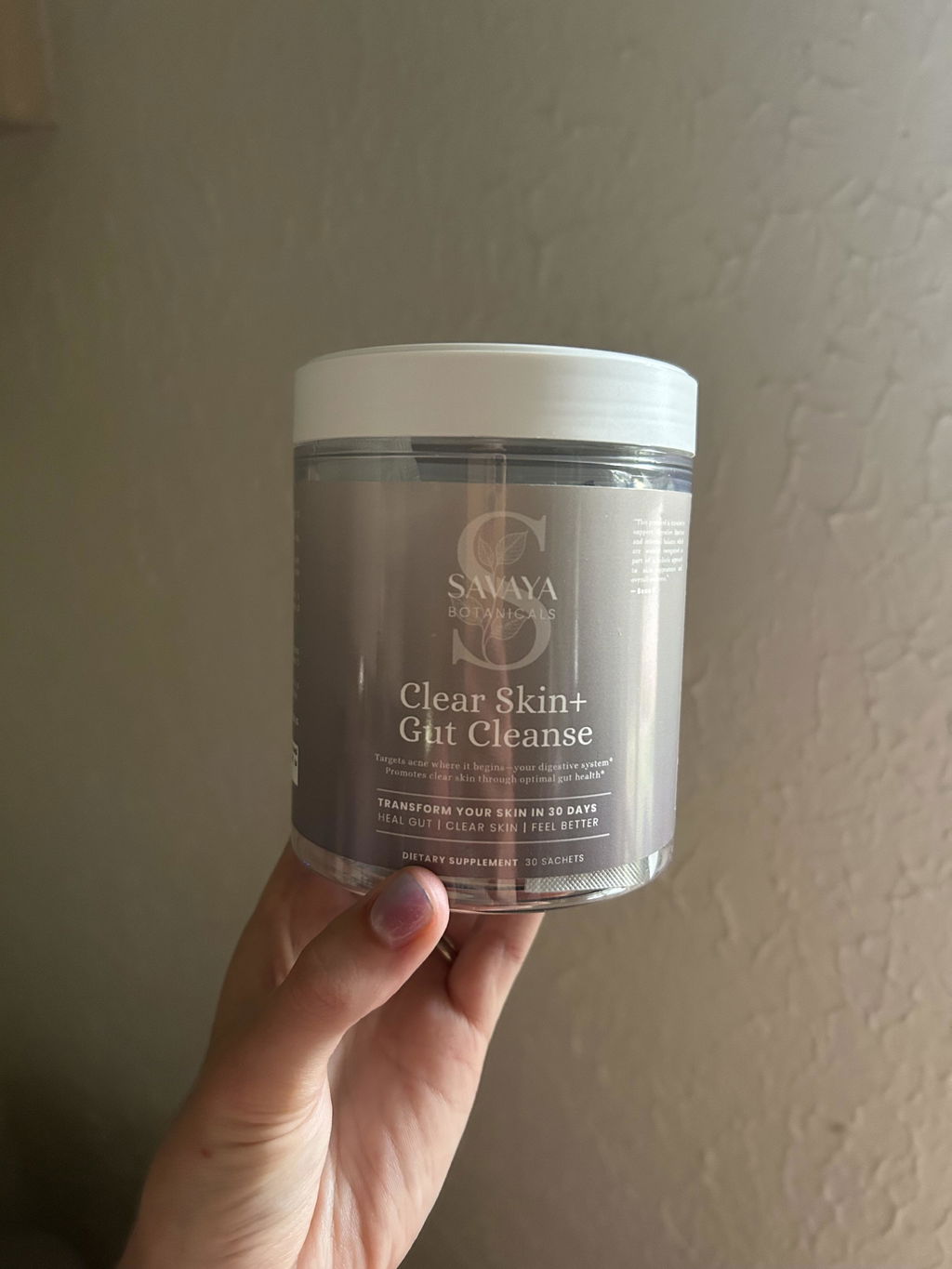
Savaya Clear Skin+ Max Detox is the first off-the-shelf protocol I found that matched the way I was already thinking clinically: gut barrier, elimination, botanicals, antioxidants, and liver support in one finite 60-day structure.

I do not recommend it because it sounds trendy. I recommend it because it finally gives patients a simple way to address the internal pattern I was already seeing in practice.

The other reason is compliance. A protocol only works if someone can actually follow it. Two capsules a day is realistic. Eleven separate bottles are not. A 60-day window is realistic. An endless supplement routine is not.

That is why I would rather give someone one complete, finite protocol than a list of disconnected things to buy.

The line Rebecca sent me three weeks later.

Three weeks after the bottle was empty, Rebecca emailed me one sentence: "The skin is still holding."

That is the moment I care about. Not a perfect before-and-after under flattering light. Not a two-day glow. The question is whether the skin stays calmer when the protocol ends.

For recurring acne, that is the difference between suppressing a symptom and helping the body stop feeding it so aggressively.

Her skin was not airbrushed. She still had marks from old inflammation. But the angry cycle had slowed. The new cysts were not arriving in the same predictable waves. For someone who had spent years waiting for the next flare, that was the result that mattered.

If you are reading this after trying everything.

If you are reading this after another breakout, another tube, another refill, or another late-night search, this is what I would tell you in my office:

Your acne may not be a failure of hygiene, discipline, or willpower. It may be a signal that your skin is carrying a burden your gut, liver, and elimination pathways have not been able to clear efficiently.

The next step is not always a stronger surface treatment. Sometimes it is a complete internal protocol with a clear beginning, a clear end, and a reason for every ingredient.

That is why this page has taken the long route before showing you the product. Cold traffic does not need another bottle shoved in its face. It needs a reason to believe the old approach may have been incomplete.

Start with the same 60-day internal protocol Sarah would use for Rebecca today.

Built for recurring acne that has not responded long-term to creams, antibiotics, hormonal medication, or Accutane. 60-day refund policy available.

Plant-based internal protocol
2-7 days US delivery
60-day refund policy
Sarah's internal protocol

A protocol for women who have already tried the surface route

60
Days in the protocol window
5
Internal pathways supported together
11
Botanicals in one formula
1
Simple daily routine
Designed for recurring breakouts where the surface-only approach has not held.

Most acne products work on one piece: bacteria, oil, exfoliation, probiotics, or digestion. This protocol is built around the whole gut-skin loop: binding, elimination, gut lining support, antioxidant support, and liver support.

Many people notice digestion and bloating first. Skin changes usually follow more slowly as fewer new breakouts form and existing inflammation calms. The protocol is designed around a 60-day window, not an overnight promise.

Yes. This is for people who have already tried the surface route and want to support the internal pattern underneath recurring breakouts. If you are under medical care, keep your provider involved.

Some people notice temporary changes in the first week. If that happens, reduce to one capsule for a few days, drink more water, and give the body time to adjust. Stop if anything feels wrong for you.

Because cold traffic needs the argument first. The product makes sense only after the reader understands why the gut, liver, elimination, and skin are connected.

🔒 60 Day Money-Back Guarantee 🔒 Guaranteed Safe & Secure Checkout 🔒 No-Hassle Returns 🔒 Fast US Shipping

Stock is limited due to high demand. Get up to 46% OFF + FREE SHIPPING while supplies last.